Jeanne Blasberg is a novelist, travel writer, and adventurer. She is a voracious reader and regularly reviews books on her blog, Goodreads, BookBub, LibraryThing, and Amazon.
One of those books that is both wonderful and gutting at the same time. To read Brooks’ recent release documenting the loss of her husband of thirty-five years at the age of sixty was like a cannonball to the stomach. I am fortunate to be in a long marriage and approaching the age of sixty, and this very concise memoir drove home the message to not take tomorrow for granted, to prepare for death and to get one’s story down in whatever form has meaning for you. It is a beautiful tale of loss while chronicling a true and deep love. I am grateful for Brooks wisdom in capturing what our society shuns – death and a permission to grieve. So much for a culture that expects mourners to “get over it and get on with it,” Brooks allows herself time and space to wallow and in so doing offers the reader the same opportunity. For lovers of The Year of Magical Thinking by Joan Didion….
https://jeanneblasberg.com/wp-content/uploads/2025/02/https3A2F2Fsubstack-post-media.s3.amazonaws.com2Fpublic2Fimages2Fac841182-76a7-426f-be2e-cf7fa828bb27_644x938.jpg938644Jeanne/wp-content/uploads/2018/12/blasberg-logo.svgJeanne2025-02-21 13:57:572025-02-21 13:57:57Memorial Days by Geraldine Brooks
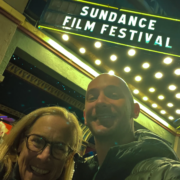
One of the best things about living in Park City during January is the opportunity to attend the Sundance Film Festival. Because story occupies my imagination, because the festival is relocating after the 2026 edition and because our son came out to attend, we went all-in. Features, Docs, Shorts… the full gamut. Maybe it’s a Gen X thing, and I’m missing the cultural moment – just as the Super Bowl half time show went right over my head – but I noticed a common theme with many of the thirty-something protagonists in the feature films. It was like the anti-RomCom has become genre with characters resisting romantic relationships, really struggling with love and commitment. Left me sad. I found this to be true in “Oh, Hi!,” “Magic Farm,” “Bubble & Squeak,” “The Wedding Banquet,” and for quite different reasons, “Ricky.” Another takeaway: what I found hilarious, many people found disturbing…. Hmmm….
Charlie and I in front of the iconic Egyptian Theatre, where Robert Redford began screening the Sundance Film Festival 41 years ago!!
We put aside the star-gawking for the first Saturday of Sundance, and John and I attended a full day of FOODTANK screenings and panel discussions. A beautiful integration of my loves – storytelling and regenerative farming… FOOD TANK is an organization that recognizes the power of story and visual media to educate, inform, and propel change in the food system. With so much of the population living in cities and detached from agriculture, it’s important to show people what is happening on the front lines! Check out the trailers of the following powerful films that were showcased: “Common Ground,’ “Generation Growth,” “Strange Little Fruit,” “Farming While Black,” “Café Y Aves,” and “From the Heartland.”
Most of what we buy and consume is wrapped in story – either the ones told by the media, our communities, or the ones we tell ourselves. I’ve always realized the importance of telling Flynn Creek Farm’s story not only with words in these blogs and other essays, but with film. We aim to give an honest accounting of our failures and successes and to be very transparent about what starting a commercial farm takes. Who knows, maybe somebody will watch and become inspired….I may have mentioned that viewing “Kiss the Ground” one evening during COVID is what pushed John and I over the edge. This is a recent video showing the January/February mood on our farm…… but as of this writing, the barn and silo have come down!!
Over the farm’s first three years in our care, we have documented many impressions as well as changes to the land. We’ve interviewed our team members because the farm’s story is unique to each of us. Each one of us, for various reasons, is searching for meaning in this place and trying to make a difference.
If you want to be part of the story… mark your calendar 🙂 I wrote more about it in last month’s newsletter….
One of those books that is both wonderful and gutting at the same time. To read Brooks’ recent release documenting the loss of her husband of thirty-five years at the age of sixty was like a cannonball to the stomach. I am fortunate to be in a long marriage and approaching the age of sixty, and this very concise memoir drove home the message to not take tomorrow for granted, to prepare for death and to get one’s story down in whatever form has meaning for you. It is a beautiful tale of loss while chronicling a true and deep love. I am grateful for Brooks wisdom in capturing what our society shuns – death and a permission to grieve. So much for a culture that expects mourners to “get over it and get on with it,” Brooks allows herself time and space to wallow and in so doing offers the reader the same opportunity. For lovers of The Year of Magical Thinking by Joan Didion….
https://jeanneblasberg.com/wp-content/uploads/2025/02/dd9cdb16-8a77-4d2f-b8b9-c24ed9a56ef2_2316x2533.webp15921456Jeanne/wp-content/uploads/2018/12/blasberg-logo.svgJeanne2025-02-21 13:56:212025-02-21 13:56:21The Story
I’m sending warm wishes of light – both internal and external – on this darkest day of the year. Even though the news has been full of drone sightings in the night sky and people taking notice, I would argue we don’t look up enough. That includes me. In prior years, it was because my night sky was diffused by ambient city lights, but possibly more-so because I wasn’t in the right mindset. Similar to a disconnection from my food source, I was oblivious to the power of the moon, chalking up early civilization’s reliance on moon phases to guide activity and to create our first calendars as primitive.
December 15, 2024 the Full Spirit Moon rising in Park City, UT
Now that I’m living in the Wasatch mountains of Utah during the winter and on our farm in Wisconsin during the summer, much has changed. First of all, it’s easier to admire constellations and the moon against a black night sky. But it’s more than admiration. While researching the different facets of holistic farming, I’m getting enlightened as to the importance of the moon’s pull. Once only noticeable to me by the extreme tides we experienced in Rhode Island, I now appreciate the moon’s effect on everything containing water, ie all living things including the soil.
Performing farming activities in sync with natural forces and the phases of the moon is said to improve outcomes. On a personal level, opportunities for creativity, productivity, and well-being also vary with the phases of the moon. Simply put, the new moon is a time to reflect and set intentions, energy builds during the waxing moon with opportunities to forge relationships and accomplish tasks, culminating in peak energy at the full moon (as well as peak emotion), and during the waning phases of the moon, it is time to let go, regroup, and purify.
Do you consider my modern reach for a Moon Calendar app to be in conflict with a goal of connecting to nature?
To pay better attention to the moon, I’ve begun drawing its phase at the top of my daily journal entry. I also check in with apps that both suggest where farming effortsmight be best spent each day as well as personal opportunities. Our culture likes to type-cast the moon as dark and spooky, associated with fear, superstition and danger. A bum rap…. Consider the following list of all the Moon influences by seventeenth century astrologer William Lilly:
Body, emotions, moods, changeability, memory, ethereal, habits, rhythms, down bearing, cold, moist and phlegmatic, organs with contained spaces, feelings, basic needs, your mother, mothering, yin, astrological sign of cancer, stomach, breasts, lungs, meninges of brain, all bodies of water, the stomach and linings of internal organs, the moon rules round things, figures, like our bodies. Moon is related to Sulfur, Pluto, Monday is Moon Day, round vegetables, cabbages, pomegranate, coconuts, trailing plants such as melons, cucumber, corn, salty things, milk and dairy products, sweets, pearls, emerald, moonstone, ducks, cranes, herons, silver metal and white color, Frogs, the Otter, Snails, Midwives, Nurses, Queens, Countesses, Ladies, all manner of Women; as also the common People, messengers, The Moon holds memories, even lifetimes ago, imprinting on mothers, the subconscious, our emotions, and psychology.
Despite not looking to the night sky as often as I should have, I love the moon as a metaphor in literature, even tapping it to symbolize feminine cycles in my 2017 novel, EDEN and ever so slightly in its sequel, DAUGHTER OF A PROMISE. I am currently in a literature class studying JANE EYRE by Charlotte Brontë. This classic novel uses multiple moon references and imagery to represent change, the maternal spirit, and (sometimes irrational) feminine power.
But I digress. Back to farming… because I sense many of you are more interested in this new adventure of mine 🙂
….Since 1818 the FARMER’S ALMANAC has been a staple in agricultural homes. Its list of ‘gardening according to the moon’ includes categories such as: plant aboveground crops, plant root crops, transplant, plant seedbeds, plant flowers, kill plant pests.
…. And in the introduction to her wonderful guide (above), THE CELESTIAL GARDEN: GROWING HERBS, VEGETABLES, AND FLOWERS IN SYNC WITH THE MOON AND ZODIAC, renowned Wisconsin herbalist and medicinal plant grower, Jane Hawley Stevens writes, “Timing is everything. Celestial gardening …. is a tangible practice that can help us engage in the larger energy that supports life. When there is too much to accomplish in a day, practicing celestial [farming] guides you to the open doors so you don’t waste time bumping into the closed ones. The idea of making choices based on the phase of the Moon may seem a little irrational, but [farmers] throughout time and across many cultures have found that [working] by the Moon is a practical tool that can improve our [yield] as well as our daily lives. There is much guidance from Nature that we simply overlook. The Sun and Moon are two of the most direct and accessible natural forces that we can consult to help us experience greater ease and joy in everything.”
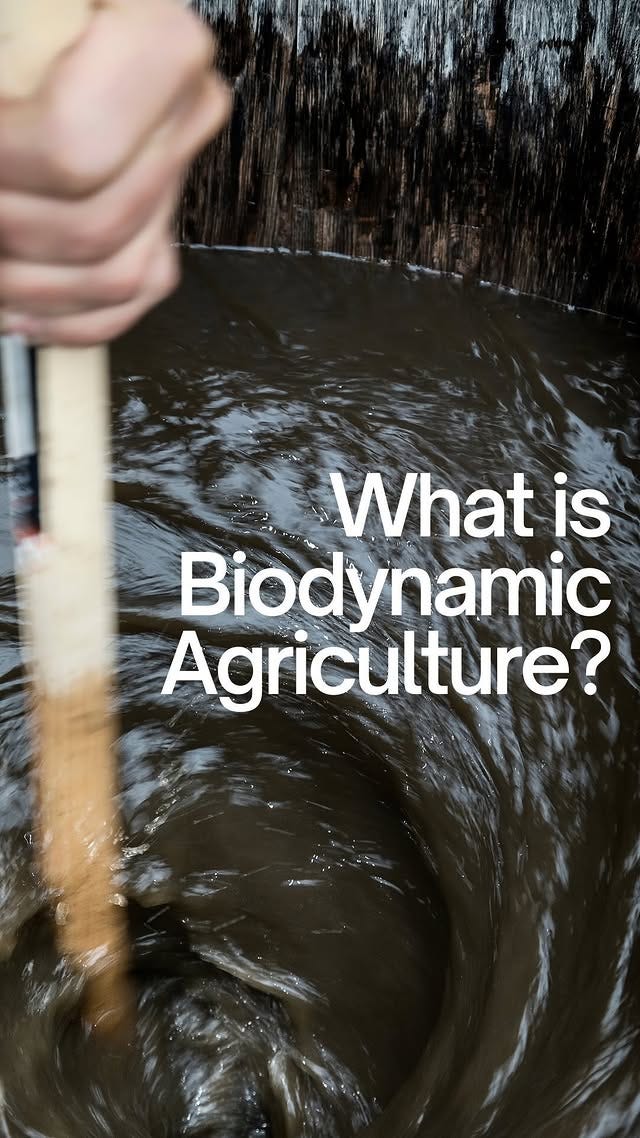
A similar philosophy founded in Austria a century ago, Biodynamic Farming, can be incredibly prescriptive with regard to working in concert with nature and celestial activity, drilling down to even the time of day best suited for certain activities. Maria Thun, an early adapter of this movement, was full of pronouncements such as “…plants of which we eat the leaves should be sowed, hoed and cultivated on leaf days, that is, on a Water sign (Cancer, Scorpio, Pisces) and that onions should be sown on leaf days if they were to be eaten fresh in the summer and not stored. Leaf development is stronger with plants sown when the Sun is in Pisces, that is February 19 to March 20. But for later crops of greens, planting when the Sun is in Cancer, June 21 to July 22, when the Moon is also in a water sign.” WOW….
I’m curious about your thoughts on these philosophies? What is your favorite phase of the Moon? A crescent moon? A full moon? Do you try to live in concert with the moon?
I have become a great fan of Miranda July. Her latest novel, ALL FOURS, is a big hit. after finishing it, I wanted more and read her debut, THE FIRST BAD MAN. So original, hysterical characters, and premises.
I want to reward readers who make it to the end with a holiday gift!! The first three readers who reply to this email with the word “MOON” will receive a signed copy of DaUGHTER OF A PROMISE. I will let you know if you are a winner and get your mailing address (US mailing addresses only).
After finishing ALL FOURS, I was yearning to return to Miranda July’s voice and humor, so I downloaded her debut right away and was not disappointed. Cheryl, the protagonist of THE FIRST BAD MAN, is original and hilarious yet in so many ways, for this regimented reader, even identifiable. Accommodating a twenty-one-year-old self-obsessed daughter of her boss into her home, Cheryl’s life is disrupted but this unwanted roommate ends up opening Cheryl to a place of growth and love. Just as full of crazy sex and imagery, but always original and superbly written…. I love this author!
https://jeanneblasberg.com/wp-content/uploads/2024/12/Screenshot-2024-12-15-at-12.30.03 PM.png484438Jeanne/wp-content/uploads/2018/12/blasberg-logo.svgJeanne2024-12-15 14:40:202024-12-15 14:42:19THE FIRST BAD MAN by Miranda July
Loved this novel, its narration by the author, its tone and voice. The premise and setting – a cross country drive turning into a holing up in a motel room 30 minutes away from home- and what the motel room comes to represent. I loved the voice and revelatory observations and so much absurdity. The conclusions at the end were well earned. The best type of feminist literature- I can’t stop thinking about this book.
https://jeanneblasberg.com/wp-content/uploads/2024/12/Screenshot-2024-12-15-at-12.30.56 PM.png684710Jeanne/wp-content/uploads/2018/12/blasberg-logo.svgJeanne2024-12-15 14:37:412024-12-15 14:42:39ALL FOURS by Miranda July
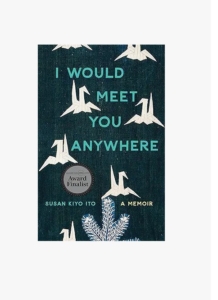
A well-written and powerful memoir – not just about a young woman’s quest to reunite with her birth family, but her vulnerability and willingness to subjugate her emotional needs in order to maintain a relationship with them. Susan Kiyo writes in a clear and sharp style and offers through her writing a warning for all people to not subject themselves to narcissistic, emotional tyranny.
https://jeanneblasberg.com/wp-content/uploads/2024/11/fda20353-afe4-4f62-974f-5297e9d07ca6_484x666.jpg666484Jeanne/wp-content/uploads/2018/12/blasberg-logo.svgJeanne2024-11-26 11:22:382024-11-26 11:22:38I Would Meet You Anywhere by Susan Kiyo Ito
I loved the way this story unfolds. Set in a farming community in the Red River Valley of North Dakota, families come together in sorrow and financial hardship in a novel that is full of wonderful characters as well as literary references. An awful accident occurred before the action of the novel begins however, the haunting ramifications of that night ripple into everything. The reader becomes increasingly aware that the details of the accident must
be reckoned with just as the farmers’ increasing use of chemical-rich farming practices. The characters are living in a toxic place – both environmentally and emotionally. In addition, the novel is set during the 2008/2009 financial crisis adding additional stress and sub-plots. This novel was powerful and entertaining in equal measure.
https://jeanneblasberg.com/wp-content/uploads/2024/11/06738606-a8d4-46de-a374-88b925097d03_500x584.jpg584500Jeanne/wp-content/uploads/2018/12/blasberg-logo.svgJeanne2024-11-26 11:16:392024-11-26 11:17:39The Mighty Red by Louise Erdrich
“throws out traditional expectations and homogeneity and relies on determination and compassion to make random pieces of a puzzle crazily connect.”
Rental Houseexplores a young couple’s marriage and what keeps them together despite the baggage they carry from their families of origin. It is a lovely, literary novel, set around two extended vacations, five years apart. Messily reckoning with their upward mobility, Keru and Nate escape Manhattan first by renting a vacation home on Cape Cod and later in the Catskills, with an obligatory hosting of family each time. With humor and insight, Wang stretches out domestic entanglements and studies cultural differences by contrasting the two sets of parents. Just as with real-life extended stays with parents and in-laws,Rental Houseis not so much about the action, but the hilarious subtext.
To give the relationship context, Wang seamlessly intersperses the action with backstory. Keru and Nate meet by happenstance at a college Halloween party. She is post-break-up, determined not to wallow in misery, and seeks out fun in her dorm. “There were parties on every floor, this person told her, slumped against a banister, already drunk. She went down a random hall, through a random open door, and into a random room that had loud music, a large crowd, and a guy in a corner strapped to a homemade shark fin, dancing poorly by himself.” Despite the randomness of everything leading up to their coupling, their union and extended family reads as inevitable, even representative of the times. Keru asks Nate at the same party, “I have no family connections or generational wealth. But I’m determined to build a life worth the trials it took my parents and me to get here. You with me, Nate the great white?”
She is the daughter of Chinese immigrants who never assimilated in their home state of Minnesota. “[They] had voluntarily left a place of many Asians for a place with few. In their minds, too many Asians in an area was not ideal, and could only draw dissent or hate from the locals, as inLook, here comes another overqualified Asian to steal a specialized job that no one really wants.”
Nate is from rural Appalachia, “a poor white from nowhere and the first in his family to go to college.” He shuns his parents’ wish for him to be a lawyer—“Won’t it be nice to have a lawyer in the family?”—and enters academia. Keru works in consulting, becoming the marriage’s primary earner. She is an only child who vacillates between rebuffing a bigger family and craving one. They decide not to have children, withstanding judgment by their contemporaries and their family, and instead heap their nurturing affection on a large sheep dog named Mantou.
Wang’s concise language and sharp observations culminate in numerous humorous scenes. While prepping the Cape rental for the parents to descend, “Another topic was whose parents were more difficult. Each side made a strong case for their own, but this was pure anxiety talking and the answer didn’t really matter.” Keru’s family arrives first, having driven nonstop fully masked and gloved, inspecting the safety of the home before being willing to enter. “Nate’s presence went mostly unacknowledged.” The history is that before Keru’s father blessed their engagement he insisted Nate be debt-free. “You are not to marry into this family until they have paid off every cent of that debt themselves. We are not here to bail them out.” From there Keru had three options. She and Nate could break up or elope, or she could use her own savings, the entirety of it, to pay off his loan in full.” She pays it herself, and when she tells her father the debt is gone, he says, “His parents came through, didn’t they? For Keru’s father did not believe in the existence of an entrenched white family without money, and Keru had given up convincing him otherwise.”
When it was Nate’s parent’s turn to visit, the conversation was dominated by his mother’s circumspect racism. “While Nate and Keru were still dating, she also had questions: What kind of immigrants are they, what kind of Chinese people? Are they Christians? Do they believe in God? Did they enter the country the right way? Are her parents citizens? Is Keru a citizen? Do they feel more American or Chinese? Do they speak Chinese around you? Do they know you don’t understand Chinese? Have you asked? How is that offensive? You just explain, very politely, that we speak only English around Keru and expect Keru to speak only English around us.”
Five years later, approaching Keru’s 40th birthday, their marriage is in a slump and they rent in the Catskills. Keru is the one to make all the plans. “[She] had set out to make money and that was what she’d done, but more and more she sensed that Nate resented her for making money, even though this money helped both them and his mother. Money was her shield, how she measured her worth, and unwilling to stop making it, Keru weighed how much resentment she could stand.”
The pressures she lives with does have an escape valve in her quirky propensity to spontaneously hurl objects ranging from coasters at the Halloween party, to rocks in the direction of bathers on the beach, to an axe laden with a flaming piece of wood into the kitchen of the Cape rental. By the time they are in the Catskills, Keru can turn her rage on and off, recognizing that throwing her phone and smashing it “against a quartz countertop until the screen turns to confetti” would only result in having to “go to the Apple store and make up some story about how her phone was run over by a car.”
Despite different backgrounds that could grow into great obstacles, Keru and Nate have unique yet complementary childhood wounds. Their wounds and quirks keep them together, exemplifying a new “American family”: one that throws out traditional expectations and homogeneity and relies on determination and compassion to make random pieces of a puzzle crazily connect.
https://jeanneblasberg.com/wp-content/uploads/2024/11/Screenshot-2024-11-26-at-10.57.06 AM.png750812Jeanne/wp-content/uploads/2018/12/blasberg-logo.svgJeanne2024-11-26 10:47:322024-11-26 10:59:27Review of RENTAL HOUSE by Weike Wang
This novel hooked me from the beginning with its premise of a young woman serving time for a crime she did not commit. Upon release from prison, she must rebuild her life but also gather the pieces of what led to her incarceration. She gave birth and relinquished a child while in prison, she lost the love of a young man, she had to reconcile a difficult relationship with her mother. Answering the question, what does it take to be forgiven, this novel is well written with plenty of twists to keep you turning the page.
https://jeanneblasberg.com/wp-content/uploads/2024/11/cf7ee6bc-ae19-43dd-adb0-2c2025131899_502x462.jpg462502Jeanne/wp-content/uploads/2018/12/blasberg-logo.svgJeanne2024-11-26 10:19:562024-11-26 10:28:16Days of Wonder by Caroline Leavitt
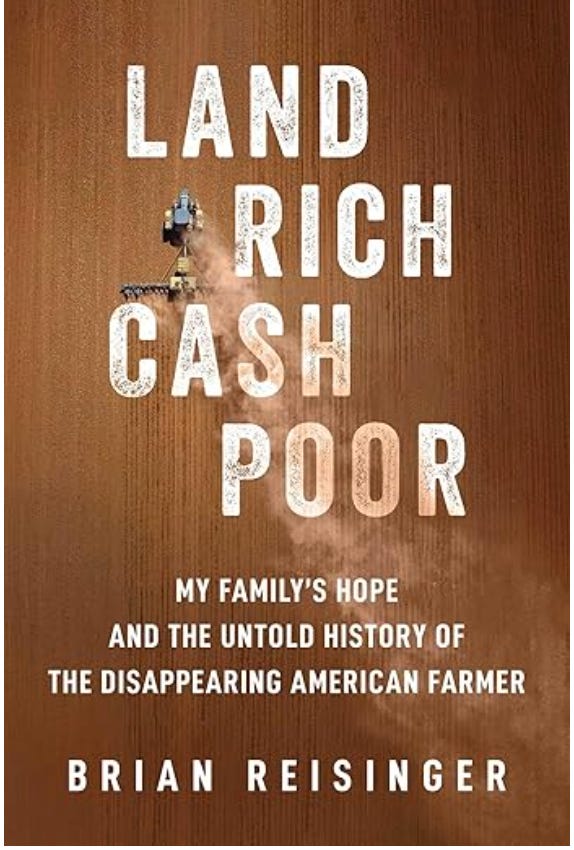
Land Rich, Cash Poor: My Family’s Hope and the Untold History of the Disappearing American Farmer by Brian Reisinger
As a new farmer in southwest Wisconsin, I read this book as a cautionary tale as well as motivation to keep doing what we are doing – trying to create a model for a mid-sized farm based on a regenerative, diversified operating plan. This story is told well. It is both personal and family memoir as well as a history of the ups and downs of the societal and geopolitical issues that have greatly impacted the American farmer over the past hundred years. Required reading for the frustrated citizen wondering how we got to this point!!
The hidden history of an economic and cultural catastrophe that is threatening our very food supply—the disappearance of the American farmer.
Taking on this story of heart and hardship, award-winning journalist Brian Reisinger weaves forgotten eras of American history with his own family’s four-generation fight for survival in Midwestern farm country. Readers learn the truth about America’s most detrimental and unexplained socioeconomic How the family farms that feed us went from cutting a middle-class path through the Great Depression to barely making ends meet in modern America. Along the way, they’ll see what it truly takes to feed our accidents that can kill or maim; weather that blesses or threatens; resilience in the face of crushing economic crises, from inflation to COVID-19; and the tradition that presses down on each generation when you’re not just fighting for your job, you’re fighting for your heritage.
With newly analyzed data, sharp historical analysis, honest debate, and personal storytelling, Reisinger reveals the roots of a problem with stakes as high as they come. A vulnerable food supply, soaring prices for American families, environmental and ecological decay, farmer suicides, addictions, a deepening urban-rural divide, and more worries than ever about what’s for dinner. These are all becoming the hallmarks of a food system that has long stood as a modern miracle. Land Rich, Cash Poor offers the honest truth about these issues, and a candid look at what we can do about them—before it’s too late.
https://jeanneblasberg.com/wp-content/uploads/2024/09/book-review-jeanne-blasberg.png200300jbadmin/wp-content/uploads/2018/12/blasberg-logo.svgjbadmin2024-09-25 12:34:232024-09-25 14:46:52Land Rich, Cash Poor: My Family’s Hope and the Untold History of the Disappearing American Farmer by Brian Reisinger
We may request cookies to be set on your device. We use cookies to let us know when you visit our websites, how you interact with us, to enrich your user experience, and to customize your relationship with our website.
Click on the different category headings to find out more. You can also change some of your preferences. Note that blocking some types of cookies may impact your experience on our websites and the services we are able to offer.
Essential Website Cookies
These cookies are strictly necessary to provide you with services available through our website and to use some of its features.
Because these cookies are strictly necessary to deliver the website, refusing them will have impact how our site functions. You always can block or delete cookies by changing your browser settings and force blocking all cookies on this website. But this will always prompt you to accept/refuse cookies when revisiting our site.
We fully respect if you want to refuse cookies but to avoid asking you again and again kindly allow us to store a cookie for that. You are free to opt out any time or opt in for other cookies to get a better experience. If you refuse cookies we will remove all set cookies in our domain.
We provide you with a list of stored cookies on your computer in our domain so you can check what we stored. Due to security reasons we are not able to show or modify cookies from other domains. You can check these in your browser security settings.
Other external services
We also use different external services like Google Webfonts, Google Maps, and external Video providers. Since these providers may collect personal data like your IP address we allow you to block them here. Please be aware that this might heavily reduce the functionality and appearance of our site. Changes will take effect once you reload the page.
Google Webfont Settings:
Google Map Settings:
Google reCaptcha Settings:
Vimeo and Youtube video embeds:
Privacy Policy
You can read about our cookies and privacy settings in detail on our Privacy Policy Page.