Learning a New Language: The Lexicon of the Farm
The essay “Learning a New Language: The Lexicon of the Farm” originally appeared on Jeannie’s Substack. Subscribe here for monthly updates!
It’s no surprise to learn I love language, but what if I told you I’ve been struggling with new vocabulary? … the lexicon of the farm.
I’m back on the farm after an action-packed ten days in Boston! I attended GrubStreet’s Muse & The Marketplace and and taught a craft session on Making Ancient Texts Your Own, in other words, writing retellings. GrubStreet and Porter Square Books hosted a launch party for Daughter of a Promise at the Calderwood Writers’ Stage. (If you missed it, you can watch a replay on my YouTube channel!) I attended book clubs and galas where my book was featured and had the joy of discussing my novel’s themes at Temple Israel, Boston. The best part, as always, was reconnecting with friends: the dinners, walks, and squash games!!
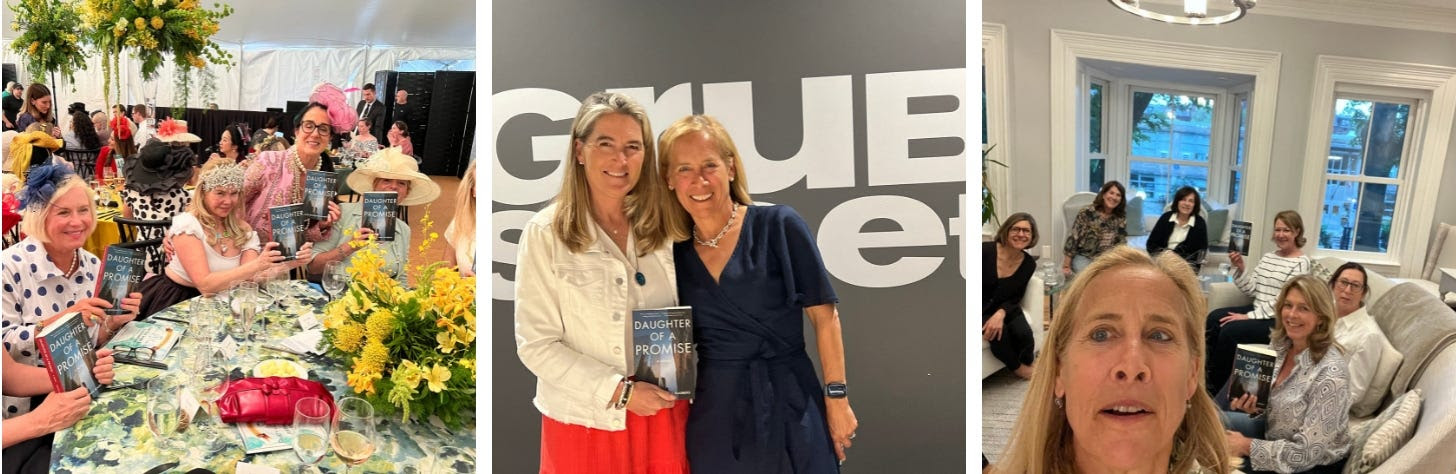
Party in the Park, Kathy Sherbrooke and me on the Grub Street stage, a favorite bookclub!!
I returned to Wisconsin in time to experience tornado warnings and bunkering in our basement. Phew, our newly arrived sheep are okay, but the storms will be a topic for a future essay, because today I planned to write about language. It’s no surprise to learn I love language, but what if I told you I’ve been struggling with new vocabulary? It’s not during my Spanish lessons, or with the NYT crossword puzzle, but the lexicon of the farm.
I can’t be too hard on myself, as it’s coming with firehose velocity: new names, terms, and expressions. The most sacred, in my opinion, belong to the birds I’ve identified using Cornell’s Merlin app. I record their songs every morning to catalog who’s passing through our prairie. Today I added a Yellow-bellied Flycatcher to the list. (Have a listen.) The idea is that consistent, albeit amateur data collection will show our land management techniques are leading to increased biodiversity, with birds as a bellwether.

Great forage for our new sheep, spring status of veggie beds, our new Dorpers
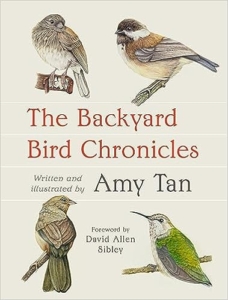
You will be blown away by Tan’s illustrations
Literary tangent – I am absolutely adoring Amy Tan’s new release The Backyard Bird Chronicles in which she writes, “…my impulse to observe birds comes from the same one that led me to become a fiction writer. By disposition, I am an observer. I want to know why things happen… I am drawn to see details, patterns, and aberrations that suggest a more interesting truth….”
Tan’s words resonated with me. (I was jumping in my seat, thinking me too! me too!) During the pandemic, many of us reconnected with nature, as a result birding may be at an all-time high. For my list-oriented brain, observing and identifying animals feels like a comfortable portal into a life on the land. Along with birds, I’m identifying plants (and weeds) using the Seek app from iNaturalist. I’ve gotten to the stage where I quiz myself as I walk about. The only problem is that plants look different every couple of days!!
It’s not just fluency I’m after but a need to communicate.
It’s not just fluency I’m after, but a need to communicate. Interacting with our farm managers, our crew, our neighbors, consultants in forestry and landscaping, earth movers and engineers can feel like listening to insiders’ shorthand with me interrupting every few sentences for a translation. These folks are competent regarding not only flora and fauna but with regard to the names of the tools, farming methods, farm vehicles, tractors and all the implements that are attached to them.
My neighbor to the north has owned her farm for decades, home-birthed her five children there, raised animals, drives tractors, and takes midnight joy rides in her gator during the full moon. She rattles off the names of every berry, shrub, and edible mushroom, solutions for weed suppression, when to mow to eradicate them. I’m like the person who was supposed to take six months of intensive Berlitz before heading off on a foreign assignment, yet as in any decent nightmare, I’ve arrived in the strange land where my mouth moves and no sound comes out. My neighbor kindly changes the topic from foraging for morels to her favorite restaurants in town.
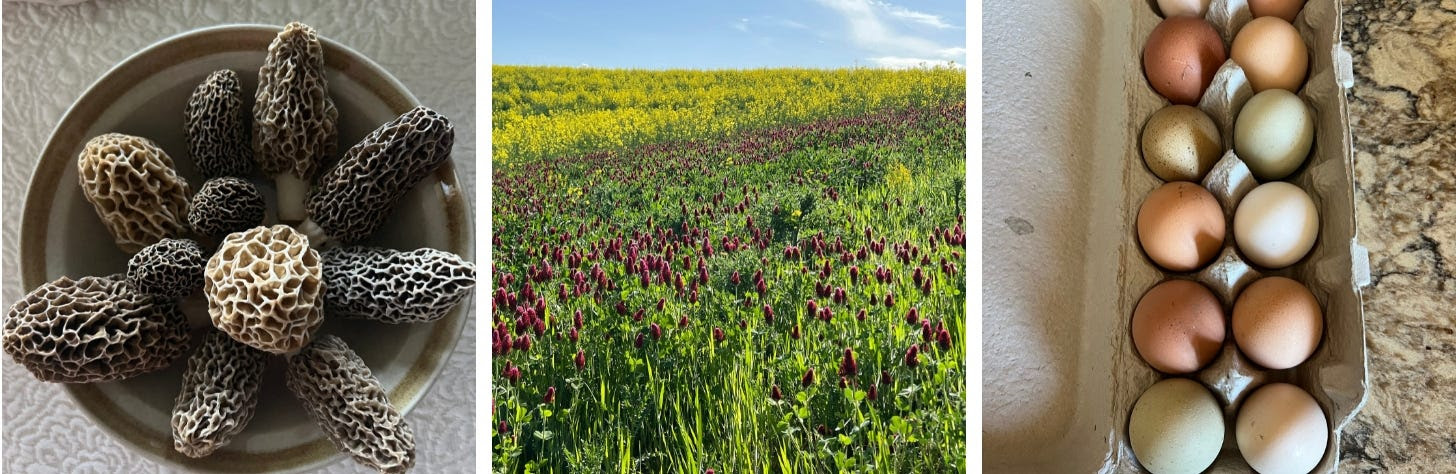
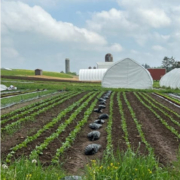
Favorite springtime farm features include foraged morels, the color of the prairie, and fresh turkey eggs from our wonderful neighbor (also she found the morels!!)
Let’s face it, knowing the lingo is the first step toward shedding the feeling of imposter, somebody who’s landed on a beautiful piece of Wisconsin farmland without a clue. And just when I think I’m making headway, I’m on a walk with a logger and refer to the cedar grove as the cyprus grove and lose all credibility. I can talk the talk in a domesticated, cultivated garden, but a regenerative farm is all about knowing what is indigenous and what is invasive and culling out the latter.
…learning this language is not purely academic: it goes hand in hand with getting dirty.
Topics I have blundered my way through in the past two years: The engineering of wells and stormwater retention ponds, paths of erosion, grading, and gravel. Solar power and battery storage, compost and chicken manure, fencing, cover crop and crop cover, high tunnels, caterpillar tunnels, transplants, seedlings, cold houses and hot houses, seed variety, skid steers, water wheel transplanters and rinse conveyors. Every construction project in my past involved professionals whose job it was to take care of the pesky details. But a responsible agricultural steward (me) needs to be on top of all the above. I now find myself in a community of extremely self-reliant people where one’s street cred goes way down when the amount of horsepower for each of your tractors isn’t on the tip of your tongue.
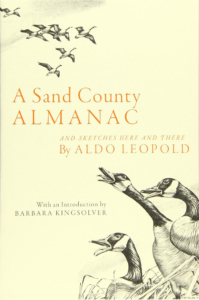
A lyrical classic
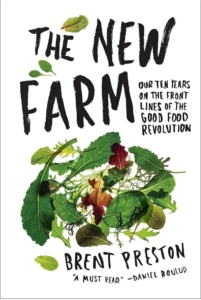
A funny book. You’d be crazy to get into farming after reading it!
An agitating treatise
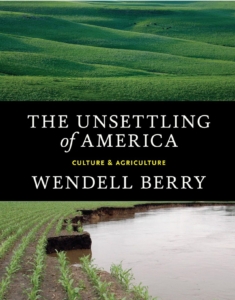
While I may have once pictured myself reading Aldo Leopold and Wendell Berry, canning tomatoes, preserving berries, meditating to birdsong, and doing yoga on our screened porch, learning this new language is not purely academic: it goes hand in hand with getting dirty. As I manager the tension between experiencing the bucolic and doing the work… I remember Amy Tan’s mantra to “be the bird.”
Do you operate in a world with a unique language? Make me feel better and tell me your story!!