Tag Archive for: book reviews

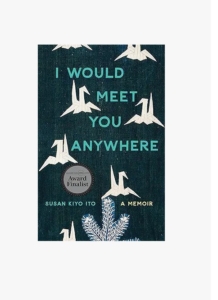
I Would Meet You Anywhere by Susan Kiyo Ito

I Would Meet You Anywhere by Susan Ito

A well-written and powerful memoir – not just about a young woman’s quest to reunite with her birth family, but her vulnerability and willingness to subjugate her emotional needs in order to maintain a relationship with them. Susan Kiyo writes in a clear and sharp style and offers through her writing a warning for all people to not subject themselves to narcissistic, emotional tyranny.

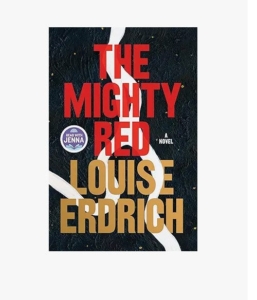
The Mighty Red by Louise Erdrich


 I loved the way this story unfolds. Set in a farming community in the Red River Valley of North Dakota, families come together in sorrow and financial hardship in a novel that is full of wonderful characters as well as literary references. An awful accident occurred before the action of the novel begins however, the haunting ramifications of that night ripple into everything. The reader becomes increasingly aware that the details of the accident must 

be reckoned with just as the farmers’ increasing use of chemical-rich farming practices. The characters are living in a toxic place – both environmentally and emotionally. In addition, the novel is set during the 2008/2009 financial crisis adding additional stress and sub-plots. This novel was powerful and entertaining in equal measure.

Review of RENTAL HOUSE by Weike Wang

This review of Rental House by Weike Wang was originally published in the New York Journal of Books.

Rental House by Weike Wang

“throws out traditional expectations and homogeneity and relies on determination and compassion to make random pieces of a puzzle crazily connect.”

Rental Houseexplores a young couple’s marriage and what keeps them together despite the baggage they carry from their families of origin. It is a lovely, literary novel, set around two extended vacations, five years apart. Messily reckoning with their upward mobility, Keru and Nate escape Manhattan first by renting a vacation home on Cape Cod and later in the Catskills, with an obligatory hosting of family each time. With humor and insight, Wang stretches out domestic entanglements and studies cultural differences by contrasting the two sets of parents.  Just as with real-life extended stays with parents and in-laws,Rental Houseis not so much about the action, but the hilarious subtext.

To give the relationship context, Wang seamlessly intersperses the action with backstory. Keru and Nate meet by happenstance at a college Halloween party. She is post-break-up,  determined not to wallow in misery, and seeks out fun in her dorm. “There were parties on every floor, this person told her, slumped against a banister, already drunk. She went down a random hall, through a random open door, and into a random room that had loud music, a large crowd, and a guy in a corner strapped to a homemade shark fin, dancing poorly by himself.” Despite the randomness of everything leading up to their coupling, their union and extended family reads as inevitable, even representative of the times. Keru asks Nate at the same party, “I have no family connections or generational wealth. But I’m determined to build a life worth the trials it took my parents and me to get here. You with me, Nate the great white?”

She is the daughter of Chinese immigrants who never assimilated in their home state of Minnesota. “[They] had voluntarily left a place of many Asians for a place with few. In their minds, too many Asians in an area was not ideal, and could only draw dissent or hate from the locals, as inLook, here comes another overqualified Asian to steal a specialized job that no one really wants.”

Nate is from rural Appalachia, “a poor white from nowhere and the first in his family to go to college.” He shuns his parents’ wish for him to be a lawyer—“Won’t it be nice to have a lawyer in the family?”—and enters academia. Keru works in consulting, becoming the marriage’s primary earner. She is an only child who vacillates between rebuffing a bigger family and craving one. They decide not to have children, withstanding judgment by their contemporaries and their family, and instead heap their nurturing affection on a large sheep dog named Mantou.

Wang’s concise language and sharp observations culminate in numerous humorous scenes. While prepping the Cape rental for the parents to descend, “Another topic was whose parents were more difficult. Each side made a strong case for their own, but this was pure anxiety talking and the answer didn’t really matter.” Keru’s family arrives first, having driven nonstop fully masked and gloved, inspecting the safety of the home before being willing to enter. “Nate’s presence went mostly unacknowledged.” The history is that before Keru’s father blessed their engagement he insisted Nate be debt-free. “You are not to marry into this family until they have paid off every cent of that debt themselves. We are not here to bail them out.” From there Keru had three options. She and Nate could break up or elope, or she could use her own savings, the entirety of it, to pay off his loan in full.” She pays it herself, and when she tells her father the debt is gone, he says, “His parents came through, didn’t they? For Keru’s father did not believe in the existence of an entrenched white family without money, and Keru had given up convincing him otherwise.”

When it was Nate’s parent’s turn to visit, the conversation was dominated by his mother’s circumspect racism. “While Nate and Keru were still dating, she also had questions: What kind of immigrants are they, what kind of Chinese people? Are they Christians? Do they believe in God? Did they enter the country the right way? Are her parents citizens? Is Keru a citizen? Do they feel more American or Chinese? Do they speak Chinese around you? Do they know you don’t understand Chinese? Have you asked? How is that offensive? You just explain, very politely, that we speak only English around Keru and expect Keru to speak only English around us.”

Five years later, approaching Keru’s 40th birthday, their marriage is in a slump and they rent in the Catskills. Keru is the one to make all the plans. “[She] had set out to make money and that was what she’d done, but more and more she sensed that Nate resented her for making money, even though this money helped both them and his mother. Money was her shield, how she measured her worth, and unwilling to stop making it, Keru weighed how much resentment she could stand.”

The pressures she lives with does have an escape valve in her quirky propensity to spontaneously hurl objects ranging from coasters at the Halloween party, to rocks in the direction of bathers on the beach, to an axe laden with a flaming piece of wood into the kitchen of the Cape rental. By the time they are in the Catskills, Keru can turn her rage on and off, recognizing that throwing her phone and smashing it “against a quartz countertop until the screen turns to confetti” would only result in having to “go to the Apple store and make up some story about how her phone was run over by a car.”

Despite different backgrounds that could grow into great obstacles, Keru and Nate have unique yet complementary childhood wounds. Their wounds and quirks keep them together, exemplifying a new “American family”: one that throws out traditional expectations and homogeneity and relies on determination and compassion to make random pieces of a puzzle crazily connect.


If you enjoyed Jeannie’s review of Colored Television, read more of her book reviews on her blog, on Goodreads or StoryGraph, or on the New York Journal of Books. For more TBR inspiration, check out Jeannie’s curated book lists at Bookshop.org and Shepherd.com


Days of Wonder by Caroline Leavitt

This novel hooked me from the beginning with its premise of a young woman serving time for a crime she did not commit. Upon release from prison, she must rebuild her life but also gather the pieces of what led to her incarceration. She gave birth and relinquished a child while in prison, she lost the love of a young man, she had to reconcile a difficult relationship with her mother. Answering the question, what does it take to be forgiven, this novel is well written with plenty of twists to keep you turning the page.


If you enjoyed Jeannie’s review of  Days of Wonder, read more of her book reviews on her blog, on Goodreads or StoryGraph, or on the New York Journal of Books. For more TBR inspiration, check out Jeannie’s curated book lists at Bookshop.org and Shepherd.com

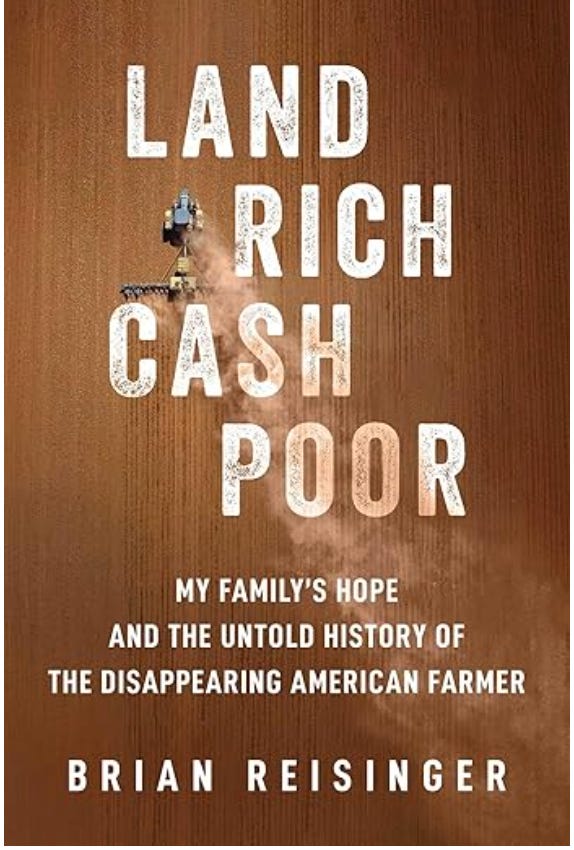
Land Rich, Cash Poor: My Family’s Hope and the Untold History of the Disappearing American Farmer by Brian Reisinger

Land Rich, Cash Poor: My Family’s Hope and the Untold History of the Disappearing American Farmer by Brian Reisinger

land-rich-cash-poor-brian-reisinger-book-review-jeanne-blasbergAs a new farmer in southwest Wisconsin, I read this book as a cautionary tale as well as motivation to keep doing what we are doing – trying to create a model for a mid-sized farm based on a regenerative, diversified operating plan. This story is told well. It is both personal and family memoir as well as a history of the ups and downs of the societal and geopolitical issues that have greatly impacted the American farmer over the past hundred years. Required reading for the frustrated citizen wondering how we got to this point!!

bookshop-support-local-bookstores


About Land Rich Cash Poor:

The hidden history of an economic and cultural catastrophe that is threatening our very food supply—the disappearance of the American farmer.

Taking on this story of heart and hardship, award-winning journalist Brian Reisinger weaves forgotten eras of American history with his own family’s four-generation fight for survival in Midwestern farm country. Readers learn the truth about America’s most detrimental and unexplained socioeconomic How the family farms that feed us went from cutting a middle-class path through the Great Depression to barely making ends meet in modern America. Along the way, they’ll see what it truly takes to feed our  accidents that can kill or maim; weather that blesses or threatens; resilience in the face of crushing economic crises, from inflation to COVID-19; and the tradition that presses down on each generation when you’re not just fighting for your job, you’re fighting for your heritage.

With newly analyzed data, sharp historical analysis, honest debate, and personal storytelling, Reisinger reveals the roots of a problem with stakes as high as they come. A vulnerable food supply, soaring prices for American families, environmental and ecological decay, farmer suicides, addictions, a deepening urban-rural divide, and more worries than ever about what’s for dinner. These are all becoming the hallmarks of a food system that has long stood as a modern miracle. Land Rich, Cash Poor offers the honest truth about these issues, and a candid look at what we can do about them—before it’s too late.

If you enjoyed Jeannie’s review of Colored Television, read more of her book reviews on her blog, on Goodreads or StoryGraph, or on the New York Journal of Books. For more TBR inspiration, check out Jeannie’s curated book lists at Bookshop.org and Shepherd.com

Colored Television by Danzy Senna

This review of Colored Television by Danzy Senna was originally published in the New York Journal of Books.

Colored Television by Danzy Senna
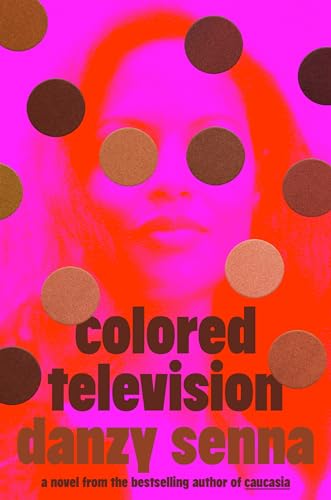
colored-television-danzy-senna-book-review-jeanne-blasbergColored Television is a sharp, comedic novel about the competing drives to make money and make art in one woman’s pursuit of her “American Dream.” Most of all, it is a novel that explores race and racial identities, portraying protagonist Jane, a mixed-race middle-aged mother, as she struggles for belonging in a society that seems either black or white. The mixed-race (white and Black) experience defines her life’s work, writing for the prior decade what her husband, Lenny, terms her “Mulatto War and Peace,” as well as how she thinks of her life, being born into an in-between place, perennially straddling a gap. Her actions in the novel are motivated by a desire for rootedness, epitomized by her young eyes in the perfect pages of home décor catalogs, and later manifested as a craftsman-style home surrounded by a picket fence, owning a labradoodle, in “Multiracial Mulberry,” where she’d be able to send her two children, Ruby and Finn, to a “blue-ribbon” public school.

Her character waffles between grit and confidence and an underlying insecurity that stems from her parents “[raising] her and her sister in a ghetto of artists and poets, guaranteeing that they would be alienated from rich children and poor children alike, thanks to a cultural and political vocabulary that suggested class and privilege without actual class and privilege – gauche caviar without the actual caviar. Jane remembered wishing at a certain point, Ruby’s age maybe, that she came from a dignified working-class immigrant family. Her kind of poverty was the loneliest kind, the least dignified kind, because her parents had chosen it. They had picked poetry over profit.”

In addition, she reflects on her own grade school experience as her daughter is the same age as when “Jane and her sister had been part of a program called METCO that bused a select group of Black children—a talented two percent as it were—from the inner city of Boston to the suburbs. Not too many, just enough to sprinkle those suburban white schools with seasoning. Jane had been sent to a school in Brookline, where she made a friend, a wan white girl with a funny laugh named Emma.”

A particularly poignant scene drives home Jane’s yearning on behalf of her children. She hosts Ruby’s birthday party in the glitzy home in which they are house-sitters, joined by guests they have met only recently, and presents her daughter with an expensive American Girl doll the family can’t afford, sending Ruby up to her bedroom in tears because if it was going to be her only American Doll she didn’t want the dark-skinned one.

It is Jane’s desire to provide stability for her children that makes her often cringe-worthy tactics redeemable. She is an academic on sabbatical aiming to finish her long-awaited second novel, the publication of which will help her rise in status at the college where she teaches, allowing her family to stop bouncing around Los Angeles in sublets and borrowed spaces.

“an important book by an important author who understands only too well that heavy topics are most accessible when delivered with a spoonful of sugar.”

As Danzy Senna’s novel opens, Jane sits in her friend’s borrowed home, in his borrowed office and borrowed desk, drinking up his wine and wearing his wife’s clothing. She finally feels motivated, gaining steam and ambition with the completion of her novel in sight, adding complexity to this multilayered opus that weaves together past and present voices of the mixed-race experience.

In the weeks between the submitted manuscript first impressing her agent (who obviously had yet to read it) and being brutally rejected by her editor, she indulges in optimistic house-hunting and spending. After accepting the rejection, although hiding it from her husband, she musters an earnest instinct to hustle, albeit dishonestly, justifying her actions as necessary to salvage her dreams for her family.

Jane is a complex yet sympathetic protagonist for whom the reader roots while also feeling dread as she lies to Lenny, pitches her friend’s TV agent, avoids his texts and calls, then takes meetings with players in the industry under false pretenses. Her idea is to turn the underlying themes of her novel into a comedic series, and she wins the opportunity to work with the up and coming showrunner, Hampton Ford. He is a Black man who senses he is benefitting from “a moment” and operates with the urgency to not squander the opportunity.

Together, they have high hopes of delivering something meaningful and profound that will push the TV watching public to be entertained by racial truths. When Jane feels guilt over her tenuous path, she justifies her actions by fixating on Lenny’s inability to make money from his art and the ticking clock of needing to find a home for her family. Jane’s father had instilled in her “Race is about money and money is about race. Black people don’t want to be white, they just want what white people have.”

Danzy Senna’s observant eye and humor result in many brilliant, laugh-out-loud moments. Whether it be with regard to the arduous journey of the novelist as compared to the faster roll-out of TV shows, Jane’s insecurity in the face of her son’s special needs diagnosis, the absurdity of Los Angeles’s special brand of superficiality, or the way she used a psychic to help snare Lenny as her husband, this novel uses comedy to deliver the racial truths Jane had hoped a future TV series might.

Don’t let the comedic epitaph fool you. This is an important book by an important author who understands only too well that heavy topics are most accessible when delivered with a spoonful of sugar.

bookshop-support-local-bookstores

About Colored Television:

A brilliant dark comedy about second acts, creative appropriation, and the racial identity–industrial complex.

Jane has high hopes her life is about to turn around. After years of living precariously, she, her painter husband, Lenny, and their two kids have landed a stint as house sitters in a friend’s luxurious home high in the hills above Los Angeles, a gig that coincides magically with Jane’s sabbatical. If she can just finish her latest novel, Nusu Nusu, the centuries-spanning epic Lenny refers to as her “mulatto War and Peace,” she’ll have tenure and some semblance of stability and success within her grasp. But things don’t work out quite as hoped. In search of a plan B, like countless writers before her Jane turns her desperate gaze to Hollywood. When she finagles a meeting with a hot young producer with a seven-figure deal to create “diverse content” for a streaming network, he seems excited to work with a “real writer” to create what he envisions as the greatest biracial comedy ever to hit the small screen. Things finally seem to be going right for Jane—until they go terribly wrong. Funny, piercing, and page-turning, this is Senna’s most on-the-money novel yet.

If you enjoyed Jeannie’s review of Colored Television, read more of her book reviews on her blog, on Goodreads or StoryGraph, or on the New York Journal of Books. For more TBR inspiration, check out Jeannie’s curated book lists at Bookshop.org and Shepherd.com

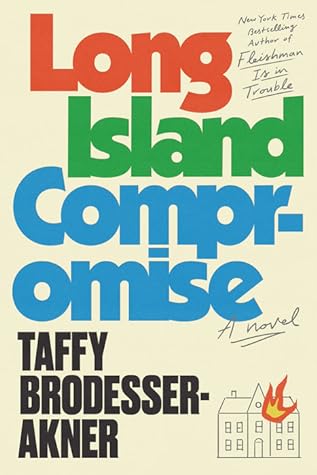
Long Island Compromise by Taffy Brodesser-Akner

Long Island Compromise by Taffy Brodesser-Akner

long-island-compromise-taffy-brodesser-akner-jeanne-blasberg-book-reviewI loved this novel for its sharp, whip-smart observations and turns of phrase. I love a book with funny, revelatory descriptions and this one delivers. It is a simple plot that is basically an excuse to delve into the theme of generational inheritance and trauma. The Fletcher family is scarred by their father’s kidnapping, their inherited wealth, as well as the toxicity of the family business – a styrofoam factory. The character development is thorough with each sibling getting a good chunk of ink, allowing for the nuclear family described from various angles and points in time. We also see the family characters as they bump up against the outside world – employers, spouses, love interests, friends, and employees. These scenes offer comedic dialogue, examples of paranoia, neurosis, and guilt – scenes which the author has great skill in painting to the extent they could be laugh out loud funny and cringe-worthy at the same time. The reader deduces from the opening pages that this is a doomed family, the novel portraying their fall from grace, nevertheless there is so much intelligent language and observation to be soaked up from every page. Highly recommend.
bookshop-support-local-bookstores

About Long Island Compromise:

NATIONAL BESTSELLER • An exhilarating novel about one American family, the dark moment that shatters their suburban paradise, and the wild legacy of trauma and inheritance, from the New York Times bestselling author of Fleishman Is in Trouble

New York Times Book Review Editors’ Choice • New York Magazine’s Beach Read Book Club Pick • Belletrist Book Club Pick

“A big, juicy, wickedly funny social satire . . . probably the funniest book ever about generational family trauma.”—Oprah Daily

“Were we gangsters? No. But did we know how to start a fire?”

In 1980, a wealthy businessman named Carl Fletcher is kidnapped from his driveway, brutalized, and held for ransom. He is returned to his wife and kids less than a week later, only slightly the worse, and the family moves on with their lives, resuming their prized places in the saga of the American dream, comforted in the realization that though their money may have been what endangered them, it is also what assured them their safety.

But now, nearly forty years later, it’s clear that perhaps nobody ever got over anything, after all. Carl has spent the ensuing years secretly seeking closure to the matter of his kidnapping, while his wife, Ruth, has spent her potential protecting her husband’s emotional health. Their three grown children aren’t doing much better: Nathan’s chronic fear won’t allow him to advance at his law firm; Beamer, a Hollywood screenwriter, will consume anything—substance, foodstuff, women—in order to numb his own perpetual terror; and Jenny has spent her life so bent on proving that she’s not a product of her family’s pathology that she has come to define it. As they hover at the delicate precipice of a different kind of survival, they learn that the family fortune has dwindled to just about nothing, and they must face desperate questions about how much their wealth has played a part in both their lives’ successes and failures.

Long Island Compromise spans the entirety of one family’s history, winding through decades and generations, all the way to the outrageous present, and confronting the mainstays of American Jewish life: tradition, the pursuit of success, the terror of history, fear of the future, old wives’ tales, evil eyes, ambition, achievement, boredom, dybbuks, inheritance, pyramid schemes, right-wing capitalists, beta-blockers, psychics, and the mostly unspoken love and shared experience that unite a family forever.

Read more of Jeannie’s Reviews on her blog, on Goodreads or StoryGraph, or on the New York Journal of Books. For more TBR inspiration, check out Jeannie’s curated book lists at Bookshop.org

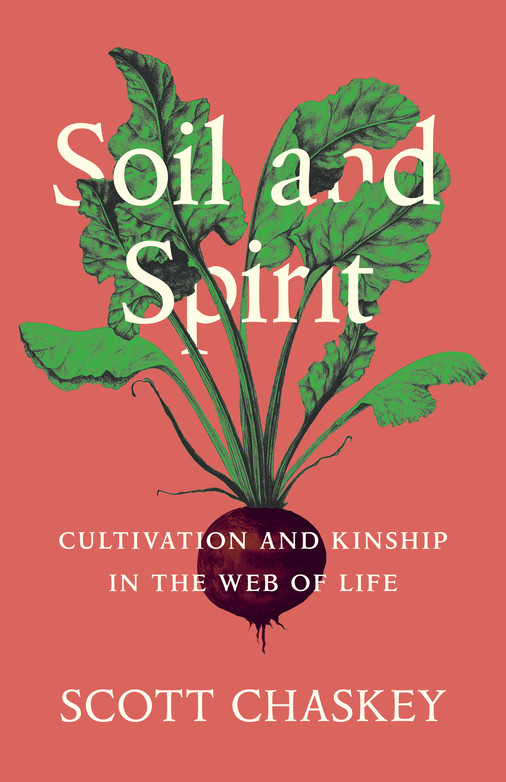
Soil and Spirit by Scott Chaskey

Soil and Spirit: Cultivation and Kinship in the Web of Life by Scott Chaskey

soil-and-spirit-scott-chasky-jeanne-blasberg-book-reviewI listened to the audio version of this book of essays as I walked our farm in the afternoons. Scott Chaskey’s reading voice as well as his poetic prose provided a meditative and spiritual accompaniment to those outings. These essays honor his work as well as the work of many land and seed stewards across the globe. They were also accessible to people who aren’t in farming as well and touched this beginning farmer in a way that sparked a sense of knowing and curiosity.
bookshop-support-local-bookstores


About Soil and Spirit:

As a farmer with decades spent working in fields, Scott Chaskey has been shaped by daily attention to the earth. A leader in the international Community Supported Agriculture (CSA) movement, he has combined a longstanding commitment to food sovereignty and organic farming with a belief that humble attention to microbial life and diversity of species provides invaluable lessons for building healthy human communities.

Along the way, between “planning the rotations of fields, ordering seeds and supplies, and watching the weather,” Chaskey was “always writing, poetic stanzas or pages to piece together a book.” And in this lively collection of essays, he explores the evolution of his perspective–as a farmer and as a poet. Tracing the first stage in his development back to a homestead in Maine, on the ancestral lands of the Abenaki, he recalls learning to cultivate plants and nourish reciprocal relationships among species, even as he was reading Yeats and beginning to write poems. He describes cycling across Ireland, stopping to taste blackberries and linger in the heather before meeting Seamus Heaney, and farming in Cornwall’s ancient landscape of granite, bramble, and twisted trees. Later in life, he travels to China for an international conference on Community Supported Agriculture, reading ancient wilderness poetry along the way, and then on to the pueblo of Santa Clara in New Mexico, where he joins a group of Indigenous women harvesting amaranth seeds. Closer to home on the Southfork of Long Island, he describes planting redwood saplings and writing verse in the shade of an ancient beech tree.

“Enlivened by decades of work in open fields washed by the salt spray of the Atlantic”—words that describe his prose as well as his vision of connectedness—Scott Chaskey has given us a book for our time. A seed of hope and regeneration in a time of widespread despair.

Read more of Jeannie’s Reviews on her blog, on Goodreads or StoryGraph, or on the New York Journal of Books. For more TBR inspiration, check out Jeannie’s curated book lists at Bookshop.org

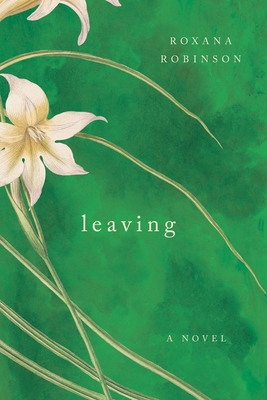
Leaving by Roxana Robinson

Leaving by Roxana Robinson

leaving-roxana-robinson-jeanne-blasberg-book-review** spoiler alert ** So many people I admire gushed over this book and so I began this book with high hopes. It certainly has good qualities, the language and the voice are strong. This is the story of a couple who had been together in college finding each other again after thirty or forty years and the man, Warren, leaves his wife to be with the woman, Sarah. Their relationship becomes a long, painful, dead-end street. That aside, I couldn’t reconcile Sarah’s character – she was attracted to Warren and pleased he was pursuing her, but never seemed willing to totally commit to moving somewhere to be with him or to share her home with him. She was rigid and and unwilling to compromise and yet when Warren breaks it off it’s like her world has come to an end. Her thoughts and reactions were misaligned. In addition, the author could be repetitive, harping on for pages and pages. There is a good bit of the book dedicated to the main characters’ relationships with their children, the through lines of which got lost for me. I wont be one of those reviewers who complains about not liking the characters, but there were three in this book I just couldn’t listen to any longer.

bookshop-support-local-bookstores


About Leaving:

What risks would you be willing to take to fall in love again?

“I never thought I’d see you here,” Sarah says. Then she adds, “But I never thought I’d see you anywhere.” Sarah and Warren’s college love story ended in a single moment.

Decades later, when a chance meeting brings them together, a passion ignites―threatening the foundations of the lives they’ve built apart. Since they parted in college, each has married, raised a family, and made a career. When they meet again, Sarah is divorced and living outside New York, while Warren is still married and living in Boston.

Seeing Warren sparks an awakening in Sarah, who feels emotionally alive for the first time in decades. Still, she hesitates to reclaim a chance at love after her painful divorce and years of framing her life around her children and her work. Warren has no such reservations: he wants to leave his marriage but can’t predict how his wife and daughter will react.

As their affair intensifies, Sarah and Warren must confront the moral responsibilities of their love for their families and each other. Leaving charts a passage through loyalty and desire as it builds to a shattering conclusion.

In her boldest and most powerful work to date, Roxana Robinson demonstrates her “trademark gifts as an intelligent, sensitive analyst of family life” (Wendy Smith, Chicago Tribune ) in an engrossing exploration of the vows we make to one another, the tensile relationships between parents and their children, and what we owe to others and ourselves.

Read more of Jeannie’s Reviews on her blog, on Goodreads or StoryGraph, or on the New York Journal of Books. For more TBR inspiration, check out Jeannie’s curated book lists at Bookshop.org

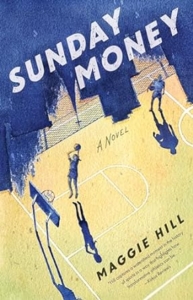
Sunday Money by Maggie Hill

Sunday Money by Maggie Hill

sunday-money-by-maggie-hill-book-review-jeanne-blasberg

Sunday Money is such a well-written book. I rooted for Claire as she navigated teenage struggle and coming of age. New York in the 197o’s is a great back drop, as is the sport of basketball. As a lifelong woman athlete, I love to see these stories being told. I will be recommending this novel!

bookshop-support-local-bookstores


About Sunday Money:

It’s 1971, but for Claire Joyce and girls’ basketball, it might as well be 1871. Stilted rules (three-bounce dribbling, two roving players for full-court games, and uniforms that include bloomers) set their play unfairly apart from the boys’ basketball Claire’s older brother John has trained her in.

Basketball is the only constant in Claire life, and as she enters her teen years the skills she’s cultivated on the court—passing, shooting, and faking—help her guard against the chaos of an alcoholic mother, an increasingly violent younger brother, and the downward spiral her beloved John soon finds himself unable to climb out of. Deeply cut from the cloth of the Catholic Church, Brooklyn’s working class, and the limited expectations her world has for girls, Claire strives to find a mirror that might reflect a different, future self. Then Title IX bounces on the scene. Suddenly, girls’ basketball becomes explosive, musical, passionate, and driven—and if Claire plays it just right, it just might offer a full ride to a previously out-of-reach college.

Sunday Money follows Claire as she narrates her way through 1970s Brooklyn, hustling on and off the court and striving to break free of the turmoil in her home and the rulebook “good” girls are supposed to follow.


Read more of Jeannie’s Reviews on her blog, on Goodreads or StoryGraph, or on the New York Journal of Books. For more TBR inspiration, check out Jeannie’s curated book lists at Bookshop.org