Tag Archive for: boston

Why Farming? Looking Back to Move Forward

The essay “Why Farming? Looking Back to Move Forward” originally appeared on Jeannie’s Substack. Subscribe here for monthly updates!

Last month’s newsletter addressed “Why Wisconsin?” but I probably should have answered this one first,  “Why Farming?”

There are many possible answers …. some I use to satisfy people who need a logical explanation because the truth to “why farming?” is still slowly revealing itself. Would it make sense if I told you John and I had an idea, and given our health, energy and resources felt prepared for an ambitious next act, so we took the leap into something we knew embarrassingly little about, only to later understand why it was meant to be?

Writing and publishing has inured me to fear and helped me develop very personal definitions around what is success and what is failure. Writing and farming both require listening and openness, both require approaching the world with a creative mindset.

THE ILLUMINATION CODE by Kim Chestney encourages finding spaciousness and stillness in order to connect with your innate wisdom and intuition. During COVID, we achieved something akin to that right brain focus while driving thousands of miles around the country, imagining our future. In her book, Chestney makes the point we are all connected by universal energy and a piece of each of us simply knows… everything. She explains “When you activate your connection to the nonlocal dimension, you open up your faculties of sensing, thinking and feeling as channels for expansive information sharing. In this way, the universe becomes a kind of guide, constantly course correcting toward its implicit truth.” I don’t mean to claim farming is our truth, but we are becoming more and more certain it is a critical next step on our path.
Listen:

Write-your-own-story-podcast-wisdom-wellness-and-main-character-energy-with-jeanne-blasberg

Many have stopped reading by now or are shaking their heads, but I believe it requires a rearview mirror perspective to comprehend the plan. Also, it requires an understanding that our journeys are not linear. So, while it is extremely validating to feel healing and peace on the farm at present, there were also clues in my past that I can now point to:

  • An obsession with my vegetable garden and growing food for my family
  • the way references to Madison, WI inexplicably made my ears perk up as, it was more than a curious sensation, but something inside that said “take note.” It was the same when my husband told me we had the opportunity to move to Switzerland. In my mind’s eye I already knew it was going to happen.
  • John and I talking for decades about starting a business in the health and wellness space, or the food space, or creating healthy consumer products, maybe something plant based….
  • A lack of trust in the food system, lending to a dysfunctional relationship with food.
  • A deep concern for the environment,
  • As a little girl, dreaming of being a scientist, of inventing something and conducting experiments.
  • Vegetarianism becoming more than a dietary choice for me. It now feels political as well as spiritual.
  • And then there’s the fact that I am most happy problem solving as part of a team… This solitary writing life comes with a price 🙂

Listen:

In another recent read, Alicia Kennedy’s NO MEAT REQUIRED: THE CULTURAL HISTORY & CULINARY FUTURE of PLANT-BASED EATING, I learned the term “Ecofeminism.” It gels with my sense that women will be the ones to lead the way out of this broken food system and environmental crisis. Making another point, Kennedy asserts, “The food that is broadly consumed in our country is created to fulfill the desires of capitalism not our bodies, with no regard for the long term health consequences.” Becoming a farmer is a productive and positive way to take a stand against industrial, corporate farming in favor of regional, seasonal food systems that emphasizes biodiversity and dignified lives for farmers.
Listen:

Life-stories-podcast-growing-change-jeanne-blasberg-on-regenerative-farming-and-supplying-local-restaurants

Interestingly, I’ve come to think of my writing career as the necessary gateway into farming. Writing and publishing has inured me to fear and helped me develop very personal definitions around what is success and what is failure. Writing and farming both require listening and openness, both require approaching the world with a creative mindset. Being close to the land offers daily ways to be creative, take our diet for example—it is incredible how much on our farm can be foraged for meals, not to mention how a bumper crop of zucchini or tomato has us brainstorming ways to preserve and prepare. We are constantly addressing challenges – a day something doesn’t break on a farm is an unusually great day! The generosity in a rural setting is heart-warming. I am in awe of the people I have met in my new community: independent, self-reliant geniuses who look out for one another. In this setting, I am a complete beginner which is very rejuvenating.

I conclude with a plug for a new writing project (it’s relevant!!) :
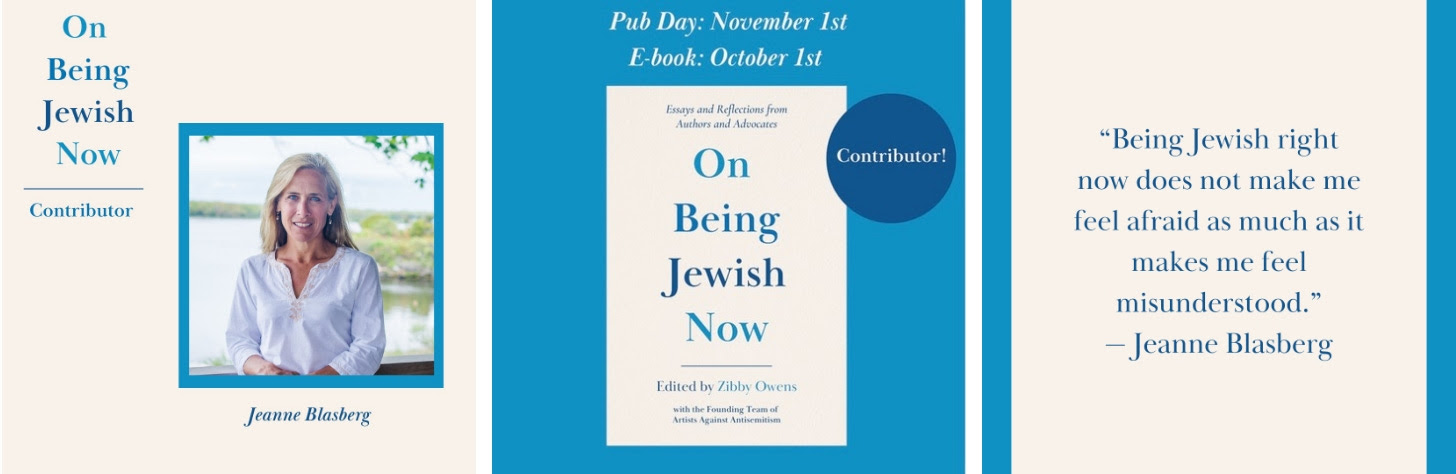
on-being-jewish-now-anthology-zibby-owens-jeanne-blasberg-essays

Honored to have an essay included in this powerful anthology

To preorder or learn more about ON BEING JEWISH NOW

It’s relevant because the passage below, although meant to be taken metaphorically, is one I have always been drawn to in our liturgy. It recalls our ancestors’ agrarian mindset and expresses a Jewish value I aim to live by:

And when you reap the harvest of your land, you shall not wholly reap the corners of your field, neither shall you gather the gleanings of your harvest; you shall leave them for the poor and the stranger.
Listen:

aging-well-coming-back-to-the-land-for-the-first-time-why-farming-podcast-bestselling-author-jeanne-blasberg-and-life-on-flynn-creek-farm

COME SEE ME:

On Tour with DAUGHTER OF A PROMISE:

Sept 7/8 Printer’s Row Literary Festival, Chicago, IL

September 29, The Brooklyn Book Festival Brooklyn, NY

October 26, The Boston Book Festival. Boston, MA

and TALKING FARMING:

October 12, National Farmer’s Day, Flynn Creek Farm is one of the sponsors of the COMMON GROUND screening and will have a table at Monona Terrace in Madison, WI
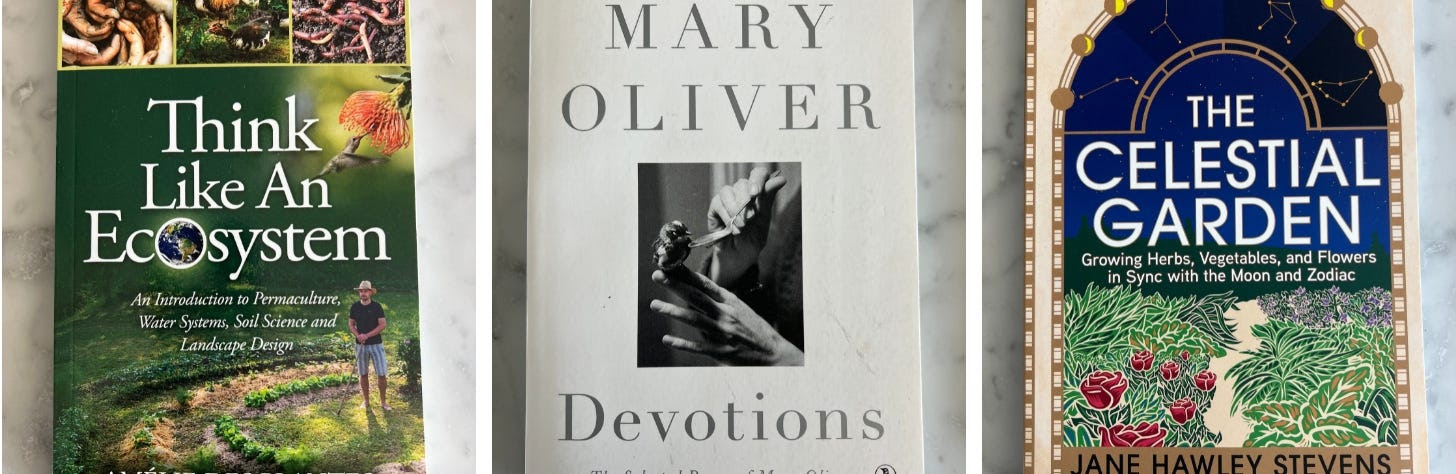
books-think-like-an-ecosystem-mary-oliver-devotions-celestial-garden-jeanne-blasberg-why-farming

Great companions on our recent boat trip


Why Wisconsin? Inheritance, Migration, and Finding Home

The essay “Why Wisconsin? Inheritance, Migration, and Finding Home” originally appeared on Jeannie’s Substack. Subscribe here for monthly updates!

wisconsin-minnesota-ice-hockey-UW-badgers

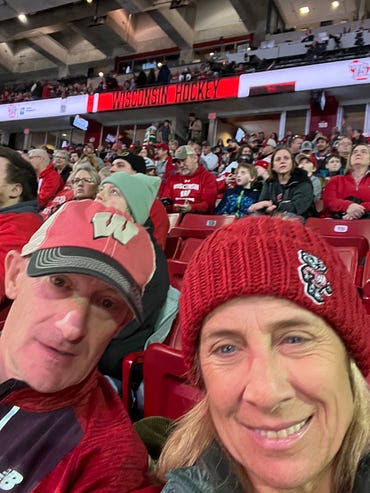
UW vs Minnesota Men’s Ice Hockey, January 2024

It’s a question I get a lot these days. “Do you or John have family in Wisconsin?”

People seem truly puzzled about our migration when I explain never having set foot into the state until three years ago… that we had been searching for a way to get into farming when we reconnected with an old family friend who encouraged us to visit Madison. One thing led to another, and we trusted the opportunities that kept showing up on our path. We love where we’ve landed, the rolling hills and water, the food culture, and the civic pride.

I’m one of those people who can’t easily answer the question, “Where are you from?” And, “Why Wisconsin?” follows suit, but the question has had me reflecting on my weird relationships with place…

My first novel, EDEN, is about a family’s devotion to their summer tradition, specifically a matriarch’s dedication to a home and the small seaside town where her family goes back for generations.  I wrote it from a desk in such a community, feeling the outsider, while observing and envying the generational ties I witnessed all around.

jeanne-blasberg-holding-book-daughter-of-a-promise-in-westerly-rhode-island--inspiration-for-long-harbor-in-front-of-the-ocean

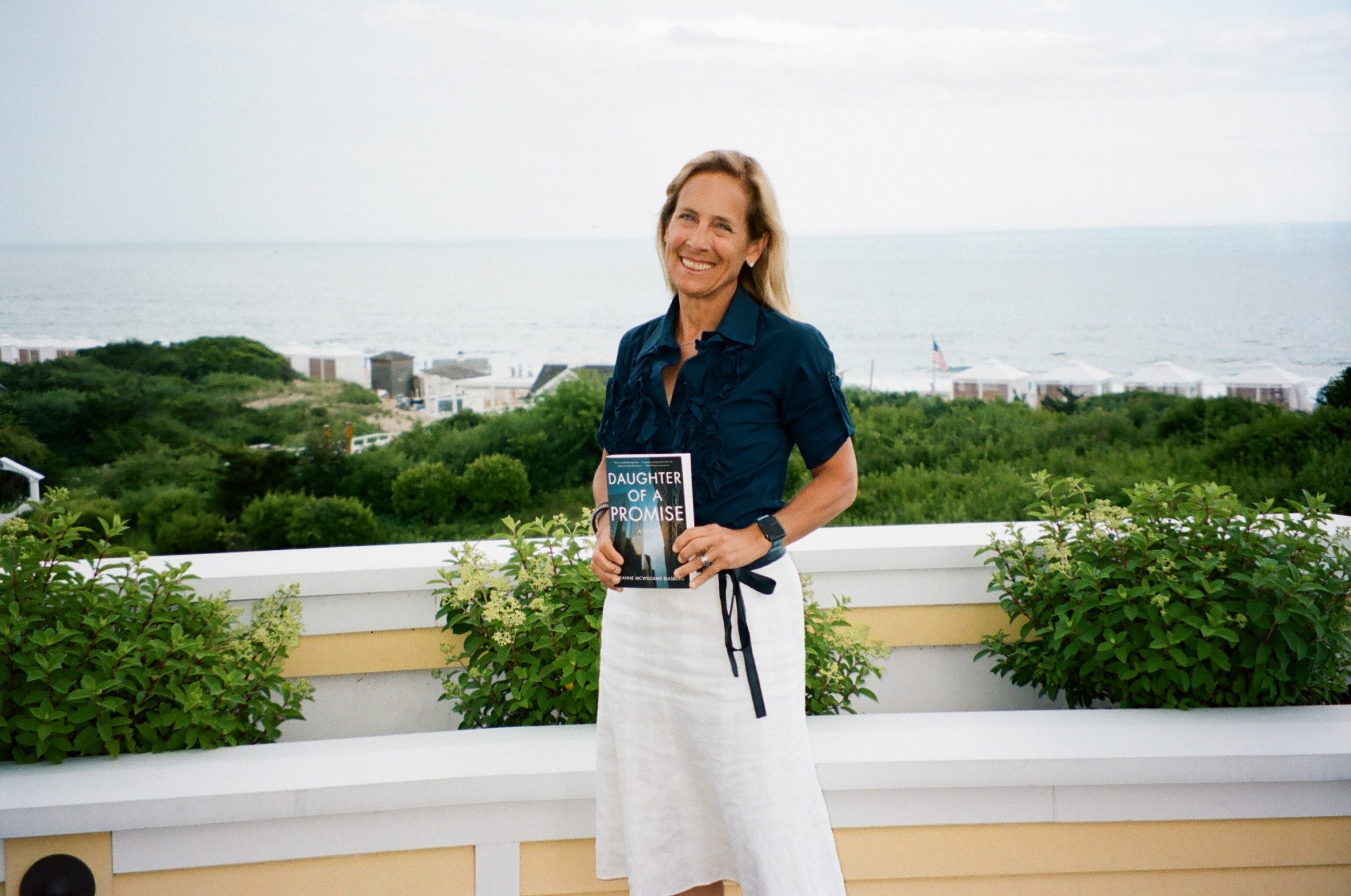
A recent visit to the Ocean House in Watch Hill, RI to discuss DAUGHTER OF A PROMISE. This place was the inspiration for Long Harbor, a setting featured in all three of my novels.

A few months before EDEN’s publication, John and I traveled to Iceland where we spent a day with a guide named Thor. At the end of an adventurous afternoon, he showed us a plaque with a picture of farmers. “These are my ancestors, and this was their farm,” he said.

“How long has your family been in Iceland?” I asked. It’s the type of question that rolls off my tongue naturally, or maybe any American’s tongue, but he looked at me confused. I realized my foolishness when he answered, “My family has always been in Iceland, since the beginning.”

jeanne-blasberg-iceland-trip-travel-couple-with-waterfall

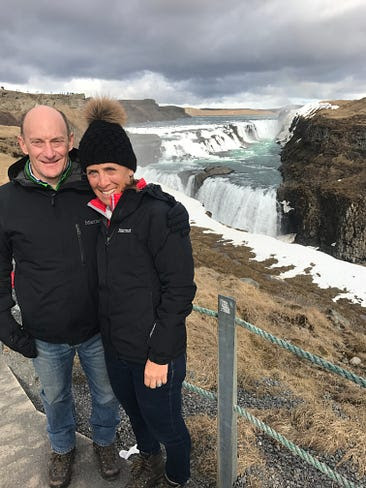
Exploring Iceland in 2017

Much as DAUGHTER OF A PROMISE’s protagonist, Betsabé, wonders what her outlook would have been if she’d been raised differently, I never got over Thor’s reply.  How might my human experience have been shaped if I’d felt such a connection to one specific place? If I walked the same land as my ancestors since the beginning of time! Before my grandparents, I don’t have much knowledge of the places my ancestors lived.

The closest thing for me was when John and I moved to Boston in 1994. I looked forward to living in a city where his family was established, where our last name meant something. Upon meeting me, people would ask, “Oh, are you related to Arthur? Are you married to his son?”

And I would answer “Yes,” and when they asked which son I was married to, the simplest reply was “Not the doctor.”

At that time in my life, stability was medicine. It was healing to raise our children with a sense of tradition which included schools, a congregation, and “our” beloved Chinese restaurant, three generations gathered around a large round table in the corner, spinning a Lazy Susan’s bounty, sharing a weekly feast. I made the city home for twenty-five years, interrupted only by a three-year stint in Switzerland.

I once considered my parents’ moving around as unfortunate, New York, Newport Beach, Dallas, Naples, as preventing my feeling connected to any one place. I’m sure others can resonate. Our country is one of immigrants or descendants of immigrants, with brave stories that make mine sound frivolous. There is something distinctly American about moving. (According to the US Census Bureau, about 1 in 10 people move every year. In 2022, about 8.2 million people moved between states.)

flynn-creek-carm-wisconsin-organic-regenerative-agriculture-farming-tomatoes

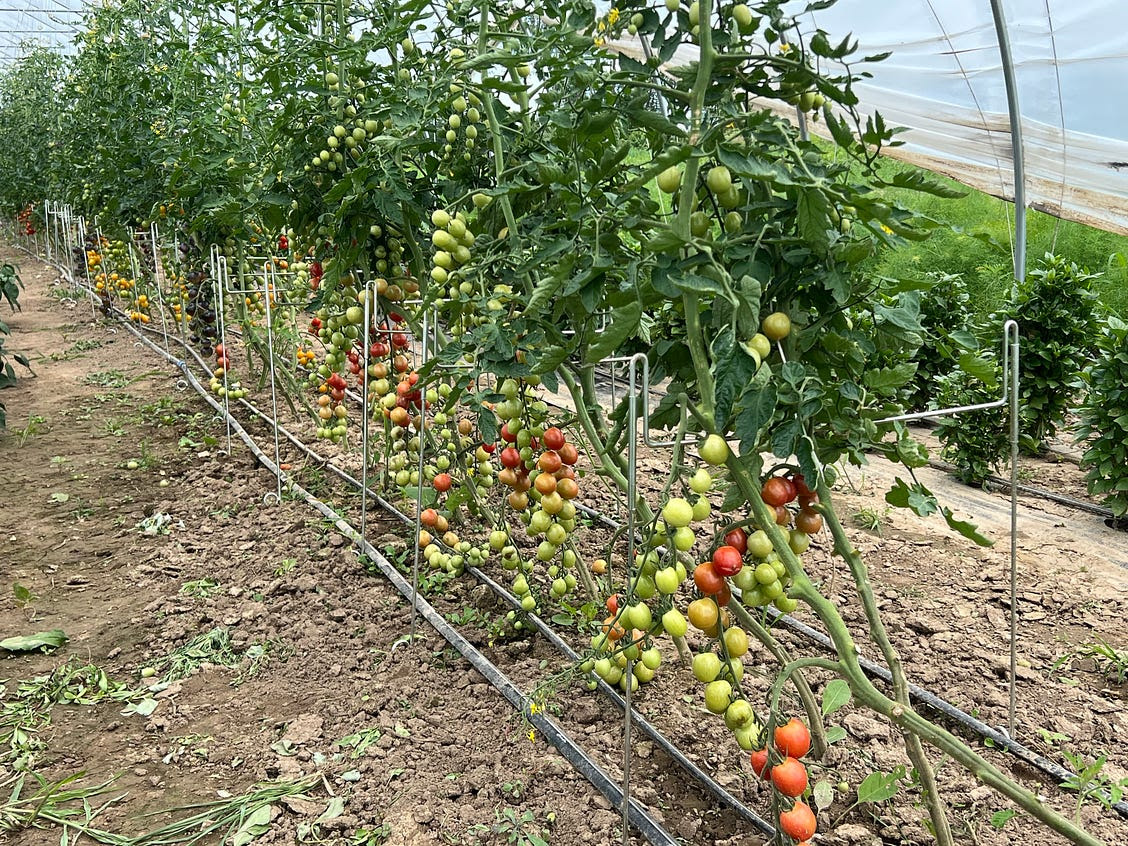
The beauty of tomatoes ready to burst at Flynn Creek Farm, July 2024

At the age of 58, I consider my willingness and ability to move a blessing. I think of the perspective that comes with being a stranger in a new land as character building. I know COVID inspired many people to move and also made moving possible. For example, we landed in Utah in the winter of 2021 although to a mixed reception. Salt Lake City and Park City represent a region with limited natural resources and a massive influx of people. Montrose Township, Wisconsin with its population of 1,100, however, was a different story. Although many in our new community can’t quite figure out why we’re here, most are pleased we are preserving 420 acres as agricultural, even if our regenerative, organic veggie farming might have them scratching their heads.

Why Wisconsin? I don’t have a logical answer, but as crazy as it seems, in all of my uprootedness, this place feels like a place to blossom. If you’ve made a move or have a point of view on moving, I’d love to hear from you in the comments!!

If you enjoyed Jeannie’s recommendations of COVID novels, read more of her book reviews on her blog, on Goodreads or StoryGraph, or on the New York Journal of Books. For more TBR inspiration, check out Jeannie’s curated book lists at Bookshop.org and Shepherd.com

12 Top Boston Spots for the Working Writer

This post was originally published on the Boston Book Blog.

A writer’s day can be a mixed bag. Yes, my ideal is four uninterrupted, morning hours at my desk, but writers can’t always be writing – there are many other activities that go along with the job. Some days I take a class, meet with a writing group, do research, or attempt to solve technical problems. I’m fortunate that the Beacon Hill and Back Bay neighborhoods offer many locales for staying  productive. Come along with me as I take a writerly walk through Boston.


jeanne-blasberg-working-writer-Boston-athenaeum


Boston Athenaeum

When I need a change of scenery, writing at the Boston Athenaeum is truly inspiring. To work here, you will need to become a member of this magical private library, but fun fact: dogs are allowed.


jeanne-blasberg-working-writer-Boston-panifico


Panificio

My favorite writing haunt on Charles Street is Panificio at number 144. The soups are heavenly and their big windows let in tons of light. It’s also close to my local post office where I often have an errand to run!


Read More.

The Westerly Memoir Project

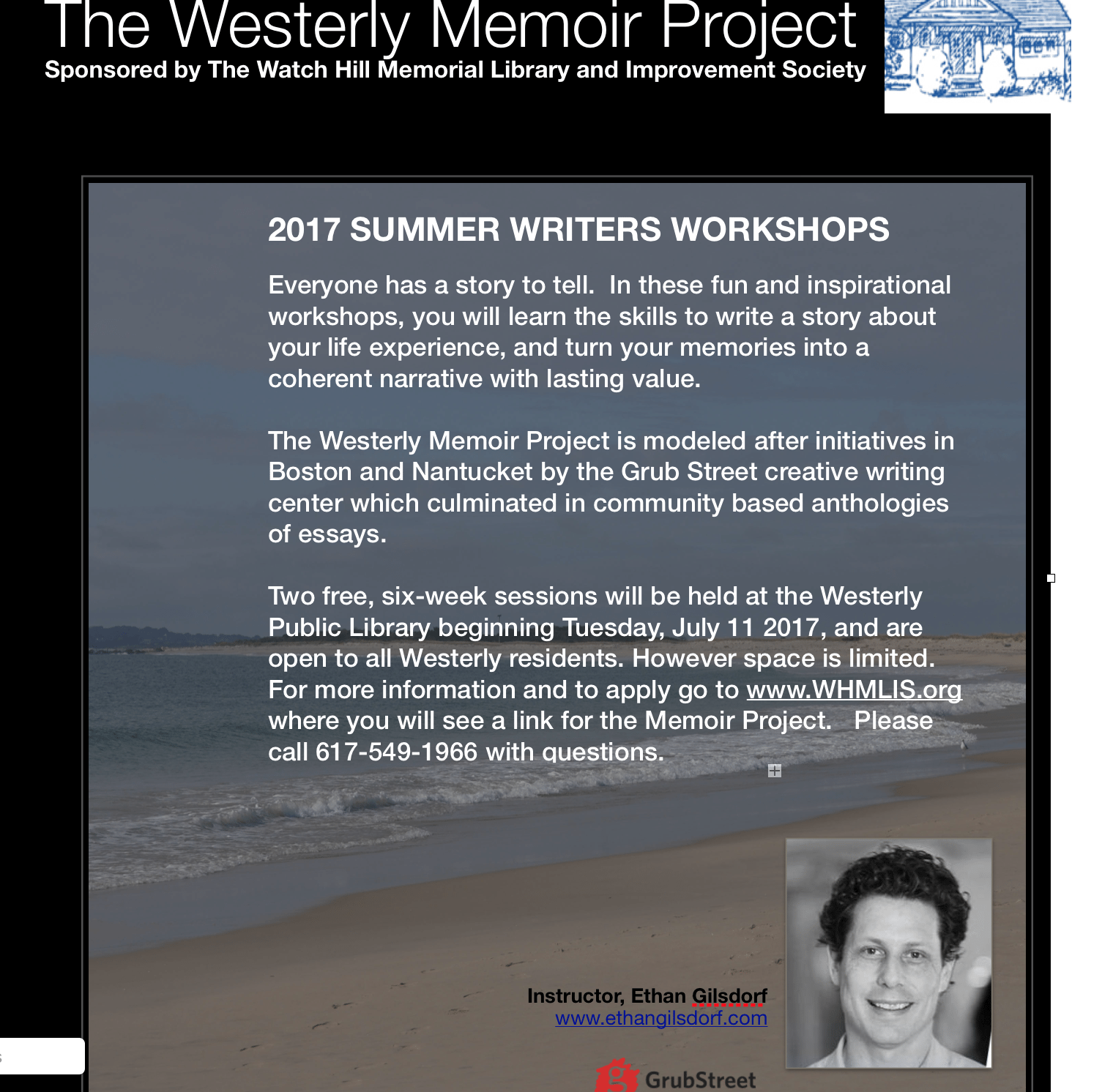
The Westerly Memoir Project (WMP) embarks on its second summer  July 11, 2017.  The project blends top-notch instruction in the art of memoir with the long-term goal of creating an anthology of personal essays, all set in the treasured seaside community of Westerly, RI.  Grub Street, a creative writing center in Boston, has completed two such projects.  The Boston Memoir Project spanned over a decade and culminated in the publication of 5 anthologies representing various neighborhoods within the city.  Then there was the Nantucket Memoir Project, which more closely mirrors the scope of the WMP.

With the pull of the ocean, both summer residents and a vibrant year-round community share a special setting.  As such, there are a myriad of view points and diverse experiences that will make up the finished work of essays to be published as the Westerly Memoir Project.

I initiated this project last year with the help of the Westerly Public Library, the Watch Hill Memorial Library and Improvement Society, and Grub Street because I truly love this place.  My co-chair, Katie Porter, and I are excited to bring the best instructing Boston’s Grub Street has to offer to our summer home.  We are also excited about where this project might lead.  The hope is that this project ignites writing well beyond that first personal narrative.  Last summer’s sessions felt like the nascent beginnings of  Westerly’s own writing community.  Let’s keep it going ! Imagine where we can go from here.