Leaving by Roxana Robinson
Leaving by Roxana Robinson
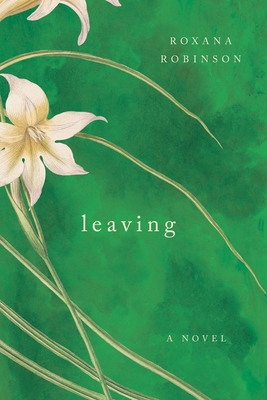 ** spoiler alert ** So many people I admire gushed over this book and so I began this book with high hopes. It certainly has good qualities, the language and the voice are strong. This is the story of a couple who had been together in college finding each other again after thirty or forty years and the man, Warren, leaves his wife to be with the woman, Sarah. Their relationship becomes a long, painful, dead-end street. That aside, I couldn’t reconcile Sarah’s character – she was attracted to Warren and pleased he was pursuing her, but never seemed willing to totally commit to moving somewhere to be with him or to share her home with him. She was rigid and and unwilling to compromise and yet when Warren breaks it off it’s like her world has come to an end. Her thoughts and reactions were misaligned. In addition, the author could be repetitive, harping on for pages and pages. There is a good bit of the book dedicated to the main characters’ relationships with their children, the through lines of which got lost for me. I wont be one of those reviewers who complains about not liking the characters, but there were three in this book I just couldn’t listen to any longer.
About Leaving:
What risks would you be willing to take to fall in love again?
“I never thought I’d see you here,” Sarah says. Then she adds, “But I never thought I’d see you anywhere.” Sarah and Warren’s college love story ended in a single moment.
Decades later, when a chance meeting brings them together, a passion ignites―threatening the foundations of the lives they’ve built apart. Since they parted in college, each has married, raised a family, and made a career. When they meet again, Sarah is divorced and living outside New York, while Warren is still married and living in Boston.
Seeing Warren sparks an awakening in Sarah, who feels emotionally alive for the first time in decades. Still, she hesitates to reclaim a chance at love after her painful divorce and years of framing her life around her children and her work. Warren has no such reservations: he wants to leave his marriage but can’t predict how his wife and daughter will react.
As their affair intensifies, Sarah and Warren must confront the moral responsibilities of their love for their families and each other. Leaving charts a passage through loyalty and desire as it builds to a shattering conclusion.
In her boldest and most powerful work to date, Roxana Robinson demonstrates her “trademark gifts as an intelligent, sensitive analyst of family life” (Wendy Smith, Chicago Tribune ) in an engrossing exploration of the vows we make to one another, the tensile relationships between parents and their children, and what we owe to others and ourselves.
Read more of Jeannie’s Reviews on her blog, on Goodreads or StoryGraph, or on the New York Journal of Books. For more TBR inspiration, check out Jeannie’s curated book lists at Bookshop.org.




 I accept invitations and view every opportunity to discuss my book as a blessing. I have fully immersed myself in the literary community in Boston. I attend readings. I take classes. I am workshopped, and I accept feedback. I blog and submit essays for publication. If I am writing I tell other people not to bother me. My business cards read “author.” I attend conferences. I approach people. I watch what the authors I admire do and I try to emulate them. When I am not writing, I am reading. I review books.
 Reject those who are rejecting you.


