
Review of RENTAL HOUSE by Weike Wang
This review of Rental House by Weike Wang was originally published in the New York Journal of Books.

Rental House by Weike Wang
“throws out traditional expectations and homogeneity and relies on determination and compassion to make random pieces of a puzzle crazily connect.”
Rental Houseexplores a young couple’s marriage and what keeps them together despite the baggage they carry from their families of origin. It is a lovely, literary novel, set around two extended vacations, five years apart. Messily reckoning with their upward mobility, Keru and Nate escape Manhattan first by renting a vacation home on Cape Cod and later in the Catskills, with an obligatory hosting of family each time. With humor and insight, Wang stretches out domestic entanglements and studies cultural differences by contrasting the two sets of parents. Just as with real-life extended stays with parents and in-laws,Rental Houseis not so much about the action, but the hilarious subtext.
To give the relationship context, Wang seamlessly intersperses the action with backstory. Keru and Nate meet by happenstance at a college Halloween party. She is post-break-up, determined not to wallow in misery, and seeks out fun in her dorm. “There were parties on every floor, this person told her, slumped against a banister, already drunk. She went down a random hall, through a random open door, and into a random room that had loud music, a large crowd, and a guy in a corner strapped to a homemade shark fin, dancing poorly by himself.” Despite the randomness of everything leading up to their coupling, their union and extended family reads as inevitable, even representative of the times. Keru asks Nate at the same party, “I have no family connections or generational wealth. But I’m determined to build a life worth the trials it took my parents and me to get here. You with me, Nate the great white?”
She is the daughter of Chinese immigrants who never assimilated in their home state of Minnesota. “[They] had voluntarily left a place of many Asians for a place with few. In their minds, too many Asians in an area was not ideal, and could only draw dissent or hate from the locals, as inLook, here comes another overqualified Asian to steal a specialized job that no one really wants.”
Nate is from rural Appalachia, “a poor white from nowhere and the first in his family to go to college.” He shuns his parents’ wish for him to be a lawyer—“Won’t it be nice to have a lawyer in the family?”—and enters academia. Keru works in consulting, becoming the marriage’s primary earner. She is an only child who vacillates between rebuffing a bigger family and craving one. They decide not to have children, withstanding judgment by their contemporaries and their family, and instead heap their nurturing affection on a large sheep dog named Mantou.
Wang’s concise language and sharp observations culminate in numerous humorous scenes. While prepping the Cape rental for the parents to descend, “Another topic was whose parents were more difficult. Each side made a strong case for their own, but this was pure anxiety talking and the answer didn’t really matter.” Keru’s family arrives first, having driven nonstop fully masked and gloved, inspecting the safety of the home before being willing to enter. “Nate’s presence went mostly unacknowledged.” The history is that before Keru’s father blessed their engagement he insisted Nate be debt-free. “You are not to marry into this family until they have paid off every cent of that debt themselves. We are not here to bail them out.” From there Keru had three options. She and Nate could break up or elope, or she could use her own savings, the entirety of it, to pay off his loan in full.” She pays it herself, and when she tells her father the debt is gone, he says, “His parents came through, didn’t they? For Keru’s father did not believe in the existence of an entrenched white family without money, and Keru had given up convincing him otherwise.”
When it was Nate’s parent’s turn to visit, the conversation was dominated by his mother’s circumspect racism. “While Nate and Keru were still dating, she also had questions: What kind of immigrants are they, what kind of Chinese people? Are they Christians? Do they believe in God? Did they enter the country the right way? Are her parents citizens? Is Keru a citizen? Do they feel more American or Chinese? Do they speak Chinese around you? Do they know you don’t understand Chinese? Have you asked? How is that offensive? You just explain, very politely, that we speak only English around Keru and expect Keru to speak only English around us.”
Five years later, approaching Keru’s 40th birthday, their marriage is in a slump and they rent in the Catskills. Keru is the one to make all the plans. “[She] had set out to make money and that was what she’d done, but more and more she sensed that Nate resented her for making money, even though this money helped both them and his mother. Money was her shield, how she measured her worth, and unwilling to stop making it, Keru weighed how much resentment she could stand.”
The pressures she lives with does have an escape valve in her quirky propensity to spontaneously hurl objects ranging from coasters at the Halloween party, to rocks in the direction of bathers on the beach, to an axe laden with a flaming piece of wood into the kitchen of the Cape rental. By the time they are in the Catskills, Keru can turn her rage on and off, recognizing that throwing her phone and smashing it “against a quartz countertop until the screen turns to confetti” would only result in having to “go to the Apple store and make up some story about how her phone was run over by a car.”
Despite different backgrounds that could grow into great obstacles, Keru and Nate have unique yet complementary childhood wounds. Their wounds and quirks keep them together, exemplifying a new “American family”: one that throws out traditional expectations and homogeneity and relies on determination and compassion to make random pieces of a puzzle crazily connect.
If you enjoyed Jeannie’s review of Colored Television, read more of her book reviews on her blog, on Goodreads or StoryGraph, or on the New York Journal of Books. For more TBR inspiration, check out Jeannie’s curated book lists at Bookshop.org and Shepherd.com.
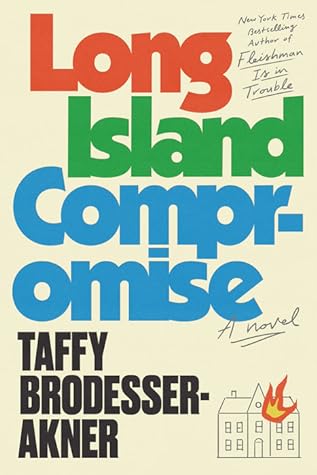 I loved this novel for its sharp, whip-smart observations and turns of phrase. I love a book with funny, revelatory descriptions and this one delivers. It is a simple plot that is basically an excuse to delve into the theme of generational inheritance and trauma. The Fletcher family is scarred by their father’s kidnapping, their inherited wealth, as well as the toxicity of the family business – a styrofoam factory. The character development is thorough with each sibling getting a good chunk of ink, allowing for the nuclear family described from various angles and points in time. We also see the family characters as they bump up against the outside world – employers, spouses, love interests, friends, and employees. These scenes offer comedic dialogue, examples of paranoia, neurosis, and guilt – scenes which the author has great skill in painting to the extent they could be laugh out loud funny and cringe-worthy at the same time. The reader deduces from the opening pages that this is a doomed family, the novel portraying their fall from grace, nevertheless there is so much intelligent language and observation to be soaked up from every page. Highly recommend.
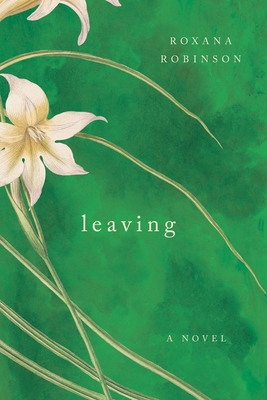 ** spoiler alert ** So many people I admire gushed over this book and so I began this book with high hopes. It certainly has good qualities, the language and the voice are strong. This is the story of a couple who had been together in college finding each other again after thirty or forty years and the man, Warren, leaves his wife to be with the woman, Sarah. Their relationship becomes a long, painful, dead-end street. That aside, I couldn’t reconcile Sarah’s character – she was attracted to Warren and pleased he was pursuing her, but never seemed willing to totally commit to moving somewhere to be with him or to share her home with him. She was rigid and and unwilling to compromise and yet when Warren breaks it off it’s like her world has come to an end. Her thoughts and reactions were misaligned. In addition, the author could be repetitive, harping on for pages and pages. There is a good bit of the book dedicated to the main characters’ relationships with their children, the through lines of which got lost for me. I wont be one of those reviewers who complains about not liking the characters, but there were three in this book I just couldn’t listen to any longer.


