Tag Archive for: novel

The Stark Beauty of Last Things by Celine Keating

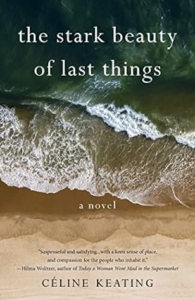
The Stark Beauty of Last Things by Celine Keating

stark-beauty-of-last-things-celine-keating-book-review-jeanne-blasberg

The Stark Beauty of Last Things is a poetic novel that emphasizes the fragility of the worlds we occupy- relationships, lives, places – are all fleeting. The problem is that humans often fail to understand this until it is too late. Told from multiple points of view, this novel also provides an interesting history of Montauk.

bookshop-support-local-bookstores


About The Stark Beauty of Last Things:

Read more of Jeannie’s Reviews on her blog, on Goodreads or StoryGraph, or on the New York Journal of Books. For more TBR inspiration, check out Jeannie’s curated book lists at Bookshop.org

Wellness by Nathan Hill

Wellness by Nathan Hill

wellness-nathan-hill-book-review-jeanne-blasberg

I loved The Nix and when I heard Nathan Hill had a new novel coming out, I preordered. I toggled between reading and listening to the audiobook because it is narrated by Ari Fliakos who is my all time favorite reader. His tone captures the wry wit of Hill’s characters so well. But onto Wellness—All I can say is that I have been recommending it to everyone and Nathan Hill has become my favorite author. He writes with the wisdom and life knowledge of a person much older but with the funny, dry cutting language of a person who is younger. His observations about diets and tech to name just two societal staples are hysterical. And yet while being funny and amusing, the book is also so heartbreakingly poignant. I loved it, couldn’t put it down and now while my husband is reading, I am constantly asking him what part he is up to and to read it aloud to me so we can have a good laugh. The best kind of book.

bookshop-support-local-bookstores


About Wellness:

The New York Times best-selling author of The Nix is back with a poignant and witty novel about a modern marriage and the bonds that keep people together. Mining the absurdities of contemporary society, Wellness reimagines the love story with a healthy dose of insight, irony, and heart.

“A stunning novel about the stories that we tell about our lives and our loves, and how we sustain relationships throughout time—it’s beyond remarkable, both funny and heartbreaking, sometimes on the same page.” —NPR

When Jack and Elizabeth meet as college students in the gritty ’90s Chicago art scene, the two quickly join forces and hold on tight, each eager to claim a place in the thriving underground scene with an appreciative kindred spirit. Fast-forward twenty years to suburban married life, and alongside the challenges of parenting, they encounter the often-baffling pursuits of health and happiness from polyamorous would-be suitors to home-renovation hysteria.

For the first time, Jack and Elizabeth struggle to recognize each other, and the no-longer-youthful dreamers are forced to face their demons, from unfulfilled career ambitions to childhood memories of their own dysfunctional families. In the process, Jack and Elizabeth must undertake separate, personal excavations, or risk losing the best thing in their lives: each other.

Read more of Jeannie’s Reviews on her blog, on Goodreads or StoryGraph, or on the New York Journal of Books. For more TBR inspiration, check out Jeannie’s curated book lists at Bookshop.org

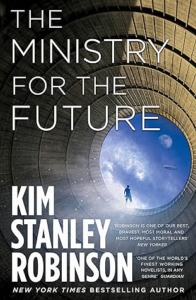
The Ministry for the Future by Kim Stanley Robinson

The Ministry for the Future by Kim Stanley Robinson

ministry-for-the-future-kim-stanley-robinson-book-review-jeanne-blasbergThis is a work of science fiction that reads like it could be true. It is very long book that offers many thread lines and points of view as well as the ministry for the future’s ideas with regard to advocating for beings that can’t speak for themselves. It was educational, inspiring but also filled me with dread.

bookshop-support-local-bookstores


About The Ministry for the Future:

Read more of Jeannie’s Reviews on her blog, on Goodreads or StoryGraph, or on the New York Journal of Books. For more TBR inspiration, check out Jeannie’s curated book lists at Bookshop.org

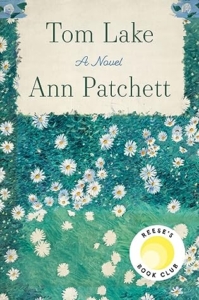
Tom Lake by Ann Patchett

Tom Lake By Ann Patchett

tom-lake-ann-patchett-book-review-jeanne-blasbergI listened to this on audio, such a delight as Meryl Streep was the narrator. Her performative and soothing voice combined with Ann Patchett’s writing resulted in a most pleasurable experience. The story was well done too. Well suited for me as a mother who had three grown children at home during the pandemic and also as the mother of a daughter. I am finding it very interesting to read the pandemic novels of great writers BTW. This is a novel about what we share with our children and what we hold back, about their insatiable desire for stories about us before they were born, and about how much changes and how much stays the same between the generations of women. This is a love story to Northern Michigan and a life dedicated to farming orchards. The point of view may be that of a grown woman in her fifties, but as she recounts one summer and one love affair to her children, she is also telling her own coming-of-age. The structure of this novel was quite pleasurable to follow.

bookshop-support-local-bookstores


About Tom Lake:

Read more of Jeannie’s Reviews on her blog, on Goodreads or StoryGraph, or on the New York Journal of Books. For more TBR inspiration, check out Jeannie’s curated book lists at Bookshop.org

The Twenty: by Marianne C. Bohr

The Twenty: One Woman’s Trek Across Corsica on the GR20 Trail by Marianne C. Bohr

the-twenty-one-woman's-trek-across-corsica-g20-trail-marianne-c-bohr-book-review-jeanne-blasbergA great read which will inspire you to get out of the chair. Bohr does an excellent job of honestly telling recounting the ups and downs of completing one of the world’s iconic hikes with her husband Joe, both in their 60’s. A reminder that one is never too old to take on a challenge, whether physical or otherwise, I loved reading this book and felt like the author was giving all of us a gentle nudge to get going!!

bookshop-support-local-bookstores


About The Twenty:

Read more of Jeannie’s Reviews on her blog, on Goodreads or StoryGraph, or on the New York Journal of Books. For more TBR inspiration, check out Jeannie’s curated book lists at Bookshop.org

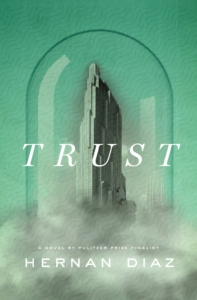
Trust by Hernan Diaz

Trust by Hernan Diaz

trust-Hernan-Dåiaz-book-review-jeanne-blasbergAfter learning this work shared the Pulitzer Prize in Fiction with Demon Copperhead, I had to read. I listened to the Audio which was narrated by four different voices, amplifying this novel’s theme of perception. Indeed a story changes so much based on who is telling it and Diaz makes this clear with regard to a marriage, mental health, wealth, and power. Who’s version do you trust? This novel is entertaining but important in that it provokes introspection around narration and point of view, reliability and inherent bias. Highly recommend.

bookshop-support-local-bookstores


About Trust:

Read more of Jeannie’s Reviews on her blog, on Goodreads or StoryGraph, or on the New York Journal of Books. For more TBR inspiration, check out Jeannie’s curated book lists at Bookshop.org

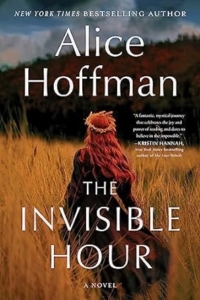
The Invisible Hour by Alice Hoffman

The Invisible Hour by Alice Hoffman

This review originally appeared in the New York Review of Books.

invisible-hour-alice-hoffman-book-review-jeanne-blasbergWith a truly imaginative structure, Alice Hoffman delves into what has become her trademark theme of magic. The Invisible Hour asks a grand “What if?” Not so much the question posed on the book’s jacket: What if Mia Jacob never found the library or The Scarlet Letter by Nathaniel Hawthorne? The larger question the novel contemplates is whether a young woman can escape so deeply into a book, and fall so deeply in love with its author that she time travels to 1837 to be with him? And what if their meeting and ensuing mutual love is what propelled him to write that very masterpiece, ultimately dedicating it to her?

Indeed, when Mia Jacobs breaks the rules of “The Community,” the cult-like farm setting in which she lived with her mother and was raised from birth to discover the small library in the town of Blackwell along with its kind librarian, a new world opens up to her. When she turns the cover of a first edition of The Scarlet Letter and reads its dedication, “To Mia, If it was a dream, it was ours alone and you were mine,” her imagination is set free. She wonders whether this book was truly meant as a message to her.

When Mia’s mother Ivy Jacob was a teenager in Boston, she found herself pregnant and ostracized by her Beacon Hill family. She fled to a farm in western Massachusetts overseen by Joel Davis who took care of her and protected her in a way her family never did. However, “The Community” had rigid rules where children were taken away from their mothers to be raised communally, where books or interaction with the outside world was forbidden, and where Joel Davis’s word was final. He took Ivy for a wife and treated her as his favorite, which led to some leniency when it came to Ivy and Mia’s behavior. However, when books were uncovered in haybales in the barn, somebody had to be punished. In order to protect her daughter, Ivy claimed they were hers and as a result, her beautiful long red hair was cut off.

Despite Mia trying to convince her mother that they should run away, Ivy feared Joel would find them and cause them harm. Indeed, he proved adept at seeking out Mia after her successful escape from The Community. During her low point, after her mother’s death, when Mia felt she has nothing left to lose, she made her way to the Blackwell Library in the dark of night, used a key the librarian had snuck her and asked for help.

Sarah, the librarian, was able to create a refuge for Mia across the state in Concord where she could begin a more normal life, attending school and spending time in the library. Joel was often spotted lurking nearby. He let her know he was watching by leaving the unmistakable red leaves of The Community’s signature apples, or by confronting her guardian Constance. After graduating from college, Mia finds her dream job working at the New York Public Library.

The second half of the novel is set in the 1837 in Salem, MA where Nathaniel Hawthorne is a depressed young man, living with his mother and sisters. He feels a failure as a writer and guilt over his grandfather’s role persecuting women as part of the Salem witch trials. Mia’s copy of The Scarlet Letter is a key to time travel and she soon finds herself in Salem as well, spending time with Nathaniel in a secret cottage in the woods and buoying him with her love.

Not wanting to alter the course of history and because of Nathaniel’s sister Elizabeth’s reproachful warnings, Mia returns to the present. She has no choice to return to 1837, however, after Joel hunts her down, claiming she has stolen the deed to his farm. He is relentless in his pursuit and so Mia returns to the past, dragging Joel along with her. It is during this period that Mia realizes she is pregnant with Nathaniel’s child. She will return to the present where she will raise her daughter proudly as a single mother.

Unwed motherhood and the ostracization that comes with it is a constant backdrop, allowing Hoffman to connect the branding of Hester Prynne with the experiences of Ivy and later Mia. Nathaniel’s sister, Elizabeth, introduces Mia to a hill dubbed the Hill of Death by some, Salvation Point by others, a place where women went to eat herbs in order to bring about miscarriage. Mia tells her of a later time when women have many opportunities including higher education and professional, while still not having autonomy when it came to reproduction. Mia’s time travel highlights the many differences between the past and the present, however, with regard to women’s autonomy, Hoffman drives home the point that frightingly little has changed.


bookshop-support-local-bookstores

About The Invisible Hour:

One June day when Mia Jacob can no longer see a way to survive, the power of words saves her. The Scarlet Letter was written almost two hundred years earlier, but it seems to tell the story of Mia’s mother, Ivy, and their life inside the Community–an oppressive cult in western Massachusetts where contact with the outside world is forbidden. But how could this be? How could Nathaniel Hawthorne have so perfectly captured the pain and loss that Mia carries inside her?

Through a journey of heartbreak, love, and time, Mia must abandon the rules she was raised with at the Community. As she does, she realizes that reading can transport you to other worlds or bring them to you, and that readers and writers affect one another in mysterious ways. She learns that time is more fluid than she can imagine, and that love is stronger than any chains that bind you.

As a girl Mia fell in love with a book. Now as a young woman she falls in love with a brilliant writer as she makes her way back in time. But what if Nathaniel Hawthorne never wrote The Scarlet Letter? And what if Mia Jacob never found it on the day she planned to die?

From “the reigning queen of magical realism” (Kristin Hannah, New York Times bestselling author), this is the story of one woman’s dream. For a little while it came true.


Read more of Jeannie’s Reviews on her blog, on Goodreads or StoryGraph, or on the New York Journal of Books. For more TBR inspiration, check out Jeannie’s curated book lists at Bookshop.org

How Beautiful We Were by Imbolo Mbue

How Beautiful We Were by Imbolo Mbue

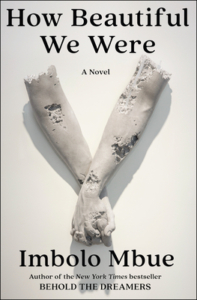
how-beautiful-we-were-imbolo-mbue-book-review-jeanne-blasbergThis is a heartbreaking novel, portraying the destruction of a town and a way of life when an American oil company arrives to drill in an African country. This is a sweeping story that crosses oceans and lifetimes told from multiple points of you. At first I was skeptical because of the ratio of expository writing to scene, but Mbue unfolds this story over time using her various voices and points of view. The novel begins in the pov of the children – a sacred and vulnerable body that grow older and more hardened as the novel comes to a close. This novel is a reminder that the negative impacts of capitalism and a colonialist mindset are not limited to the land and people in the target country, but to the Western power, in this case the United States.

bookshop-support-local-bookstores


About How Beautiful We Were:

Read more of Jeannie’s Reviews on her blog, on Goodreads or StoryGraph, or on the New York Journal of Books. For more TBR inspiration, check out Jeannie’s curated book lists at Bookshop.org

Witness by Jamel Brinkly

Witness: Stories by Jamel Brinkly

This review originally appeared in the New York Review of Books.
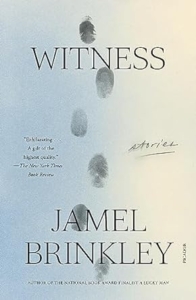
witness-jamel-brinkley-book-review-jeanne-blasbergA collection of ten short stories set in Brooklyn, NY, Witness: Stories is populated by characters navigating relationships with friends and family, both living and not. The title is that of the final story in the collection, emphasizing the act of witnessing, although personal and subjective, is a human responsibility.

Brinkley’s characters struggle in a hazy present where gentrification, workplace bias, and police injustice color their days. However, their inner wounds stem from family members or a family member being absent or increasingly unrecognizable.  In the opening story, “Blessed Deliverance” a group of white people set up an organization for rescued rabbits in the park with a neighborhood homeless man as lead volunteer. The teen protagonist and his gang of friends are amused by the many levels of absurdity surrounding this enterprise.

In “Comfort,” a woman’s brother is murdered years earlier by a white police officer, an incident she plays over repeatedly in her mind, including the implausible explanation given by the policeman at trial. Simone is having a challenge managing her present day while in dialogue with the deceased.  Many of the stories in Witness feature ghosts, implying that much of what one witnesses is inexplicable. In Brinkley’s collection, witnessing is highly experiential, involving more than simply sight.

Teenage characters bear the burden of their parents and parents bear the burden of their children. Embarrassment, shame, and regret swirl about these works, an in the very oxygen the characters breath. In “The Let Out” a young man is pursued by his father’s ex-lover, a woman who, he comes to understand, was, even in her absence, a significant member of his family. In “Bystander,” Anita and her daughter are in a devastating battle of wills that has Anita denying she even has a daughter to a homeless bystander-prophetess in Prospect Park.

The opening lines in “That Particular Sunday” exemplify Brinkley’s characterizations of the familial:

There are times when a family has an aura of completion. Remembering such a time feels like gazing at a masterpiece in an art gallery. You might find yourself taking one or two steps backward to absorb the harmonious perfection of the entire image. Or you may be lured by it, drawn to it, inching closer to study every fine detail of composition, the faultless poise with which each element confirms the necessary presence of the others. Take the figure of the son, who hurtles into the foreground of the picture, claiming his position in a web of femaleness, affixing himself to the very center of its adhesive heart, because he belongs there, or so he believes with the unblemished certainty of a boy’s imagination. Like everything else in the image, he never changes. Yes, that is my mother, his presence announces. And those are my aunts, he seems to say. And this- of the girl closest to him, her expression as breathless as his own—this is my cousin. My companion. My closest friend. Her soul is the identical twin of mine . . . They belong to a different elsewhere, a time yet to come, with another father to come, and the circumstances of their lives will frenzy the family, purpling it, cloying it until it is spoiled. Then it will be no different from any ordinary clan. Unpleasant to regard. An eyesore.”

Indeed, Brinkley’s stories insert the reader at the time the family is in frenzy, or just afterward, with characters mourning horrific losses—murders, or death by terrible accident such as being struck by a train, even mourning the absence of family members they were never told about. The stories place us in a setting that is in flux as well, one narrator stating, “We lived in the neighborhood before it was a real estate agent’s dream.” Sure, the stories are peppered with references to gentrification, but they act as a surface layer of disturbance put upon characters who have many deeper troubles.

In the culminating story, “Witness” a fist-person narrator Silas sleeps on his sister, Bernice’s, couch while looking for a job and an apartment. Bernice is not well, suffering an undiagnosed illness, with no help from white doctors. She recalls their mother’s warnings, “When it comes to those white doctors,” Bernice cried, imitating their mother, “always, always, exaggerate the pain.”

Bernice dates and marries a DJ, adding one more person to squeeze into the small apartment as she becomes increasingly sick and eventually dies. Of all the relationships of which Brinkley writes in this collection, those between siblings, although never perfect, are expressed with a degree of tenderness that is moving. His siblings need each other more than they need parents. They are, after all, of the same generation and conspirators in life, in the act of survival, as well as in the human burden of bearing witness.

 

bookshop-support-local-bookstores

About Witness:

What does it mean to really see the world around you—to bear witness? And what does it cost us, both to see and not to see?

In these ten stories, each set in the changing landscapes of contemporary New York City, a range of characters—from children to grandmothers to ghosts—live through the responsibility of perceiving and the moral challenge of speaking up or taking action. Though they strive to connect with, stand up for, care for, and remember one another, they often fall short, and the structures they build around these ambitions and failures shape their futures as well as the legacies and prospects of their communities and their city.

In its portraits of families and friendships lost and found, the paradox of intimacy, the long shadow of grief, and the meaning of home, Witness enacts its own testimony. Here is a world where fortunes can be made and stolen in just a few generations, where strangers might sometimes show kindness while those we trust–doctors, employers, siblings–too often turn away, where joy comes in snatches: flowers on a windowsill, dancing in the street, glimpsing your purpose, change on the horizon.

With prose as upendingly beautiful as it is artfully, seamlessly crafted, Jamel Brinkley offers nothing less than the full scope of life and death and change in the great, unending drama of the city.


Read more of Jeannie’s Reviews on her blog, on Goodreads or StoryGraph, or on the New York Journal of Books. For more TBR inspiration, check out Jeannie’s curated book lists at Bookshop.org

Animal, Vegetable, Miracle by Barbara Kingsolver

Animal, Vegetable, Miracle: A Year of Food Life by Barbara Kingsolver

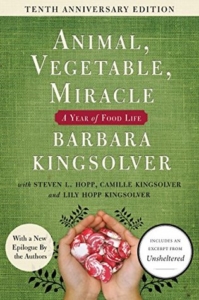
Vegetable-Miracle-barbara-kingsolver-book-review-jeanne-blasbergFor a person embarking on her own journey into farming, I was both inspired and shocked it took me so long to happen upon this book. There is so much about it to love. In the Kingsolver family’s pact to eat local and seasonal food for a year, there is honesty instead of preachiness and a sense of humor about those types of things we all dive into without understanding how much hard work things might be. But with intentionality and hard work they commune with their farm and their community which is truly aspirational. I’ll be giving this book as a gift to many people!

bookshop-support-local-bookstores


About Animal, Vegetable, Miracle:

Read more of Jeannie’s Reviews on her blog, on Goodreads or StoryGraph, or on the New York Journal of Books. For more TBR inspiration, check out Jeannie’s curated book lists at Bookshop.org