Tag Archive for: regenerative agriculture

Why Farming? Looking Back to Move Forward

The essay “Why Farming? Looking Back to Move Forward” originally appeared on Jeannie’s Substack. Subscribe here for monthly updates!

Last month’s newsletter addressed “Why Wisconsin?” but I probably should have answered this one first,  “Why Farming?”

There are many possible answers …. some I use to satisfy people who need a logical explanation because the truth to “why farming?” is still slowly revealing itself. Would it make sense if I told you John and I had an idea, and given our health, energy and resources felt prepared for an ambitious next act, so we took the leap into something we knew embarrassingly little about, only to later understand why it was meant to be?

Writing and publishing has inured me to fear and helped me develop very personal definitions around what is success and what is failure. Writing and farming both require listening and openness, both require approaching the world with a creative mindset.

THE ILLUMINATION CODE by Kim Chestney encourages finding spaciousness and stillness in order to connect with your innate wisdom and intuition. During COVID, we achieved something akin to that right brain focus while driving thousands of miles around the country, imagining our future. In her book, Chestney makes the point we are all connected by universal energy and a piece of each of us simply knows… everything. She explains “When you activate your connection to the nonlocal dimension, you open up your faculties of sensing, thinking and feeling as channels for expansive information sharing. In this way, the universe becomes a kind of guide, constantly course correcting toward its implicit truth.” I don’t mean to claim farming is our truth, but we are becoming more and more certain it is a critical next step on our path.
Listen:

Write-your-own-story-podcast-wisdom-wellness-and-main-character-energy-with-jeanne-blasberg

Many have stopped reading by now or are shaking their heads, but I believe it requires a rearview mirror perspective to comprehend the plan. Also, it requires an understanding that our journeys are not linear. So, while it is extremely validating to feel healing and peace on the farm at present, there were also clues in my past that I can now point to:

  • An obsession with my vegetable garden and growing food for my family
  • the way references to Madison, WI inexplicably made my ears perk up as, it was more than a curious sensation, but something inside that said “take note.” It was the same when my husband told me we had the opportunity to move to Switzerland. In my mind’s eye I already knew it was going to happen.
  • John and I talking for decades about starting a business in the health and wellness space, or the food space, or creating healthy consumer products, maybe something plant based….
  • A lack of trust in the food system, lending to a dysfunctional relationship with food.
  • A deep concern for the environment,
  • As a little girl, dreaming of being a scientist, of inventing something and conducting experiments.
  • Vegetarianism becoming more than a dietary choice for me. It now feels political as well as spiritual.
  • And then there’s the fact that I am most happy problem solving as part of a team… This solitary writing life comes with a price 🙂

Listen:

In another recent read, Alicia Kennedy’s NO MEAT REQUIRED: THE CULTURAL HISTORY & CULINARY FUTURE of PLANT-BASED EATING, I learned the term “Ecofeminism.” It gels with my sense that women will be the ones to lead the way out of this broken food system and environmental crisis. Making another point, Kennedy asserts, “The food that is broadly consumed in our country is created to fulfill the desires of capitalism not our bodies, with no regard for the long term health consequences.” Becoming a farmer is a productive and positive way to take a stand against industrial, corporate farming in favor of regional, seasonal food systems that emphasizes biodiversity and dignified lives for farmers.
Listen:

Life-stories-podcast-growing-change-jeanne-blasberg-on-regenerative-farming-and-supplying-local-restaurants

Interestingly, I’ve come to think of my writing career as the necessary gateway into farming. Writing and publishing has inured me to fear and helped me develop very personal definitions around what is success and what is failure. Writing and farming both require listening and openness, both require approaching the world with a creative mindset. Being close to the land offers daily ways to be creative, take our diet for example—it is incredible how much on our farm can be foraged for meals, not to mention how a bumper crop of zucchini or tomato has us brainstorming ways to preserve and prepare. We are constantly addressing challenges – a day something doesn’t break on a farm is an unusually great day! The generosity in a rural setting is heart-warming. I am in awe of the people I have met in my new community: independent, self-reliant geniuses who look out for one another. In this setting, I am a complete beginner which is very rejuvenating.

I conclude with a plug for a new writing project (it’s relevant!!) :
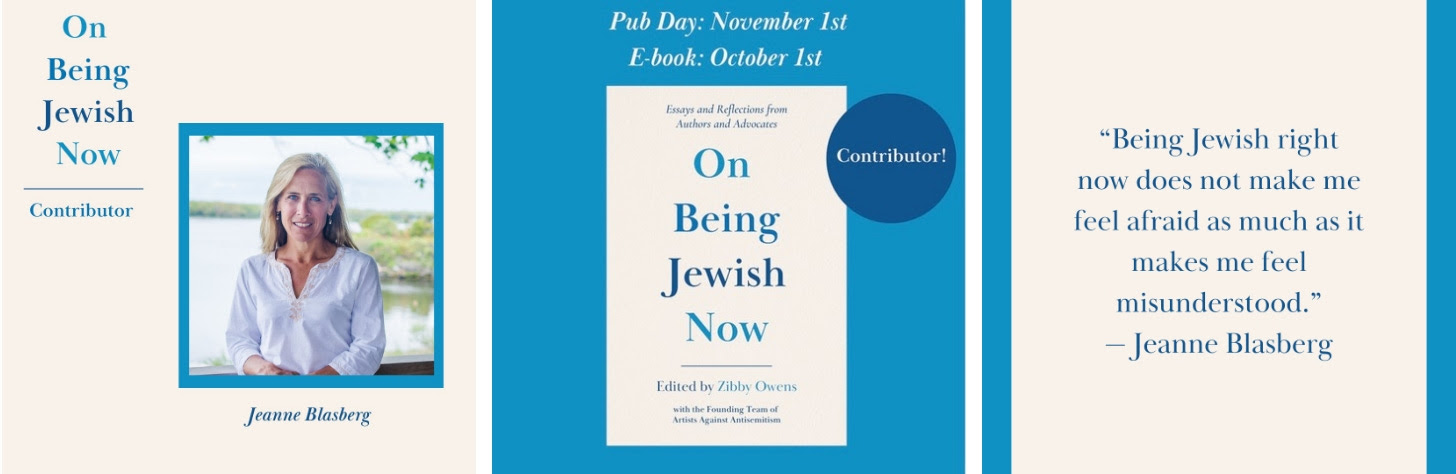
on-being-jewish-now-anthology-zibby-owens-jeanne-blasberg-essays

Honored to have an essay included in this powerful anthology

To preorder or learn more about ON BEING JEWISH NOW

It’s relevant because the passage below, although meant to be taken metaphorically, is one I have always been drawn to in our liturgy. It recalls our ancestors’ agrarian mindset and expresses a Jewish value I aim to live by:

And when you reap the harvest of your land, you shall not wholly reap the corners of your field, neither shall you gather the gleanings of your harvest; you shall leave them for the poor and the stranger.
Listen:

aging-well-coming-back-to-the-land-for-the-first-time-why-farming-podcast-bestselling-author-jeanne-blasberg-and-life-on-flynn-creek-farm

COME SEE ME:

On Tour with DAUGHTER OF A PROMISE:

Sept 7/8 Printer’s Row Literary Festival, Chicago, IL

September 29, The Brooklyn Book Festival Brooklyn, NY

October 26, The Boston Book Festival. Boston, MA

and TALKING FARMING:

October 12, National Farmer’s Day, Flynn Creek Farm is one of the sponsors of the COMMON GROUND screening and will have a table at Monona Terrace in Madison, WI
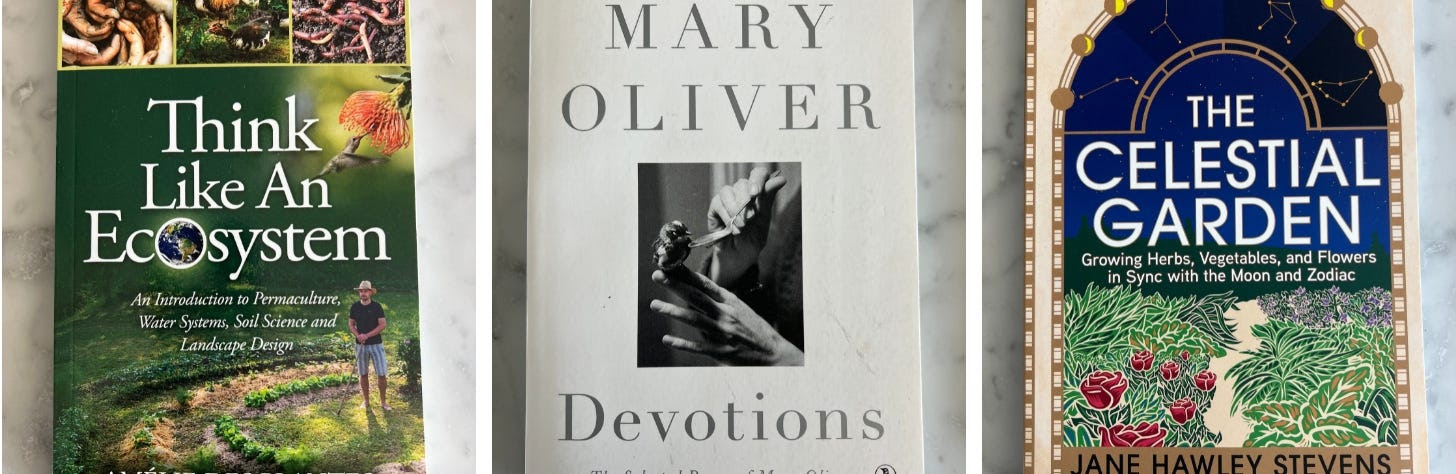
books-think-like-an-ecosystem-mary-oliver-devotions-celestial-garden-jeanne-blasberg-why-farming

Great companions on our recent boat trip


Why Wisconsin? Inheritance, Migration, and Finding Home

The essay “Why Wisconsin? Inheritance, Migration, and Finding Home” originally appeared on Jeannie’s Substack. Subscribe here for monthly updates!

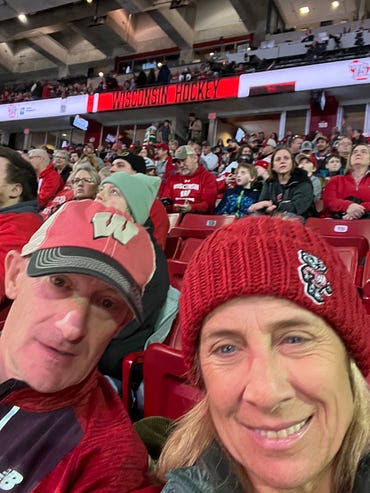
wisconsin-minnesota-ice-hockey-UW-badgers

UW vs Minnesota Men’s Ice Hockey, January 2024

It’s a question I get a lot these days. “Do you or John have family in Wisconsin?”

People seem truly puzzled about our migration when I explain never having set foot into the state until three years ago… that we had been searching for a way to get into farming when we reconnected with an old family friend who encouraged us to visit Madison. One thing led to another, and we trusted the opportunities that kept showing up on our path. We love where we’ve landed, the rolling hills and water, the food culture, and the civic pride.

I’m one of those people who can’t easily answer the question, “Where are you from?” And, “Why Wisconsin?” follows suit, but the question has had me reflecting on my weird relationships with place…

My first novel, EDEN, is about a family’s devotion to their summer tradition, specifically a matriarch’s dedication to a home and the small seaside town where her family goes back for generations.  I wrote it from a desk in such a community, feeling the outsider, while observing and envying the generational ties I witnessed all around.

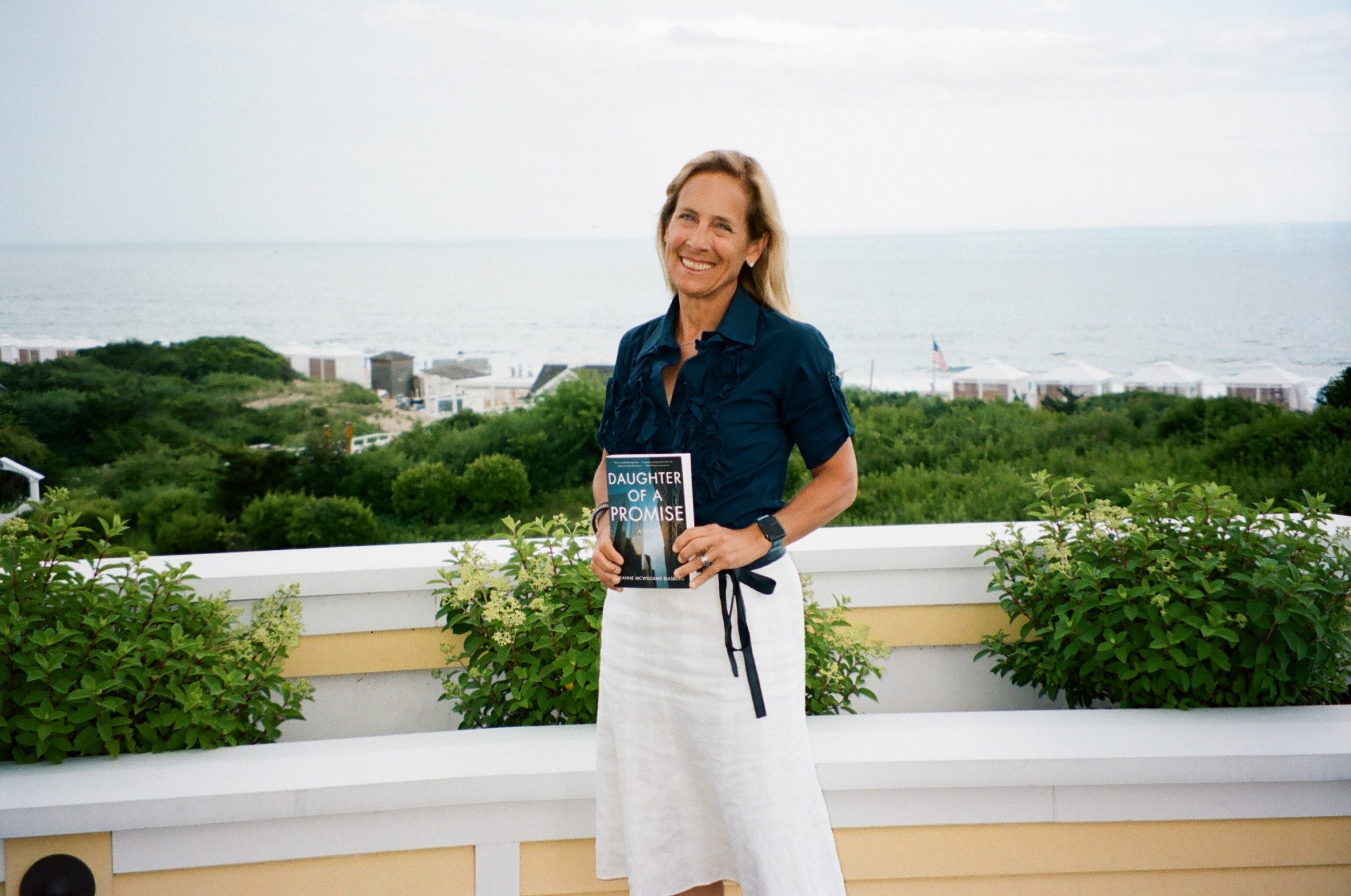
jeanne-blasberg-holding-book-daughter-of-a-promise-in-westerly-rhode-island--inspiration-for-long-harbor-in-front-of-the-ocean

A recent visit to the Ocean House in Watch Hill, RI to discuss DAUGHTER OF A PROMISE. This place was the inspiration for Long Harbor, a setting featured in all three of my novels.

A few months before EDEN’s publication, John and I traveled to Iceland where we spent a day with a guide named Thor. At the end of an adventurous afternoon, he showed us a plaque with a picture of farmers. “These are my ancestors, and this was their farm,” he said.

“How long has your family been in Iceland?” I asked. It’s the type of question that rolls off my tongue naturally, or maybe any American’s tongue, but he looked at me confused. I realized my foolishness when he answered, “My family has always been in Iceland, since the beginning.”

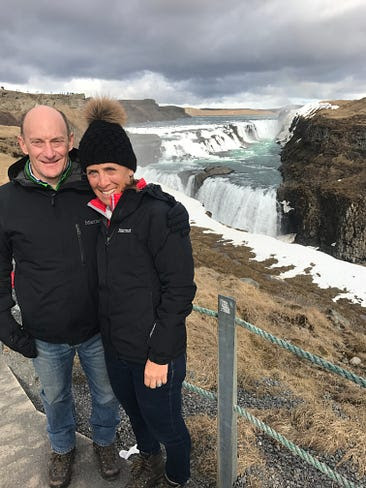
jeanne-blasberg-iceland-trip-travel-couple-with-waterfall

Exploring Iceland in 2017

Much as DAUGHTER OF A PROMISE’s protagonist, Betsabé, wonders what her outlook would have been if she’d been raised differently, I never got over Thor’s reply.  How might my human experience have been shaped if I’d felt such a connection to one specific place? If I walked the same land as my ancestors since the beginning of time! Before my grandparents, I don’t have much knowledge of the places my ancestors lived.

The closest thing for me was when John and I moved to Boston in 1994. I looked forward to living in a city where his family was established, where our last name meant something. Upon meeting me, people would ask, “Oh, are you related to Arthur? Are you married to his son?”

And I would answer “Yes,” and when they asked which son I was married to, the simplest reply was “Not the doctor.”

At that time in my life, stability was medicine. It was healing to raise our children with a sense of tradition which included schools, a congregation, and “our” beloved Chinese restaurant, three generations gathered around a large round table in the corner, spinning a Lazy Susan’s bounty, sharing a weekly feast. I made the city home for twenty-five years, interrupted only by a three-year stint in Switzerland.

I once considered my parents’ moving around as unfortunate, New York, Newport Beach, Dallas, Naples, as preventing my feeling connected to any one place. I’m sure others can resonate. Our country is one of immigrants or descendants of immigrants, with brave stories that make mine sound frivolous. There is something distinctly American about moving. (According to the US Census Bureau, about 1 in 10 people move every year. In 2022, about 8.2 million people moved between states.)

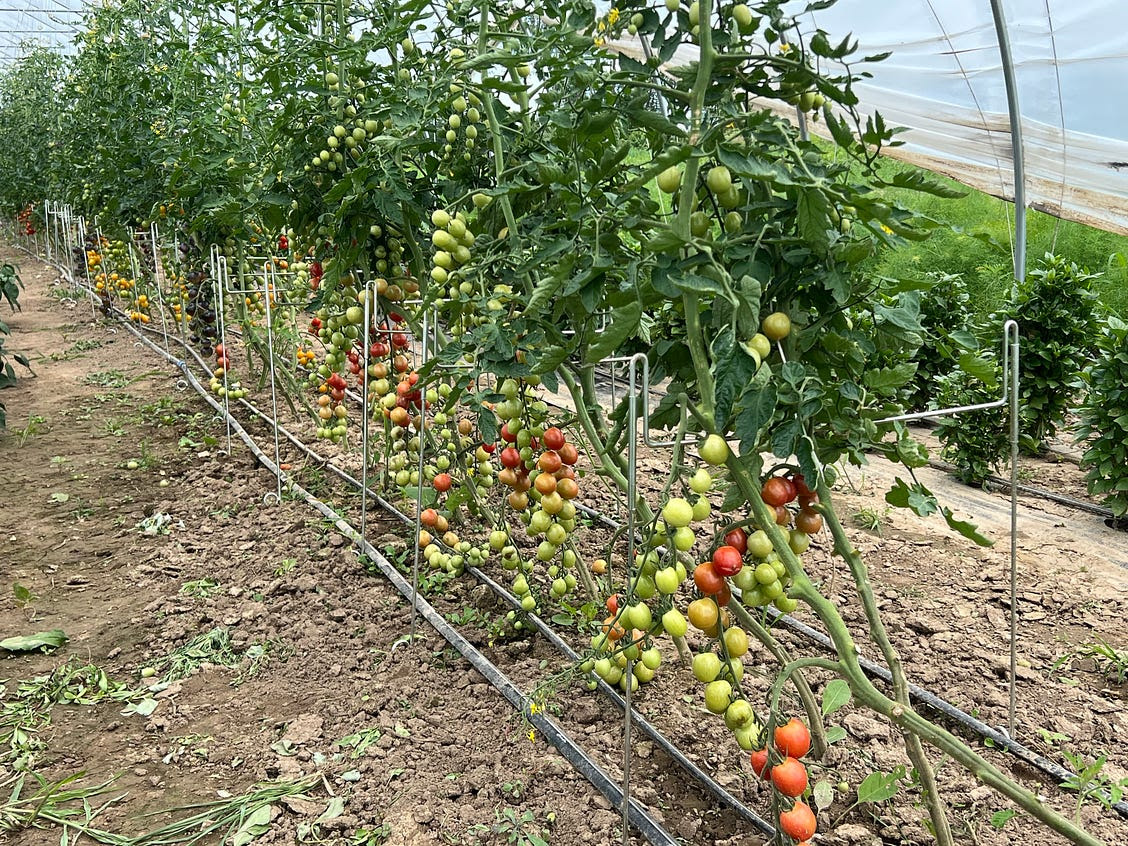
flynn-creek-carm-wisconsin-organic-regenerative-agriculture-farming-tomatoes

The beauty of tomatoes ready to burst at Flynn Creek Farm, July 2024

At the age of 58, I consider my willingness and ability to move a blessing. I think of the perspective that comes with being a stranger in a new land as character building. I know COVID inspired many people to move and also made moving possible. For example, we landed in Utah in the winter of 2021 although to a mixed reception. Salt Lake City and Park City represent a region with limited natural resources and a massive influx of people. Montrose Township, Wisconsin with its population of 1,100, however, was a different story. Although many in our new community can’t quite figure out why we’re here, most are pleased we are preserving 420 acres as agricultural, even if our regenerative, organic veggie farming might have them scratching their heads.

Why Wisconsin? I don’t have a logical answer, but as crazy as it seems, in all of my uprootedness, this place feels like a place to blossom. If you’ve made a move or have a point of view on moving, I’d love to hear from you in the comments!!

If you enjoyed Jeannie’s recommendations of COVID novels, read more of her book reviews on her blog, on Goodreads or StoryGraph, or on the New York Journal of Books. For more TBR inspiration, check out Jeannie’s curated book lists at Bookshop.org and Shepherd.com

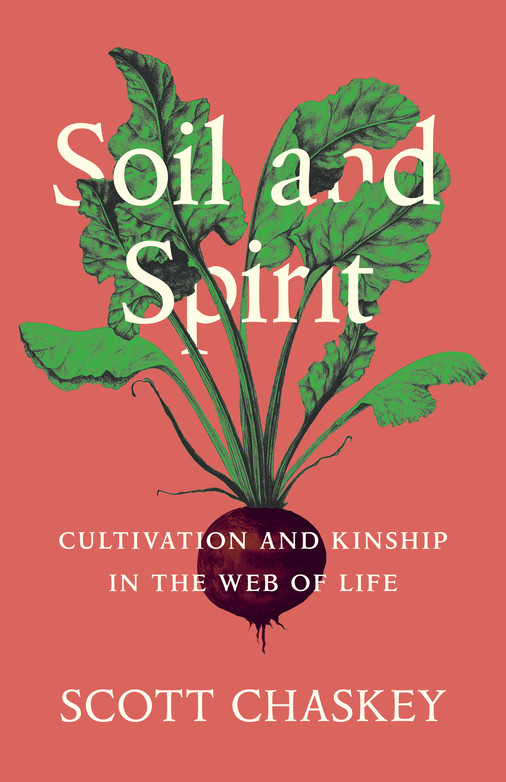
Soil and Spirit by Scott Chaskey

Soil and Spirit: Cultivation and Kinship in the Web of Life by Scott Chaskey

soil-and-spirit-scott-chasky-jeanne-blasberg-book-reviewI listened to the audio version of this book of essays as I walked our farm in the afternoons. Scott Chaskey’s reading voice as well as his poetic prose provided a meditative and spiritual accompaniment to those outings. These essays honor his work as well as the work of many land and seed stewards across the globe. They were also accessible to people who aren’t in farming as well and touched this beginning farmer in a way that sparked a sense of knowing and curiosity.

bookshop-support-local-bookstores


About Soil and Spirit:

As a farmer with decades spent working in fields, Scott Chaskey has been shaped by daily attention to the earth. A leader in the international Community Supported Agriculture (CSA) movement, he has combined a longstanding commitment to food sovereignty and organic farming with a belief that humble attention to microbial life and diversity of species provides invaluable lessons for building healthy human communities.

Along the way, between “planning the rotations of fields, ordering seeds and supplies, and watching the weather,” Chaskey was “always writing, poetic stanzas or pages to piece together a book.” And in this lively collection of essays, he explores the evolution of his perspective–as a farmer and as a poet. Tracing the first stage in his development back to a homestead in Maine, on the ancestral lands of the Abenaki, he recalls learning to cultivate plants and nourish reciprocal relationships among species, even as he was reading Yeats and beginning to write poems. He describes cycling across Ireland, stopping to taste blackberries and linger in the heather before meeting Seamus Heaney, and farming in Cornwall’s ancient landscape of granite, bramble, and twisted trees. Later in life, he travels to China for an international conference on Community Supported Agriculture, reading ancient wilderness poetry along the way, and then on to the pueblo of Santa Clara in New Mexico, where he joins a group of Indigenous women harvesting amaranth seeds. Closer to home on the Southfork of Long Island, he describes planting redwood saplings and writing verse in the shade of an ancient beech tree.

“Enlivened by decades of work in open fields washed by the salt spray of the Atlantic”—words that describe his prose as well as his vision of connectedness—Scott Chaskey has given us a book for our time. A seed of hope and regeneration in a time of widespread despair.

Read more of Jeannie’s Reviews on her blog, on Goodreads or StoryGraph, or on the New York Journal of Books. For more TBR inspiration, check out Jeannie’s curated book lists at Bookshop.org

Learning a New Language: The Lexicon of the Farm

The essay “Learning a New Language: The Lexicon of the Farm” originally appeared on Jeannie’s Substack. Subscribe here for monthly updates!

It’s no surprise to learn I love language, but what if I told you I’ve been struggling with new vocabulary? … the lexicon of the farm.

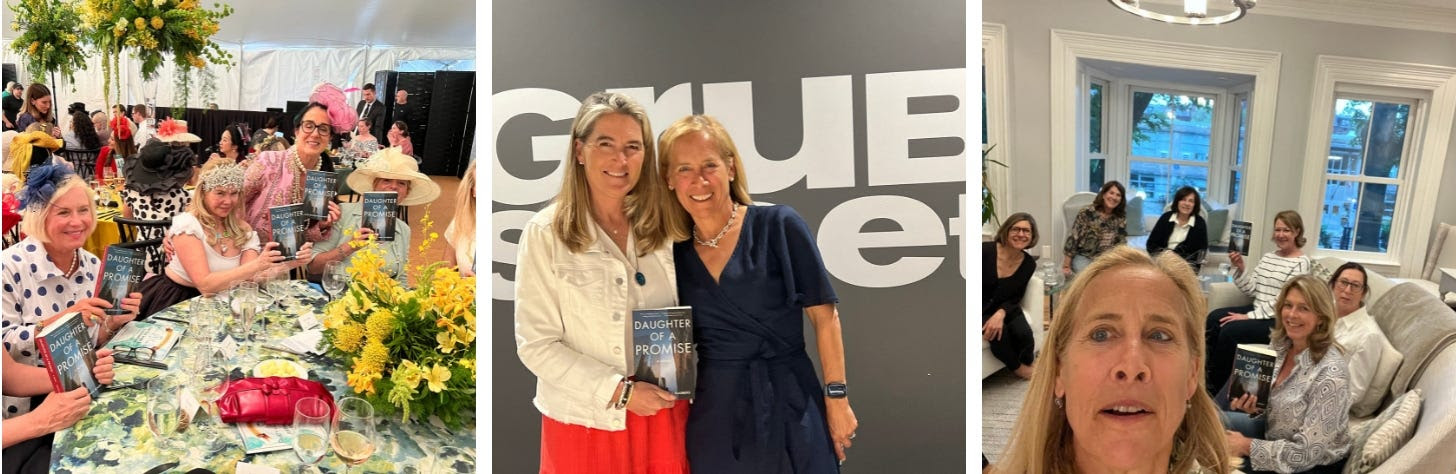
I’m back on the farm after an action-packed ten days in Boston!  I attended GrubStreet’s Muse & The Marketplace and and taught a craft session on Making Ancient Texts Your Own, in other words, writing retellings. GrubStreet and Porter Square Books hosted a launch party for Daughter of a Promise at the Calderwood Writers’ Stage. (If you missed it, you can watch a replay on my YouTube channel!) I attended book clubs and galas where my book was featured and had the joy of discussing my novel’s themes at Temple Israel, Boston.  The best part, as always, was reconnecting with friends: the dinners, walks, and squash games!!

jeanne-blasberg-book-events-daughter-of-a-promise-boston-may-2024

Party in the Park, Kathy Sherbrooke and me on the Grub Street stage, a favorite bookclub!!

I returned to Wisconsin in time to experience tornado warnings and bunkering in our basement. Phew, our newly arrived sheep are okay, but the storms will be a topic for a future essay, because today I planned to write about language. It’s no surprise to learn I love language, but what if I told you I’ve been struggling with new vocabulary? It’s not during my Spanish lessons, or with the NYT crossword puzzle, but the lexicon of the farm.

I can’t be too hard on myself, as it’s coming with firehose velocity: new names, terms, and expressions. The most sacred, in my opinion, belong to the birds I’ve identified using Cornell’s Merlin app. I record their songs every morning to catalog who’s passing through our prairie. Today I added a Yellow-bellied Flycatcher to the list. (Have a listen.) The idea is that consistent, albeit amateur data collection will show our land management techniques are leading to increased biodiversity, with birds as a bellwether.

flynn-creek-farm-fields-crops-sheep-lexicon-of-the-farm

Great forage for our new sheep, spring status of veggie beds, our new Dorpers

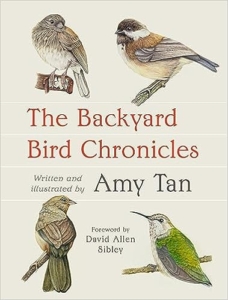
amy-tan-the-backyard-bird-chronicles-book

You will be blown away by Tan’s illustrations

Literary tangent – I am absolutely adoring Amy Tan’s new release The Backyard Bird Chronicles in which she writes, “…my impulse to observe birds comes from the same one that led me to become a fiction writer. By disposition, I am an observer. I want to know why things happen… I am drawn to see details, patterns, and aberrations that suggest a more interesting truth….”

Tan’s words resonated with me. (I was jumping in my seat, thinking me too! me too!) During the pandemic, many of us reconnected with nature, as a result birding may be at an all-time high. For my list-oriented brain, observing and identifying animals feels like a comfortable portal into a life on the land. Along with birds, I’m identifying plants (and weeds) using the Seek app from iNaturalist. I’ve gotten to the stage where I quiz myself as I walk about. The only problem is that plants look different every couple of days!!

It’s not just fluency I’m after but a need to communicate.

It’s not just fluency I’m after, but a need to communicate. Interacting with our farm managers, our crew, our neighbors, consultants in forestry and landscaping, earth movers and engineers can feel like listening to insiders’ shorthand with me interrupting every few sentences for a translation. These folks are competent regarding not only flora and fauna but with regard to the names of the tools, farming methods, farm vehicles, tractors and all the implements that are attached to them.

My neighbor to the north has owned her farm for decades, home-birthed her five children there, raised animals, drives tractors, and takes midnight joy rides in her gator during the full moon. She rattles off the names of every berry, shrub, and edible mushroom, solutions for weed suppression, when to mow to eradicate them. I’m like the person who was supposed to take six months of intensive Berlitz before heading off on a foreign assignment, yet as in any decent nightmare, I’ve arrived in the strange land where my mouth moves and no sound comes out. My neighbor kindly changes the topic from foraging for morels to her favorite restaurants in town.

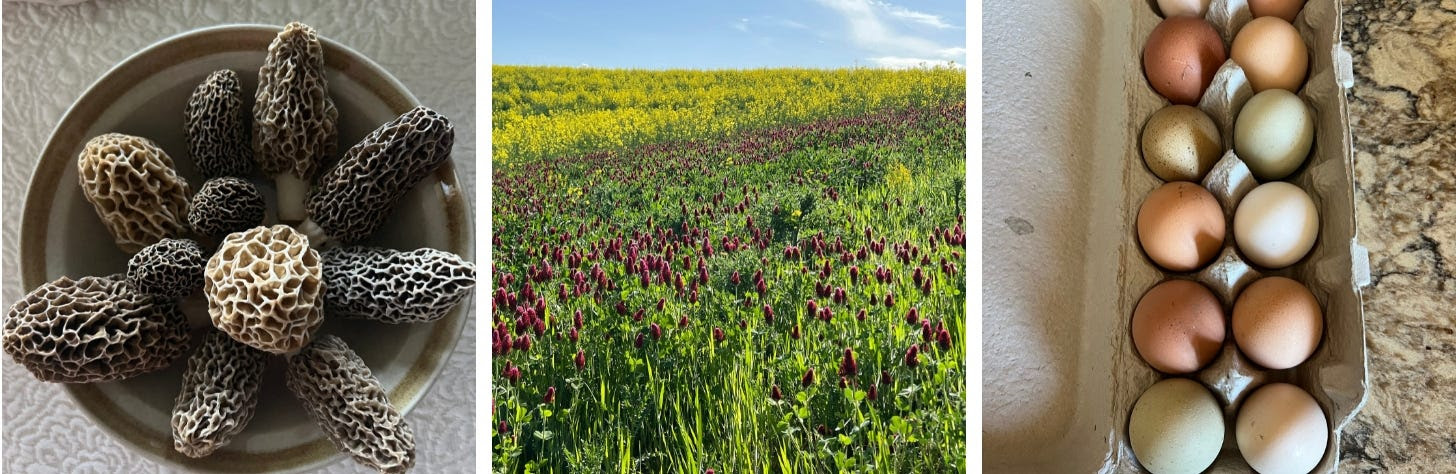
Three images: brown oblong morel mushrooms in a bowl, a bright green field and feel red-purple flowers, a dozen eggs in different colors in a cardboard egg carton

Favorite springtime farm features include foraged morels, the color of the prairie, and fresh turkey eggs from our wonderful neighbor (also she found the morels!!)

Let’s face it, knowing the lingo is the first step toward shedding the feeling of imposter, somebody who’s landed on a beautiful piece of Wisconsin farmland without a clue. And just when I think I’m making headway, I’m on a walk with a logger and refer to the cedar grove as the cyprus grove and lose all credibility. I can talk the talk in a domesticated, cultivated garden, but a regenerative farm is all about knowing what is indigenous and what is invasive and culling out the latter.

…learning this language is not purely academic: it goes hand in hand with getting dirty.

Topics I have blundered my way through in the past two years: The engineering of wells and stormwater retention ponds, paths of erosion, grading, and gravel. Solar power and battery storage, compost and chicken manure, fencing, cover crop and crop cover, high tunnels, caterpillar tunnels, transplants, seedlings, cold houses and hot houses, seed variety, skid steers, water wheel transplanters and rinse conveyors. Every construction project in my past involved professionals whose job it was to take care of the pesky details. But a responsible agricultural steward (me) needs to be on top of all the above. I now find myself in a community of extremely self-reliant people where one’s street cred goes way down when the amount of horsepower for each of your tractors isn’t on the tip of your tongue.

a-sand-county-almanac-by-aldo-leopold-book-cover

A lyrical classic

brent-preston-the-new-farm-our-ten-years-on-the-front-lines-of-the-good-food-revolution-book-cover

A funny book. You’d be crazy to get into farming after reading it!

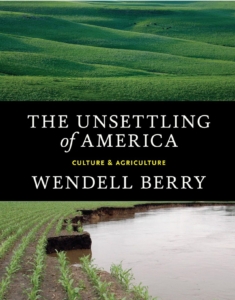
the-unsettling-of-america-culture-and-agriculture-by-wendell-barry-book-cover

An agitating treatise

While I may have once pictured myself reading Aldo Leopold and Wendell Berry, canning tomatoes, preserving berries, meditating to birdsong, and doing yoga on our screened porch, learning this new language is not purely academic: it goes hand in hand with getting dirty. As I manager the tension between experiencing the bucolic and doing the work… I remember Amy Tan’s mantra to “be the bird.”

Do you operate in a world with a unique language? Make me feel better and tell me your story!!

Sustainability in Publishing and in Life

The essay “Sustainability in Publishing and in Life” originally appeared on Jeannie’s Substack. Subscribe here for monthly updates!

daughter-of-a-promise-book-launch-boston

April 17, 2024 at Beacon Hill Bookstore and Cafe

Sustainability was a primary motivation for our getting into farming, however, the principles have seeped into every aspect of my life, including the way I think about book publishing.

Each year about 4 million book titles are released, about half of which are self-published and either e-readers or Print-on-Demand. The remainder generate print runs which are estimated in advance of a book’s release. Often, those estimates are way off. Creating physical books consumes pulp, water, glue, energy, transportation, and physical space for storage. With an average sell-through rate of 50%, that equates to hundreds of thousands of new books being returned to publishers and destroyed each year. This “traditional system” has been publicly scrutinized recently for a wide array of antiquated practices, but maybe not as much as it should be for the tons of waste it is responsible for.

Taking a more sustainable approach, my publisher and I decided to forgo a hard-cover release and were conservative with the initial print run. When stock runs out, we will opt for a print-on-demand model. I strongly encourage my readers to download digital e-reader copies or audiobooks (the narrators are phenomenal by the way!!) and start to transition to a reading life that consumes fewer natural resources.  

daughter-of-a-promise-Audiobook

Check out an excerpt of the audio version here:

Then there’s the human dimension of sustainability. Please don’t interpret the fact that I am not running around the country on a frenzied book tour as me not caring as much. I am committed more than ever to my work: to creation, expression, art, and leaving the earth a better place.

jeanne-blasberg-flynn-creek-farm-sustainabile-agriculture

Flynn Creek Farm in all its earthy glory.

I hope you have a meaningful Earth Day and incorporate one new practice into your life — compost food waste, forego insecticides in your yard, or just buy less stuff.

As always, thanks for reading!

PS – I just finished JAMES by Percival Everett and I’m finishing up SOLITO by Javier Zamora, both of which I highly recommend!!

Slowing it Down: Talking Snow, Story, and Swirling Change

Greetings from Park City where the world outside my window swirls with snow and the world inside my head swirls with story—from all that I saw at The Sundance Film Festival, as well as daily reading and writing. This includes re-reading Great Expectations by Charles Dickens and Middlemarch by George Elliot with FrizzLit. I highly recommend his book clubs!

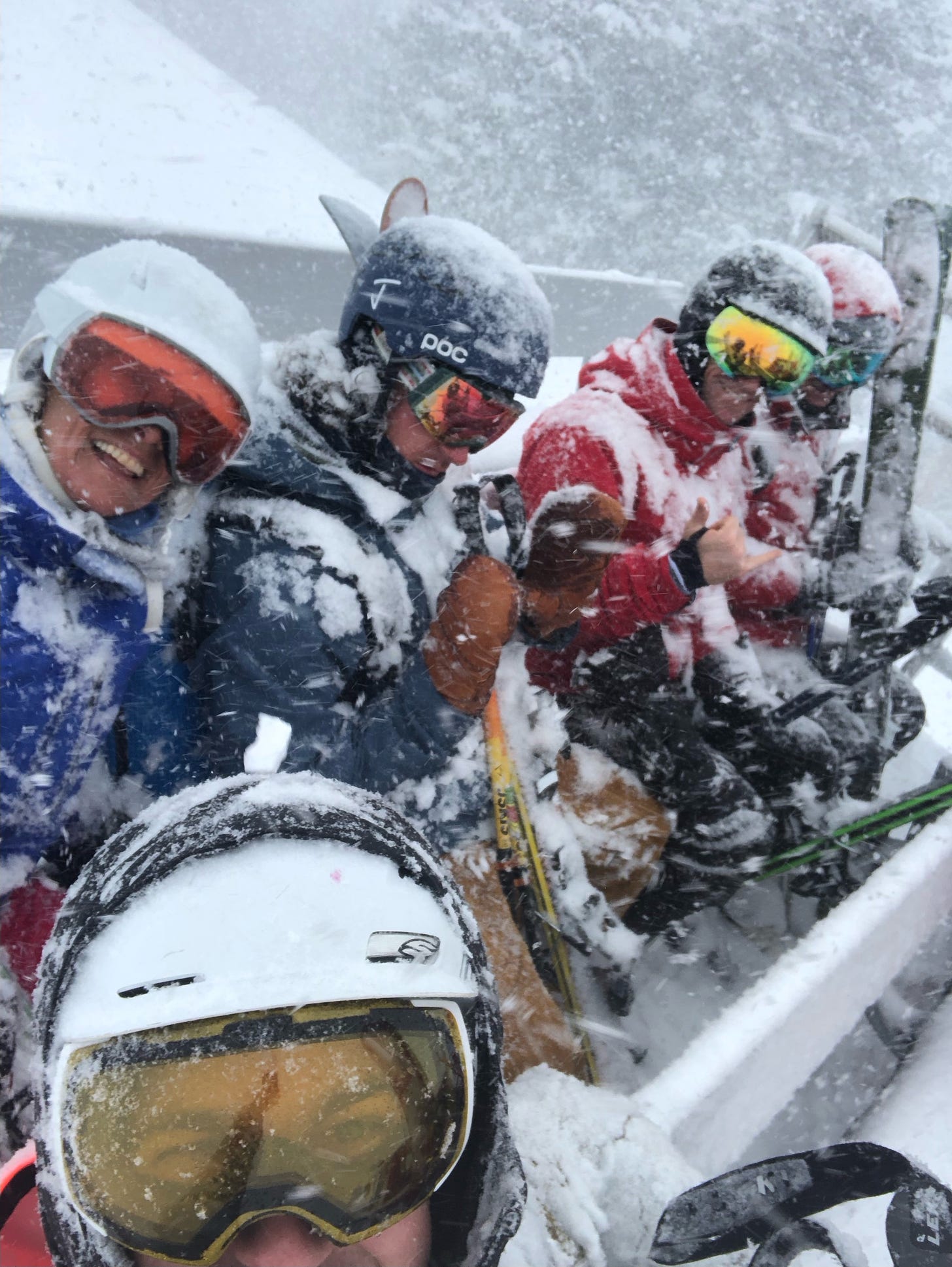
A snowy President’s Day Weekend, skiing with my sons and friends in UT.

I’m also busy preparing for the publication of Daughter of a Promise on April 2, completing interviews, writing articles, scheduling live events, as well as recording podcasts. If you haven’t yet preordered, please consider doing so! Let me know when you do and I’ll send you the e-reader version of my debut novel, Eden, as a thank you!

I am very proud of the protagonist in this book. Never has one of my characters undergone as much transformation as Bets Ruiz. She begins young and idealistic, a recent college graduate on the threshold of adulthood. She’s at that stage in life where she’s filled with hope and anxiety in equal measure. The novel is told from her retrospective point of view, in the form of a letter to her unborn son, about one fateful year. It is a year filled with desire, love, and tragedy – a year that breaks her open and ushers her into womanhood.

I’ve heard people call personal transformation reinvention – as if we always have a choice! I recently read an excerpt from Alain de Botton’s new book in Oldster Magazine that got me thinking about the change we choose to initiate. The author encourages people to not measure their lives in years but instead by the richness of those years. His theory hinges on a view that time exists in our minds, expanding or contracting based on how engaged we are in the present moment. When absorbed in something new, time is expansive. Being in a rut or stuck in a predictable routine, however, gives the effect of weeks, years, and decades passing by quickly. Initiating change may seem like a luxury not everyone is prepared to take on. However, it’s interesting to consider what holds us back. 

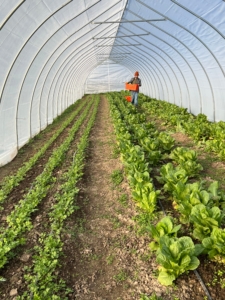
flynn-creek-farm-planting-season-greenhouse-rows

Extending the growing season in the upper Midwest

One thing that holds us back is fear. Deciding to dedicate myself to Flynn Creek Farm required I overcome fear. And it still does! Farming is incredible during the growing season surrounded by green land, with time expanding as broadly as the big blue sky. In the middle of the night, however, when Wisconsin is dark and covered in snow, I confess to waking in a panic.

Nonetheless, embracing change and tackling fear seem to be integral on my journey. I love skiing because of the opportunity to bite off chunks of fear. Publishing a novel, moving to a new town, and taking on a big project have all kept me awake at night with different degrees of doubt, but they have also resulted in immense joy and satisfaction. They have slowed time. Letting go of the past to make room for new things is my way of affirming life, my acknowledgment that there are many possible paths in this world and I needn’t settle for only one.

Constantly_curating_jeanne_blasberg_substackI’d love to hear about your experiences or philosophy of adopting change. Leave a comment below or on my Substack!


New Year, New Writing Updates!

The essay “New Year, New Writing Updates!” originally appeared on Jeannie’s Substack, Constantly Curating. Subscribe here for monthly updates!

Happy New Year!

If you’re a long-time reader or you’ve subscribed to my newsletter in the past, you may have noticed I’ve migrated my essays and letters to Substack. Introducing…

Logo for Jeanne Blasberg's Substack newsletter, Constantly Curating, in white text with black shadow on a bright red background with a white border

I hope to share writing monthly, and I hope you’ll come along with me on the journey. If you haven’t yet, please subscribe to my newsletter there to keep in touch! I’m excited to share lots of fun things with you this spring like upcoming events and book giveaways (hint hint, keep reading)—and let’s not forget the most exciting news of all:

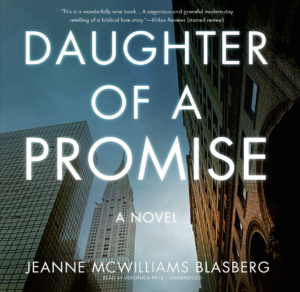
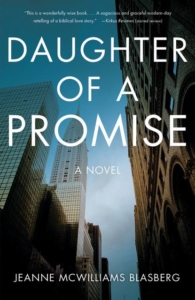
My new novel, Daughter of a Promisewill be released on April 2nd. I am very proud of this book and I am grateful for the positive feedback to date. Kirkus gave it a starred review, calling it, “A sagacious and graceful modern-day retelling of a biblical love story,” and Foreword called it, “….a powerful feminist novel set during a tumultuous year in New York.”

Daughter of a Promise Book CoverAnd yes, it’s a love story! A retelling of the legend of David and Bathsheba. My protagonist’s journey of love, loss, and self-awareness is one, I hope, many readers will relate to. Fans of Eden and The Nine, will enjoy the reappearance of some familiar characters and revisiting a beloved Rhode Island beach town.
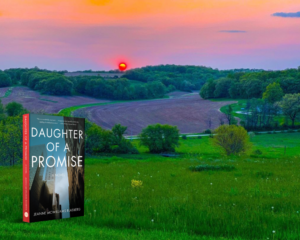
If you preorder Daughter of a Promise, and forward me a screenshot or photo of the receipt, I’ll send you an ebook download of Eden as a thank you! Preorders boost book-selling algorithms and help more people find the book, so I would truly appreciate your support.


This is a wonderfully wise book. Blasberg is an accomplished writer, and in Betsabé Ruiz she has created an insightful and strong young woman. “ — Kirkus Reviews (starred review)


flynn-creek-farm-sunset-jeanne-blasberg-daughter-of-a-promiseIn other news … John and I have bundled our passions for food, wellness, and the environment into a new venture called Flynn Creek Farm. It’s a 420-acre farm southwest of Madison, WI where we are growing veggies for the Forage Kitchens fast-casual restaurant chain. The master plan for the farm involves returning organic matter to the topsoil to grow small grains and graze cattle. We have dreams of planting an orchard and becoming a destination for education and eco-tourism. Building the wonderful team at Flynn Creek has brought both of us much joy as well as humility and new learning. I will always write fiction, but don’t be surprised if my content is inspired by this new adventure!
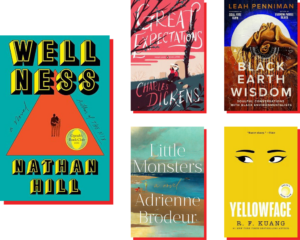
book-recommendations-wellness-great-expectations-yellowface-little-monsters-black-earth-wisdomThat’s all my exciting news for the moment, but stay tuned for updates. In the meanwhile, let me leave you with some books I’ve read this winter and highly recommend:

Check them out! And let me know what you’ve been reading.