Tag Archive for: Jeanne Blasberg

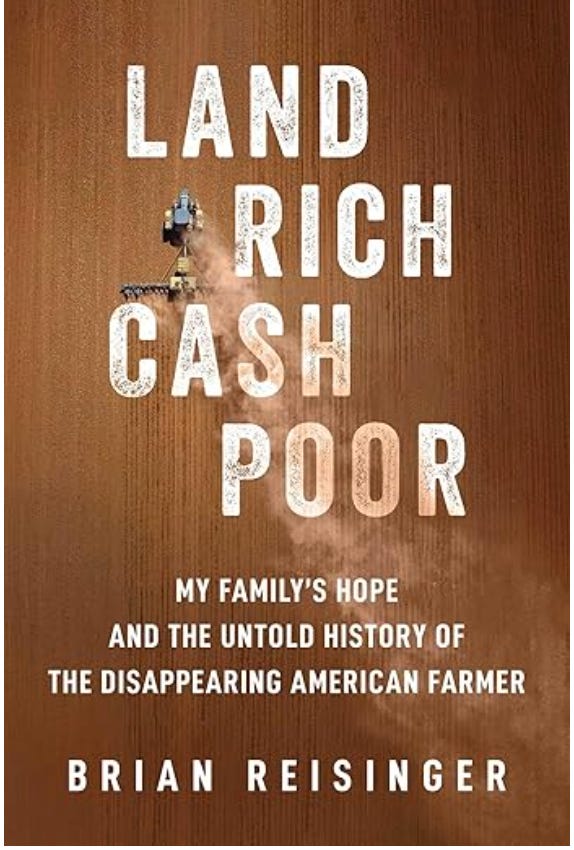
Land Rich, Cash Poor: My Family’s Hope and the Untold History of the Disappearing American Farmer by Brian Reisinger

Land Rich, Cash Poor: My Family’s Hope and the Untold History of the Disappearing American Farmer by Brian Reisinger

land-rich-cash-poor-brian-reisinger-book-review-jeanne-blasbergAs a new farmer in southwest Wisconsin, I read this book as a cautionary tale as well as motivation to keep doing what we are doing – trying to create a model for a mid-sized farm based on a regenerative, diversified operating plan. This story is told well. It is both personal and family memoir as well as a history of the ups and downs of the societal and geopolitical issues that have greatly impacted the American farmer over the past hundred years. Required reading for the frustrated citizen wondering how we got to this point!!

bookshop-support-local-bookstores


About Land Rich Cash Poor:

The hidden history of an economic and cultural catastrophe that is threatening our very food supply—the disappearance of the American farmer.

Taking on this story of heart and hardship, award-winning journalist Brian Reisinger weaves forgotten eras of American history with his own family’s four-generation fight for survival in Midwestern farm country. Readers learn the truth about America’s most detrimental and unexplained socioeconomic How the family farms that feed us went from cutting a middle-class path through the Great Depression to barely making ends meet in modern America. Along the way, they’ll see what it truly takes to feed our  accidents that can kill or maim; weather that blesses or threatens; resilience in the face of crushing economic crises, from inflation to COVID-19; and the tradition that presses down on each generation when you’re not just fighting for your job, you’re fighting for your heritage.

With newly analyzed data, sharp historical analysis, honest debate, and personal storytelling, Reisinger reveals the roots of a problem with stakes as high as they come. A vulnerable food supply, soaring prices for American families, environmental and ecological decay, farmer suicides, addictions, a deepening urban-rural divide, and more worries than ever about what’s for dinner. These are all becoming the hallmarks of a food system that has long stood as a modern miracle. Land Rich, Cash Poor offers the honest truth about these issues, and a candid look at what we can do about them—before it’s too late.

If you enjoyed Jeannie’s review of Colored Television, read more of her book reviews on her blog, on Goodreads or StoryGraph, or on the New York Journal of Books. For more TBR inspiration, check out Jeannie’s curated book lists at Bookshop.org and Shepherd.com

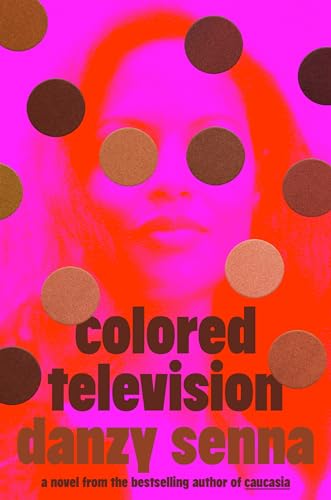
Colored Television by Danzy Senna

This review of Colored Television by Danzy Senna was originally published in the New York Journal of Books.

Colored Television by Danzy Senna

colored-television-danzy-senna-book-review-jeanne-blasbergColored Television is a sharp, comedic novel about the competing drives to make money and make art in one woman’s pursuit of her “American Dream.” Most of all, it is a novel that explores race and racial identities, portraying protagonist Jane, a mixed-race middle-aged mother, as she struggles for belonging in a society that seems either black or white. The mixed-race (white and Black) experience defines her life’s work, writing for the prior decade what her husband, Lenny, terms her “Mulatto War and Peace,” as well as how she thinks of her life, being born into an in-between place, perennially straddling a gap. Her actions in the novel are motivated by a desire for rootedness, epitomized by her young eyes in the perfect pages of home décor catalogs, and later manifested as a craftsman-style home surrounded by a picket fence, owning a labradoodle, in “Multiracial Mulberry,” where she’d be able to send her two children, Ruby and Finn, to a “blue-ribbon” public school.

Her character waffles between grit and confidence and an underlying insecurity that stems from her parents “[raising] her and her sister in a ghetto of artists and poets, guaranteeing that they would be alienated from rich children and poor children alike, thanks to a cultural and political vocabulary that suggested class and privilege without actual class and privilege – gauche caviar without the actual caviar. Jane remembered wishing at a certain point, Ruby’s age maybe, that she came from a dignified working-class immigrant family. Her kind of poverty was the loneliest kind, the least dignified kind, because her parents had chosen it. They had picked poetry over profit.”

In addition, she reflects on her own grade school experience as her daughter is the same age as when “Jane and her sister had been part of a program called METCO that bused a select group of Black children—a talented two percent as it were—from the inner city of Boston to the suburbs. Not too many, just enough to sprinkle those suburban white schools with seasoning. Jane had been sent to a school in Brookline, where she made a friend, a wan white girl with a funny laugh named Emma.”

A particularly poignant scene drives home Jane’s yearning on behalf of her children. She hosts Ruby’s birthday party in the glitzy home in which they are house-sitters, joined by guests they have met only recently, and presents her daughter with an expensive American Girl doll the family can’t afford, sending Ruby up to her bedroom in tears because if it was going to be her only American Doll she didn’t want the dark-skinned one.

It is Jane’s desire to provide stability for her children that makes her often cringe-worthy tactics redeemable. She is an academic on sabbatical aiming to finish her long-awaited second novel, the publication of which will help her rise in status at the college where she teaches, allowing her family to stop bouncing around Los Angeles in sublets and borrowed spaces.

“an important book by an important author who understands only too well that heavy topics are most accessible when delivered with a spoonful of sugar.”

As Danzy Senna’s novel opens, Jane sits in her friend’s borrowed home, in his borrowed office and borrowed desk, drinking up his wine and wearing his wife’s clothing. She finally feels motivated, gaining steam and ambition with the completion of her novel in sight, adding complexity to this multilayered opus that weaves together past and present voices of the mixed-race experience.

In the weeks between the submitted manuscript first impressing her agent (who obviously had yet to read it) and being brutally rejected by her editor, she indulges in optimistic house-hunting and spending. After accepting the rejection, although hiding it from her husband, she musters an earnest instinct to hustle, albeit dishonestly, justifying her actions as necessary to salvage her dreams for her family.

Jane is a complex yet sympathetic protagonist for whom the reader roots while also feeling dread as she lies to Lenny, pitches her friend’s TV agent, avoids his texts and calls, then takes meetings with players in the industry under false pretenses. Her idea is to turn the underlying themes of her novel into a comedic series, and she wins the opportunity to work with the up and coming showrunner, Hampton Ford. He is a Black man who senses he is benefitting from “a moment” and operates with the urgency to not squander the opportunity.

Together, they have high hopes of delivering something meaningful and profound that will push the TV watching public to be entertained by racial truths. When Jane feels guilt over her tenuous path, she justifies her actions by fixating on Lenny’s inability to make money from his art and the ticking clock of needing to find a home for her family. Jane’s father had instilled in her “Race is about money and money is about race. Black people don’t want to be white, they just want what white people have.”

Danzy Senna’s observant eye and humor result in many brilliant, laugh-out-loud moments. Whether it be with regard to the arduous journey of the novelist as compared to the faster roll-out of TV shows, Jane’s insecurity in the face of her son’s special needs diagnosis, the absurdity of Los Angeles’s special brand of superficiality, or the way she used a psychic to help snare Lenny as her husband, this novel uses comedy to deliver the racial truths Jane had hoped a future TV series might.

Don’t let the comedic epitaph fool you. This is an important book by an important author who understands only too well that heavy topics are most accessible when delivered with a spoonful of sugar.

bookshop-support-local-bookstores

About Colored Television:

A brilliant dark comedy about second acts, creative appropriation, and the racial identity–industrial complex.

Jane has high hopes her life is about to turn around. After years of living precariously, she, her painter husband, Lenny, and their two kids have landed a stint as house sitters in a friend’s luxurious home high in the hills above Los Angeles, a gig that coincides magically with Jane’s sabbatical. If she can just finish her latest novel, Nusu Nusu, the centuries-spanning epic Lenny refers to as her “mulatto War and Peace,” she’ll have tenure and some semblance of stability and success within her grasp. But things don’t work out quite as hoped. In search of a plan B, like countless writers before her Jane turns her desperate gaze to Hollywood. When she finagles a meeting with a hot young producer with a seven-figure deal to create “diverse content” for a streaming network, he seems excited to work with a “real writer” to create what he envisions as the greatest biracial comedy ever to hit the small screen. Things finally seem to be going right for Jane—until they go terribly wrong. Funny, piercing, and page-turning, this is Senna’s most on-the-money novel yet.

If you enjoyed Jeannie’s review of Colored Television, read more of her book reviews on her blog, on Goodreads or StoryGraph, or on the New York Journal of Books. For more TBR inspiration, check out Jeannie’s curated book lists at Bookshop.org and Shepherd.com

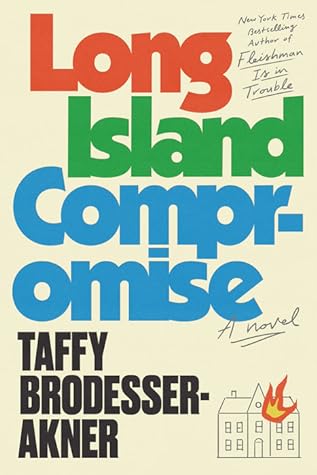
Long Island Compromise by Taffy Brodesser-Akner

Long Island Compromise by Taffy Brodesser-Akner

long-island-compromise-taffy-brodesser-akner-jeanne-blasberg-book-reviewI loved this novel for its sharp, whip-smart observations and turns of phrase. I love a book with funny, revelatory descriptions and this one delivers. It is a simple plot that is basically an excuse to delve into the theme of generational inheritance and trauma. The Fletcher family is scarred by their father’s kidnapping, their inherited wealth, as well as the toxicity of the family business – a styrofoam factory. The character development is thorough with each sibling getting a good chunk of ink, allowing for the nuclear family described from various angles and points in time. We also see the family characters as they bump up against the outside world – employers, spouses, love interests, friends, and employees. These scenes offer comedic dialogue, examples of paranoia, neurosis, and guilt – scenes which the author has great skill in painting to the extent they could be laugh out loud funny and cringe-worthy at the same time. The reader deduces from the opening pages that this is a doomed family, the novel portraying their fall from grace, nevertheless there is so much intelligent language and observation to be soaked up from every page. Highly recommend.

bookshop-support-local-bookstores

About Long Island Compromise:

NATIONAL BESTSELLER • An exhilarating novel about one American family, the dark moment that shatters their suburban paradise, and the wild legacy of trauma and inheritance, from the New York Times bestselling author of Fleishman Is in Trouble

New York Times Book Review Editors’ Choice • New York Magazine’s Beach Read Book Club Pick • Belletrist Book Club Pick

“A big, juicy, wickedly funny social satire . . . probably the funniest book ever about generational family trauma.”—Oprah Daily

“Were we gangsters? No. But did we know how to start a fire?”

In 1980, a wealthy businessman named Carl Fletcher is kidnapped from his driveway, brutalized, and held for ransom. He is returned to his wife and kids less than a week later, only slightly the worse, and the family moves on with their lives, resuming their prized places in the saga of the American dream, comforted in the realization that though their money may have been what endangered them, it is also what assured them their safety.

But now, nearly forty years later, it’s clear that perhaps nobody ever got over anything, after all. Carl has spent the ensuing years secretly seeking closure to the matter of his kidnapping, while his wife, Ruth, has spent her potential protecting her husband’s emotional health. Their three grown children aren’t doing much better: Nathan’s chronic fear won’t allow him to advance at his law firm; Beamer, a Hollywood screenwriter, will consume anything—substance, foodstuff, women—in order to numb his own perpetual terror; and Jenny has spent her life so bent on proving that she’s not a product of her family’s pathology that she has come to define it. As they hover at the delicate precipice of a different kind of survival, they learn that the family fortune has dwindled to just about nothing, and they must face desperate questions about how much their wealth has played a part in both their lives’ successes and failures.

Long Island Compromise spans the entirety of one family’s history, winding through decades and generations, all the way to the outrageous present, and confronting the mainstays of American Jewish life: tradition, the pursuit of success, the terror of history, fear of the future, old wives’ tales, evil eyes, ambition, achievement, boredom, dybbuks, inheritance, pyramid schemes, right-wing capitalists, beta-blockers, psychics, and the mostly unspoken love and shared experience that unite a family forever.

Read more of Jeannie’s Reviews on her blog, on Goodreads or StoryGraph, or on the New York Journal of Books. For more TBR inspiration, check out Jeannie’s curated book lists at Bookshop.org

Soil and Spirit by Scott Chaskey

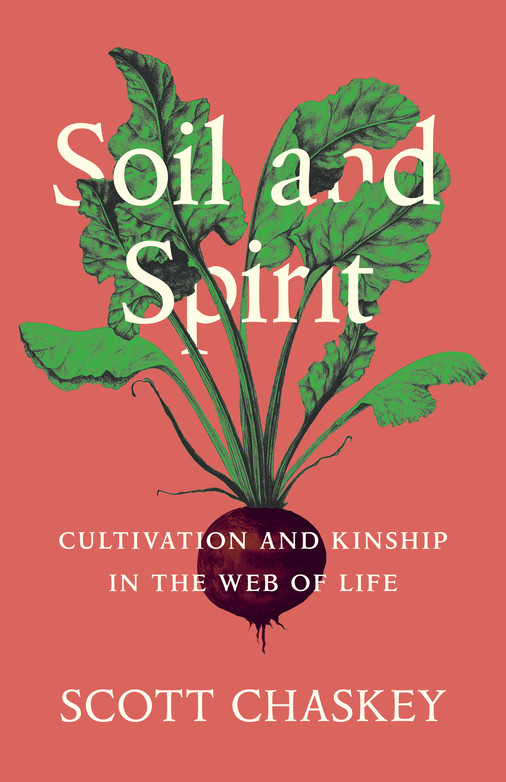
Soil and Spirit: Cultivation and Kinship in the Web of Life by Scott Chaskey

soil-and-spirit-scott-chasky-jeanne-blasberg-book-reviewI listened to the audio version of this book of essays as I walked our farm in the afternoons. Scott Chaskey’s reading voice as well as his poetic prose provided a meditative and spiritual accompaniment to those outings. These essays honor his work as well as the work of many land and seed stewards across the globe. They were also accessible to people who aren’t in farming as well and touched this beginning farmer in a way that sparked a sense of knowing and curiosity.

bookshop-support-local-bookstores


About Soil and Spirit:

As a farmer with decades spent working in fields, Scott Chaskey has been shaped by daily attention to the earth. A leader in the international Community Supported Agriculture (CSA) movement, he has combined a longstanding commitment to food sovereignty and organic farming with a belief that humble attention to microbial life and diversity of species provides invaluable lessons for building healthy human communities.

Along the way, between “planning the rotations of fields, ordering seeds and supplies, and watching the weather,” Chaskey was “always writing, poetic stanzas or pages to piece together a book.” And in this lively collection of essays, he explores the evolution of his perspective–as a farmer and as a poet. Tracing the first stage in his development back to a homestead in Maine, on the ancestral lands of the Abenaki, he recalls learning to cultivate plants and nourish reciprocal relationships among species, even as he was reading Yeats and beginning to write poems. He describes cycling across Ireland, stopping to taste blackberries and linger in the heather before meeting Seamus Heaney, and farming in Cornwall’s ancient landscape of granite, bramble, and twisted trees. Later in life, he travels to China for an international conference on Community Supported Agriculture, reading ancient wilderness poetry along the way, and then on to the pueblo of Santa Clara in New Mexico, where he joins a group of Indigenous women harvesting amaranth seeds. Closer to home on the Southfork of Long Island, he describes planting redwood saplings and writing verse in the shade of an ancient beech tree.

“Enlivened by decades of work in open fields washed by the salt spray of the Atlantic”—words that describe his prose as well as his vision of connectedness—Scott Chaskey has given us a book for our time. A seed of hope and regeneration in a time of widespread despair.

Read more of Jeannie’s Reviews on her blog, on Goodreads or StoryGraph, or on the New York Journal of Books. For more TBR inspiration, check out Jeannie’s curated book lists at Bookshop.org

Jeanne McWilliams Blasberg’s 3 favorite reads in 2023

This article on Jeannie’s Best Books of 2023 was originally published on Shepherd.com.

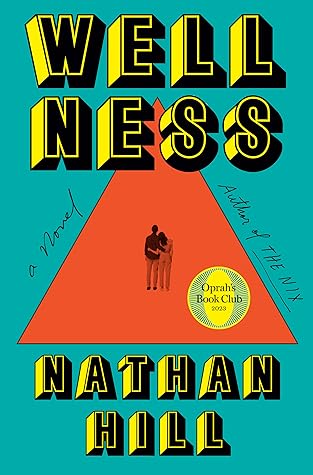
My favorite read in 2023…


Why did I love this book?

Wellness is the first of my best books for 2023. Nathan Hill writes with the wisdom and life knowledge of a person much older but with his generation’s funny, dry, cutting language. His observations about diets and tech, to name just two societal staples, are hysterical. And yet, while being funny and amusing, the book is heartbreakingly poignant on themes of loss and disappointment.

I toggled between reading and listening to the audiobook because Ari Fliakos is my all-time favorite narrator. His tone captures the wry wit of Hill’s characters and commentary. The best kind of book is one you can’t wait to share, and as my husband read before bed at night, I would ask him to read it aloud so we could share a good laugh.


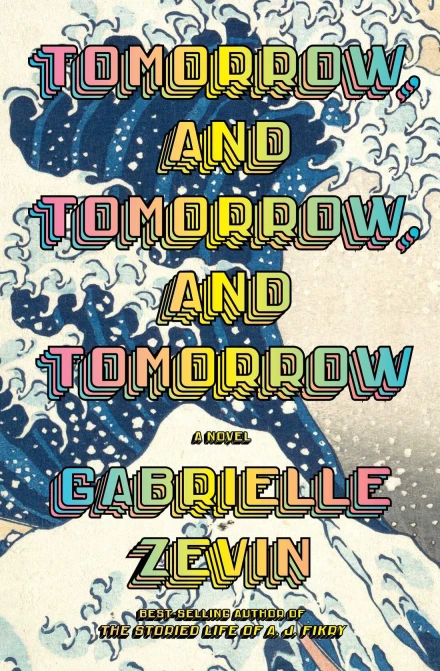
My 2nd favorite read in 2023…


Why did I love this book?

So much more than a coming-of-age journey, next up in my list of best books is Tomorrow and Tomorrow and Tomorrow. This novel’s two main characters, Sadie and Sam, develop from a childhood friendship centered on early-generation video games like Mario Bros and Donkey Kong to designing their own and starting a company together. Combining a history of gaming with themes of unrequited love, class, and parents’ expectations, this novel delivers on multiple dimensions.

The various settings were highly provocative, from Harvard and MIT in Cambridge to Los Angeles and the virtual world of gaming narratives. My favorite line was when Sam asks Sadie at the novel’s end while she thought they never became romantically involved (he had assumed it was because he was poor, Korean, or disabled). Sadie replies, “Romantic love is so common.” Indeed, the collaborative connection between artists this book so deftly portrays is one on a higher plane.

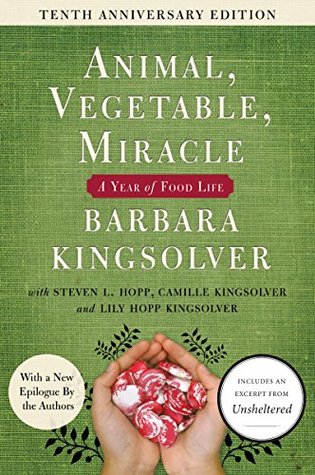
My 3rd favorite read in 2023…


Why did I love this book?

I was inspired and shocked that it took me this long to find this book. Both because I am beginning my own agricultural journey and because Barbara Kingsolver is an all-time favorite, I loved this book’s calendar-following content and the voice it employs. The family’s pact to eat local and seasonal food for a year is portrayed honestly with humor and joy instead of preachiness.

It speaks to the things we dive into full-bore without completely appreciating how much work it entails. With determination and intentionality, they commune with the land and find a community- truly aspirational. 

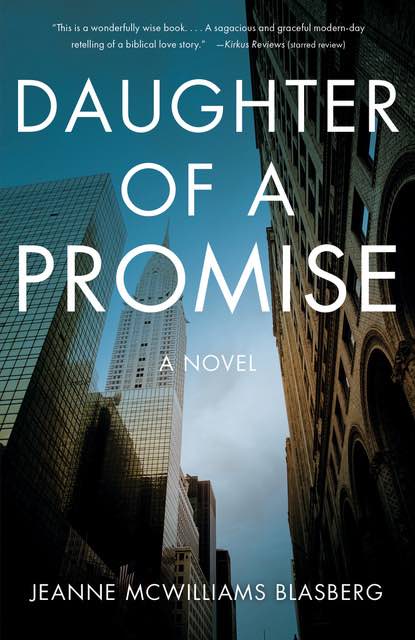
Plus, check out my book…

What is my book about?

Days after graduating college in the spring of 2019, Betsabé Ruiz’s life is nothing less than cinematic. Although her job at a white-shoe Wall Street investment bank is the opportunity of a lifetime, she is unprepared for the magnitude of wealth swirling about her, the long hours and close quarters that infuse her professional relationships with intimacy, and an unexpected attraction to her boss. And like all great films, Betsabé’s New York dream comes with a twist that challenges her to find a balance between where she came from and where she’s going.

Told in the retrospective as a letter to her unborn son, this book represents Betsabè’s coming-of-age and a modern retelling of a biblical love story.

If you enjoyed Jeannie’s recommendations of COVID novels, jead more of her book reviews on her blog, on Goodreads or StoryGraph, or on the New York Journal of Books. For more TBR inspiration, check out Jeannie’s curated book lists at Bookshop.org and Shepherd.com

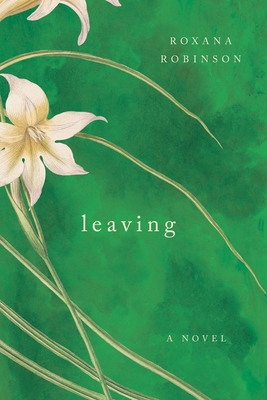
Leaving by Roxana Robinson

Leaving by Roxana Robinson

leaving-roxana-robinson-jeanne-blasberg-book-review** spoiler alert ** So many people I admire gushed over this book and so I began this book with high hopes. It certainly has good qualities, the language and the voice are strong. This is the story of a couple who had been together in college finding each other again after thirty or forty years and the man, Warren, leaves his wife to be with the woman, Sarah. Their relationship becomes a long, painful, dead-end street. That aside, I couldn’t reconcile Sarah’s character – she was attracted to Warren and pleased he was pursuing her, but never seemed willing to totally commit to moving somewhere to be with him or to share her home with him. She was rigid and and unwilling to compromise and yet when Warren breaks it off it’s like her world has come to an end. Her thoughts and reactions were misaligned. In addition, the author could be repetitive, harping on for pages and pages. There is a good bit of the book dedicated to the main characters’ relationships with their children, the through lines of which got lost for me. I wont be one of those reviewers who complains about not liking the characters, but there were three in this book I just couldn’t listen to any longer.

bookshop-support-local-bookstores


About Leaving:

What risks would you be willing to take to fall in love again?

“I never thought I’d see you here,” Sarah says. Then she adds, “But I never thought I’d see you anywhere.” Sarah and Warren’s college love story ended in a single moment.

Decades later, when a chance meeting brings them together, a passion ignites―threatening the foundations of the lives they’ve built apart. Since they parted in college, each has married, raised a family, and made a career. When they meet again, Sarah is divorced and living outside New York, while Warren is still married and living in Boston.

Seeing Warren sparks an awakening in Sarah, who feels emotionally alive for the first time in decades. Still, she hesitates to reclaim a chance at love after her painful divorce and years of framing her life around her children and her work. Warren has no such reservations: he wants to leave his marriage but can’t predict how his wife and daughter will react.

As their affair intensifies, Sarah and Warren must confront the moral responsibilities of their love for their families and each other. Leaving charts a passage through loyalty and desire as it builds to a shattering conclusion.

In her boldest and most powerful work to date, Roxana Robinson demonstrates her “trademark gifts as an intelligent, sensitive analyst of family life” (Wendy Smith, Chicago Tribune ) in an engrossing exploration of the vows we make to one another, the tensile relationships between parents and their children, and what we owe to others and ourselves.

Read more of Jeannie’s Reviews on her blog, on Goodreads or StoryGraph, or on the New York Journal of Books. For more TBR inspiration, check out Jeannie’s curated book lists at Bookshop.org

The Best Books that Utilize COVID in the Plot

This article about five of Jeannie’s favorite COVID novels was originally published on Shepherd.com.

Why am I passionate about this?

I am an author who also penned a novel during the pandemic, with a timeline that stretched into the first six months of the pandemic–against the advice of my agent and the publishing industry at large. I know many authors choose not to write about intense political and social happenings, but that “life will never be the same again” feeling was something I couldn’t avoid. The pandemic threw people together and kept us apart at the same time. I was intensely interested in its incubator effect as well as the silo aspect quarantining had on all of our lives. COVID novels reflect that and allow us to reflect on those early days and years and their world-shifting changes as we move forward.

What is my book about?

My third novel, Daughter of a Promise, was published in April 2024.

Days after graduating college in the spring of 2019, Betsabé Ruiz’s life is turning out to be nothing less than cinematic. Although her job at a white-shoe Wall Street investment bank is the opportunity of a lifetime, she is not prepared for the magnitude of wealth swirling about her, the long hours and close quarters that infuse her professional relationships with intimacy, nor an unexpected attraction to her boss. And like all great films, Betsabé’s New York dream comes with a twist that challenges her to find a balance between where she came from and where she’s going.

When Bets begins her first post-college job at First Provident in the summer of 2019, she has no idea how drastically the world will change within the year—or where the rollercoaster of life will take her relationships, with friends, family, romances, and most importantly with herself. Daughter of a Promise is a COVID novel, but also a coming of age story, a love story, and a modern retelling of a timeless classic tale.

COVID Novels I Recommend
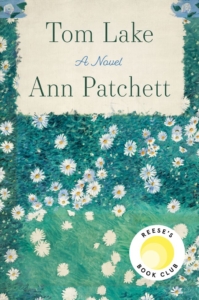
 

tom-lake-ann-patchett-covid-novelTom Lake

By Ann Patchett

Why did I love this book?

As the mother of three grown children who also returned home during the pandemic, I loved Patchett’s usage of an unanticipated reunion to tell her children a long, drawn-out story.

I love novels that explore the theme of inheritance, not of material possessions, but the emotional skills that are handed down between generations. Patchett explores what we share and what we hold back, as well as our children’s seemingly insatiable appetite for stories about our young lives.

This book is also a love story about Northern Michigan and a life dedicated to farming orchards. The protagonist’s point of view may be that of a grown woman in her fifties, but in recounting the love affair of one summer, she reaffirms her own life choices.

For more about my first recommendation for COVID novels, read my initial review.

What is this book about? 

In this beautiful and moving novel about family, love, and growing up, Ann Patchett once again proves herself one of America’s finest writers.

In the spring of 2020, Lara’s three daughters return to the family’s orchard in Northern Michigan. While picking cherries, they beg their mother to tell them the story of Peter Duke, a famous actor with whom she shared both a stage and a romance years before at a theater company called Tom Lake. As Lara recalls the past, her daughters examine their own lives and relationship with their mother, and are forced to reconsider the world and everything they thought they knew.

Tom Lake is a meditation on youthful love, married love, and the lives parents have led before their children were born. Both hopeful and elegiac, it explores what it means to be happy even when the world is falling apart. As in all of her novels, Ann Patchett combines compelling narrative artistry with piercing insights into family dynamics. The result is a rich and luminous story, told with profound intelligence and emotional subtlety, that demonstrates once again why she is one of the most revered and acclaimed literary talents working today.
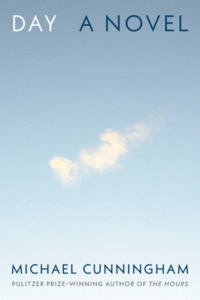
day-michael-cunningham-covid-novelDay

By Michael Cunningham

Why did I love this book?

As if relationships between siblings and spouses aren’t already complicated enough, Cunningham throws the isolation and distance of COVID into the mix.

I love this author’s ability to turn extremely authentic and simple domestic dramas occurring on one day into revelatory ideas about child-rearing and the expectations family members have of one another. A generation of young parents, their inquisitive children, the devotion of a brother and sister, and an infatuation between brothers-in-law are the subjects of this well-paced work.

The effect of the pandemic on a marriage, on family members’ psyches, and the aftermath of one of their deaths is written with tenderness and insight. This is a fabulous read depicting the new age in which we live.

Read my initial review here.

What is this book about?

As the world changes around them, a family weathers the storms of growing up, growing older, falling in and out of love, losing the things that are most precious—and learning to go on—from the Pulitzer Prize–winning author of The Hours

April 5, 2019 : In a cozy brownstone in Brooklyn, the veneer of domestic bliss is beginning to crack. Dan and Isabel, troubled husband and wife, are both a little bit in love with Isabel’s younger brother, Robbie. Robbie, wayward soul of the family, who still lives in the attic loft; Robbie, who, trying to get over his most recent boyfriend, has created a glamorous avatar online; Robbie, who now has to move out of the house—and whose departure threatens to break the family apart. Meanwhile Nathan, age ten, is taking his first uncertain steps toward independence, while Violet, five, does her best not to notice the growing rift between her parents.

April 5, 2020: As the world goes into lockdown, the brownstone is feeling more like a prison. Violet is terrified of leaving the windows open, obsessed with keeping her family safe, while Nathan attempts to skirt her rules. Isabel and Dan communicate mostly in veiled jabs and frustrated sighs. And beloved Robbie is stranded in Iceland, alone in a mountain cabin with nothing but his thoughts—and his secret Instagram life—for company.

April 5, 2021: Emerging from the worst of the crisis, the family reckons with a new, very different reality—with what they’ve learned, what they’ve lost, and how they might go on.

From the brilliant mind of Pulitzer Prize winner Michael Cunningham, Day is a searing, exquisitely crafted meditation on love and loss and the struggles and limitations of family life—how to live together and apart.
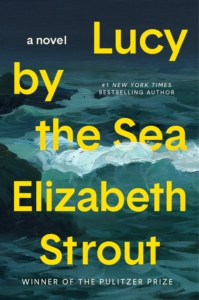
lucy-by-the-sea-elizabeth-strout-covid-novelLucy by the Sea

By Elizabeth Strout

Why did I love this book?

Elizabeth Strout is perfecting a practice I’m sold on–the literary recasting of characters from one novel to the next.

In the third of my COVID novels recommendations, I got to return to Lucy Barton and her ex-husband, William, who were thrown together in a cabin in Maine due to the pandemic. Writing the novel from the first-person perspective of the protagonist, Strout includes this pragmatic character’s interior musings, specifically the things we increasingly noticed as time slowed down during COVID.

I could so relate to Lucy’s quirky character: give me ornery, critical, and desperate any day! Weren’t we all?

What is this book about?

As a panicked world goes into lockdown, Lucy Barton is uprooted from her life in Manhattan and bundled away to a small town in Maine by her ex-husband and on-again, off-again friend, William. For the next several months, it’s just Lucy, William, and their complex past together in a little house nestled against the moody, swirling sea.

Rich with empathy and emotion, Lucy by the Sea vividly captures the fear and struggles that come with isolation, as well as the hope, peace, and possibilities that those long, quiet days can inspire. At the heart of this story are the deep human connections that unite us even when we’re apart–the pain of a beloved daughter’s suffering, the emptiness that comes from the death of a loved one, the promise of a new friendship, and the comfort of an old, enduring love.
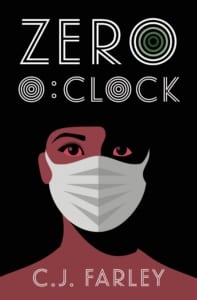
zero-oclock-cj-farley-jeanne-blasberg-book-reviewZero O’clock

By C.J. Farley

Why did I love this book?

This YA novel was the first I read set during COVID times, and it hit me with the urgency of The Hate U Give by Angie Thomas.

I loved the author’s unwavering courage in tackling the racial subject matter head-on. Heartbreaking and whip-smart, it taught me what teens were going through with regard to virtual friendship, classrooms, and pop stardom. Farley’s novel captures a moment in time during the pandemic while others were still processing it.

Like a photo album I wasn’t quite ready to revisit, it portrays the importance of a difficult time in our nation’s history coupled with that uneasy age of adolescence. Entertaining, yes, but like many COVID novels, a historical artifact, definitely.

Read my official blurb for Zero O’Clock.

What is this book about? 

Sixteen-year-old Geth Montego must carve a new path for herself in a world turned upside down by the COVID pandemic and Black Lives Matter protests.

Geth Montego only has three friends. There’s her best friend Tovah, who’s been acting weird ever since they started applying to the same colleges. Then there’s Diego, who she wants to ask to prom, but if she does it could ruin everything. And there’s the K-pop band BTS, who she’s never seen up close but she’s certain she’d be BFFs with every member of the group if she ever met them for real.

Then Geth’s small town of New Rochelle, New York, becomes the center of a virus sweeping the world. Schools are closed, jobs are lost, and the only human contact she has is over Zoom. After a confrontation with cops, Geth gets caught up in the Black Lives Matter movement and finds herself having to brave the dangers she’s spent months in quarantine trying to avoid.

Geth’s friends, family, and hometown are upended by the pandemic and the protests. Geth faces a choice: Is she willing to risk everything to fight for her beliefs? And what exactly does she believe in, anyway?

leave-the-world-behind-Rumaan-alam-book-review-jeanne-blasbergLeave the World Behind

By Rumaan Alam

Why did I love this book?

The opening of this book knocked me out, and I was hooked.

I usually veer toward literary, slower, familial dramas (true of some of the other COVID novels I recommend), but this book combined what I love in literary family dynamics with the frightening premise of an inexplicable disaster occurring in the outside world. The suspicion we were quick to possess about others during the early days of the pandemic is heightened to a new level with two couples pitted against each other, one preoccupied with the welfare and antics of their children.

I loved the construct that had even spouses second-guessing each other. The intensity of the situation brought out the worst and eventually the better sides of all the characters, a phenomenon that resonated as I read this book during the first year of the pandemic, at the same time rioters invaded our nation’s capital.

Read my initial review.

What is this book about? 

A magnetic novel about two families, strangers to each other, who are forced together on a long weekend gone terribly wrong

Amanda and Clay head to a remote corner of Long Island expecting a a quiet reprieve from life in New York City, quality time with their teenage son and daughter and a taste of the good life in the luxurious home they’ve rented for the week. But with a late-night knock on the door, the spell is broken. Ruth and G. H., an older couple who claim to own the home, have arrived there in a panic. These strangers say that a sudden power outage has swept the city, and – with nowhere else to turn – they have come to the country in search of shelter.

But with the TV and internet down, and no phone service, the facts are unknowable. Should Amanda and Clay trust this couple – and vice versa? What has happened back in New York? Is the holiday home, isolated from civilization, a truly safe place for their families? And are they safe from one another?

If you enjoyed Jeannie’s recommendations of COVID novels, jead more of her book reviews on her blog, on Goodreads or StoryGraph, or on the New York Journal of Books. For more TBR inspiration, check out Jeannie’s curated book lists at Bookshop.org and Shepherd.com

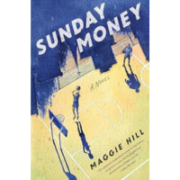
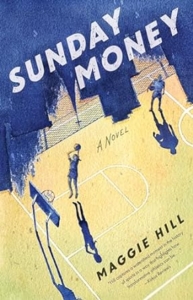
Sunday Money by Maggie Hill

Sunday Money by Maggie Hill

sunday-money-by-maggie-hill-book-review-jeanne-blasberg

Sunday Money is such a well-written book. I rooted for Claire as she navigated teenage struggle and coming of age. New York in the 197o’s is a great back drop, as is the sport of basketball. As a lifelong woman athlete, I love to see these stories being told. I will be recommending this novel!

bookshop-support-local-bookstores


About Sunday Money:

It’s 1971, but for Claire Joyce and girls’ basketball, it might as well be 1871. Stilted rules (three-bounce dribbling, two roving players for full-court games, and uniforms that include bloomers) set their play unfairly apart from the boys’ basketball Claire’s older brother John has trained her in.

Basketball is the only constant in Claire life, and as she enters her teen years the skills she’s cultivated on the court—passing, shooting, and faking—help her guard against the chaos of an alcoholic mother, an increasingly violent younger brother, and the downward spiral her beloved John soon finds himself unable to climb out of. Deeply cut from the cloth of the Catholic Church, Brooklyn’s working class, and the limited expectations her world has for girls, Claire strives to find a mirror that might reflect a different, future self. Then Title IX bounces on the scene. Suddenly, girls’ basketball becomes explosive, musical, passionate, and driven—and if Claire plays it just right, it just might offer a full ride to a previously out-of-reach college.

Sunday Money follows Claire as she narrates her way through 1970s Brooklyn, hustling on and off the court and striving to break free of the turmoil in her home and the rulebook “good” girls are supposed to follow.


Read more of Jeannie’s Reviews on her blog, on Goodreads or StoryGraph, or on the New York Journal of Books. For more TBR inspiration, check out Jeannie’s curated book lists at Bookshop.org

Learning a New Language: The Lexicon of the Farm

The essay “Learning a New Language: The Lexicon of the Farm” originally appeared on Jeannie’s Substack. Subscribe here for monthly updates!

It’s no surprise to learn I love language, but what if I told you I’ve been struggling with new vocabulary? … the lexicon of the farm.

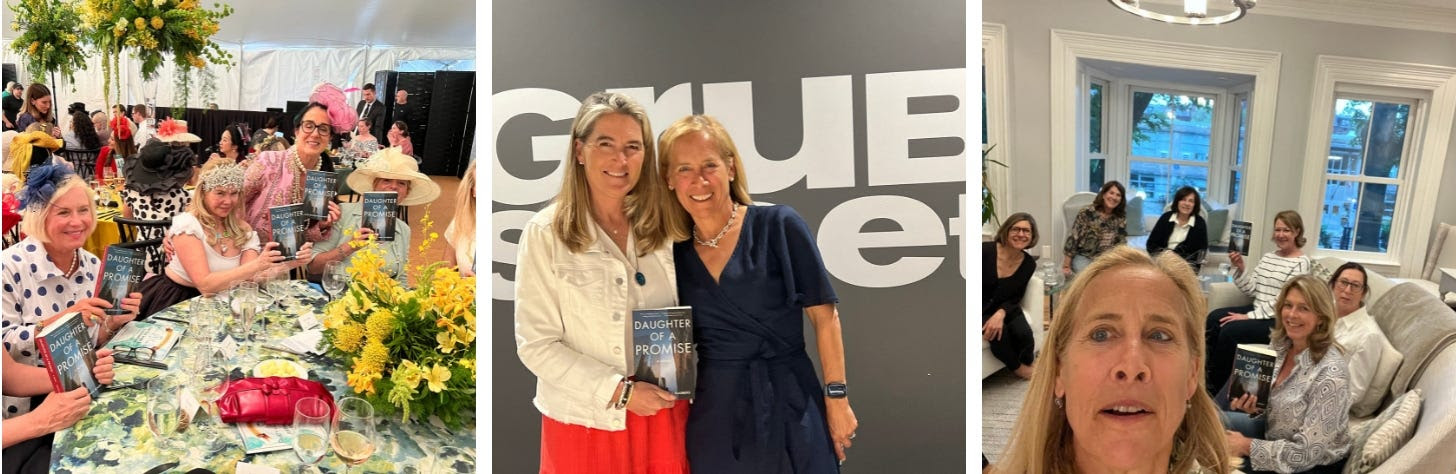
I’m back on the farm after an action-packed ten days in Boston!  I attended GrubStreet’s Muse & The Marketplace and and taught a craft session on Making Ancient Texts Your Own, in other words, writing retellings. GrubStreet and Porter Square Books hosted a launch party for Daughter of a Promise at the Calderwood Writers’ Stage. (If you missed it, you can watch a replay on my YouTube channel!) I attended book clubs and galas where my book was featured and had the joy of discussing my novel’s themes at Temple Israel, Boston.  The best part, as always, was reconnecting with friends: the dinners, walks, and squash games!!

jeanne-blasberg-book-events-daughter-of-a-promise-boston-may-2024

Party in the Park, Kathy Sherbrooke and me on the Grub Street stage, a favorite bookclub!!

I returned to Wisconsin in time to experience tornado warnings and bunkering in our basement. Phew, our newly arrived sheep are okay, but the storms will be a topic for a future essay, because today I planned to write about language. It’s no surprise to learn I love language, but what if I told you I’ve been struggling with new vocabulary? It’s not during my Spanish lessons, or with the NYT crossword puzzle, but the lexicon of the farm.

I can’t be too hard on myself, as it’s coming with firehose velocity: new names, terms, and expressions. The most sacred, in my opinion, belong to the birds I’ve identified using Cornell’s Merlin app. I record their songs every morning to catalog who’s passing through our prairie. Today I added a Yellow-bellied Flycatcher to the list. (Have a listen.) The idea is that consistent, albeit amateur data collection will show our land management techniques are leading to increased biodiversity, with birds as a bellwether.

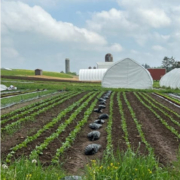
flynn-creek-farm-fields-crops-sheep-lexicon-of-the-farm

Great forage for our new sheep, spring status of veggie beds, our new Dorpers

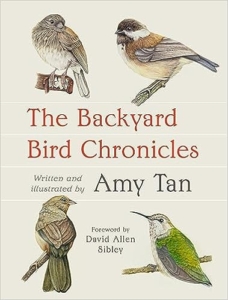
amy-tan-the-backyard-bird-chronicles-book

You will be blown away by Tan’s illustrations

Literary tangent – I am absolutely adoring Amy Tan’s new release The Backyard Bird Chronicles in which she writes, “…my impulse to observe birds comes from the same one that led me to become a fiction writer. By disposition, I am an observer. I want to know why things happen… I am drawn to see details, patterns, and aberrations that suggest a more interesting truth….”

Tan’s words resonated with me. (I was jumping in my seat, thinking me too! me too!) During the pandemic, many of us reconnected with nature, as a result birding may be at an all-time high. For my list-oriented brain, observing and identifying animals feels like a comfortable portal into a life on the land. Along with birds, I’m identifying plants (and weeds) using the Seek app from iNaturalist. I’ve gotten to the stage where I quiz myself as I walk about. The only problem is that plants look different every couple of days!!

It’s not just fluency I’m after but a need to communicate.

It’s not just fluency I’m after, but a need to communicate. Interacting with our farm managers, our crew, our neighbors, consultants in forestry and landscaping, earth movers and engineers can feel like listening to insiders’ shorthand with me interrupting every few sentences for a translation. These folks are competent regarding not only flora and fauna but with regard to the names of the tools, farming methods, farm vehicles, tractors and all the implements that are attached to them.

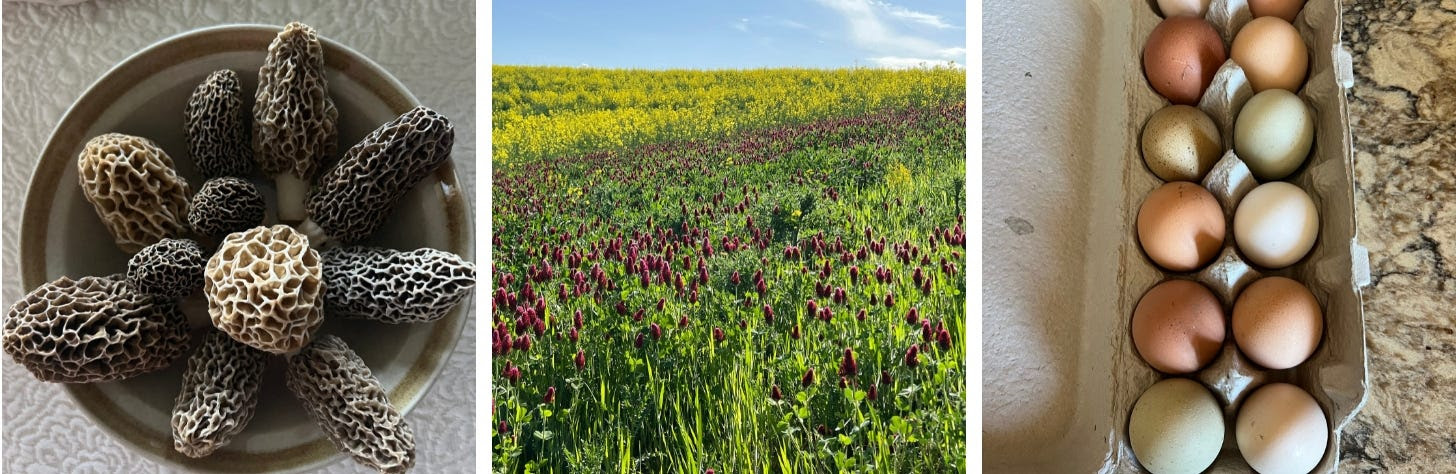
My neighbor to the north has owned her farm for decades, home-birthed her five children there, raised animals, drives tractors, and takes midnight joy rides in her gator during the full moon. She rattles off the names of every berry, shrub, and edible mushroom, solutions for weed suppression, when to mow to eradicate them. I’m like the person who was supposed to take six months of intensive Berlitz before heading off on a foreign assignment, yet as in any decent nightmare, I’ve arrived in the strange land where my mouth moves and no sound comes out. My neighbor kindly changes the topic from foraging for morels to her favorite restaurants in town.

Three images: brown oblong morel mushrooms in a bowl, a bright green field and feel red-purple flowers, a dozen eggs in different colors in a cardboard egg carton

Favorite springtime farm features include foraged morels, the color of the prairie, and fresh turkey eggs from our wonderful neighbor (also she found the morels!!)

Let’s face it, knowing the lingo is the first step toward shedding the feeling of imposter, somebody who’s landed on a beautiful piece of Wisconsin farmland without a clue. And just when I think I’m making headway, I’m on a walk with a logger and refer to the cedar grove as the cyprus grove and lose all credibility. I can talk the talk in a domesticated, cultivated garden, but a regenerative farm is all about knowing what is indigenous and what is invasive and culling out the latter.

…learning this language is not purely academic: it goes hand in hand with getting dirty.

Topics I have blundered my way through in the past two years: The engineering of wells and stormwater retention ponds, paths of erosion, grading, and gravel. Solar power and battery storage, compost and chicken manure, fencing, cover crop and crop cover, high tunnels, caterpillar tunnels, transplants, seedlings, cold houses and hot houses, seed variety, skid steers, water wheel transplanters and rinse conveyors. Every construction project in my past involved professionals whose job it was to take care of the pesky details. But a responsible agricultural steward (me) needs to be on top of all the above. I now find myself in a community of extremely self-reliant people where one’s street cred goes way down when the amount of horsepower for each of your tractors isn’t on the tip of your tongue.

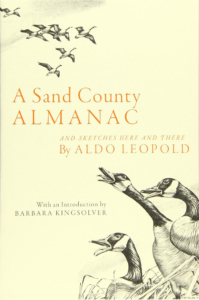
a-sand-county-almanac-by-aldo-leopold-book-cover

A lyrical classic

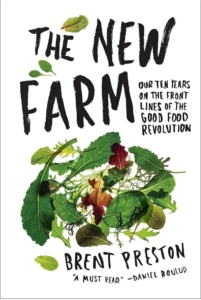
brent-preston-the-new-farm-our-ten-years-on-the-front-lines-of-the-good-food-revolution-book-cover

A funny book. You’d be crazy to get into farming after reading it!

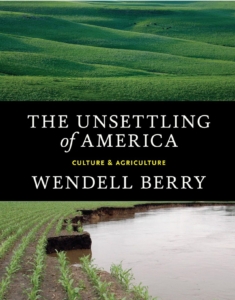
the-unsettling-of-america-culture-and-agriculture-by-wendell-barry-book-cover

An agitating treatise

While I may have once pictured myself reading Aldo Leopold and Wendell Berry, canning tomatoes, preserving berries, meditating to birdsong, and doing yoga on our screened porch, learning this new language is not purely academic: it goes hand in hand with getting dirty. As I manager the tension between experiencing the bucolic and doing the work… I remember Amy Tan’s mantra to “be the bird.”

Do you operate in a world with a unique language? Make me feel better and tell me your story!!

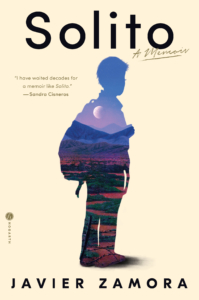
Solito by Javier Zamora

Solito by Javier Zamora

solito-by-javier-zamora-book-review-jeanne-blasberg

This memoir pulled at my gut. I was extremely impressed by the author’s ability to stay in the mind and voice of his nine-year-old self. If I hadn’t known he would survive his seven week journey from El Salvador to the US in order to grow up and write the memoir, I’m not sure I could have read on. I was both scared for young Javier, and at the same time grateful for the adults who looked out for him despite it exacting something from them during a period of immense vulnerability. An inspiring and frustrating story.

bookshop-support-local-bookstores


About Solito:

A young poet tells the story of his harrowing migration from El Salvador to the United States at the age of nine in this memoir.

Trip. My parents started using that word about a year ago–“one day, you’ll take a trip to be with us. Like an adventure.”

Javier’s adventure is a three-thousand-mile journey from his small town in El Salvador, through Guatemala and Mexico, and across the U.S. border. He will leave behind his beloved aunt and grandparents to reunite with a mother who left four years ago and a father he barely remembers. Traveling alone except for a group of strangers and a coyote hired to lead them to safety, Javier’s trip is supposed to last two short weeks.

At nine years old, all Javier can imagine is rushing into his parents’ arms, snuggling in bed between them, living under the same roof again. He does not see the perilous boat trips, relentless desert treks, pointed guns, arrests and deceptions that await him; nor can he know that those two weeks will expand into two life-altering months alongside a group of strangers who will come to encircle him like an unexpected family.

Read more of Jeannie’s Reviews on her blog, on Goodreads or StoryGraph, or on the New York Journal of Books. For more TBR inspiration, check out Jeannie’s curated book lists at Bookshop.org