Tag Archive for: new york journal of books

Review of RENTAL HOUSE by Weike Wang

This review of Rental House by Weike Wang was originally published in the New York Journal of Books.

Rental House by Weike Wang

“throws out traditional expectations and homogeneity and relies on determination and compassion to make random pieces of a puzzle crazily connect.”

Rental Houseexplores a young couple’s marriage and what keeps them together despite the baggage they carry from their families of origin. It is a lovely, literary novel, set around two extended vacations, five years apart. Messily reckoning with their upward mobility, Keru and Nate escape Manhattan first by renting a vacation home on Cape Cod and later in the Catskills, with an obligatory hosting of family each time. With humor and insight, Wang stretches out domestic entanglements and studies cultural differences by contrasting the two sets of parents.  Just as with real-life extended stays with parents and in-laws,Rental Houseis not so much about the action, but the hilarious subtext.

To give the relationship context, Wang seamlessly intersperses the action with backstory. Keru and Nate meet by happenstance at a college Halloween party. She is post-break-up,  determined not to wallow in misery, and seeks out fun in her dorm. “There were parties on every floor, this person told her, slumped against a banister, already drunk. She went down a random hall, through a random open door, and into a random room that had loud music, a large crowd, and a guy in a corner strapped to a homemade shark fin, dancing poorly by himself.” Despite the randomness of everything leading up to their coupling, their union and extended family reads as inevitable, even representative of the times. Keru asks Nate at the same party, “I have no family connections or generational wealth. But I’m determined to build a life worth the trials it took my parents and me to get here. You with me, Nate the great white?”

She is the daughter of Chinese immigrants who never assimilated in their home state of Minnesota. “[They] had voluntarily left a place of many Asians for a place with few. In their minds, too many Asians in an area was not ideal, and could only draw dissent or hate from the locals, as inLook, here comes another overqualified Asian to steal a specialized job that no one really wants.”

Nate is from rural Appalachia, “a poor white from nowhere and the first in his family to go to college.” He shuns his parents’ wish for him to be a lawyer—“Won’t it be nice to have a lawyer in the family?”—and enters academia. Keru works in consulting, becoming the marriage’s primary earner. She is an only child who vacillates between rebuffing a bigger family and craving one. They decide not to have children, withstanding judgment by their contemporaries and their family, and instead heap their nurturing affection on a large sheep dog named Mantou.

Wang’s concise language and sharp observations culminate in numerous humorous scenes. While prepping the Cape rental for the parents to descend, “Another topic was whose parents were more difficult. Each side made a strong case for their own, but this was pure anxiety talking and the answer didn’t really matter.” Keru’s family arrives first, having driven nonstop fully masked and gloved, inspecting the safety of the home before being willing to enter. “Nate’s presence went mostly unacknowledged.” The history is that before Keru’s father blessed their engagement he insisted Nate be debt-free. “You are not to marry into this family until they have paid off every cent of that debt themselves. We are not here to bail them out.” From there Keru had three options. She and Nate could break up or elope, or she could use her own savings, the entirety of it, to pay off his loan in full.” She pays it herself, and when she tells her father the debt is gone, he says, “His parents came through, didn’t they? For Keru’s father did not believe in the existence of an entrenched white family without money, and Keru had given up convincing him otherwise.”

When it was Nate’s parent’s turn to visit, the conversation was dominated by his mother’s circumspect racism. “While Nate and Keru were still dating, she also had questions: What kind of immigrants are they, what kind of Chinese people? Are they Christians? Do they believe in God? Did they enter the country the right way? Are her parents citizens? Is Keru a citizen? Do they feel more American or Chinese? Do they speak Chinese around you? Do they know you don’t understand Chinese? Have you asked? How is that offensive? You just explain, very politely, that we speak only English around Keru and expect Keru to speak only English around us.”

Five years later, approaching Keru’s 40th birthday, their marriage is in a slump and they rent in the Catskills. Keru is the one to make all the plans. “[She] had set out to make money and that was what she’d done, but more and more she sensed that Nate resented her for making money, even though this money helped both them and his mother. Money was her shield, how she measured her worth, and unwilling to stop making it, Keru weighed how much resentment she could stand.”

The pressures she lives with does have an escape valve in her quirky propensity to spontaneously hurl objects ranging from coasters at the Halloween party, to rocks in the direction of bathers on the beach, to an axe laden with a flaming piece of wood into the kitchen of the Cape rental. By the time they are in the Catskills, Keru can turn her rage on and off, recognizing that throwing her phone and smashing it “against a quartz countertop until the screen turns to confetti” would only result in having to “go to the Apple store and make up some story about how her phone was run over by a car.”

Despite different backgrounds that could grow into great obstacles, Keru and Nate have unique yet complementary childhood wounds. Their wounds and quirks keep them together, exemplifying a new “American family”: one that throws out traditional expectations and homogeneity and relies on determination and compassion to make random pieces of a puzzle crazily connect.


If you enjoyed Jeannie’s review of Colored Television, read more of her book reviews on her blog, on Goodreads or StoryGraph, or on the New York Journal of Books. For more TBR inspiration, check out Jeannie’s curated book lists at Bookshop.org and Shepherd.com


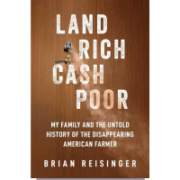
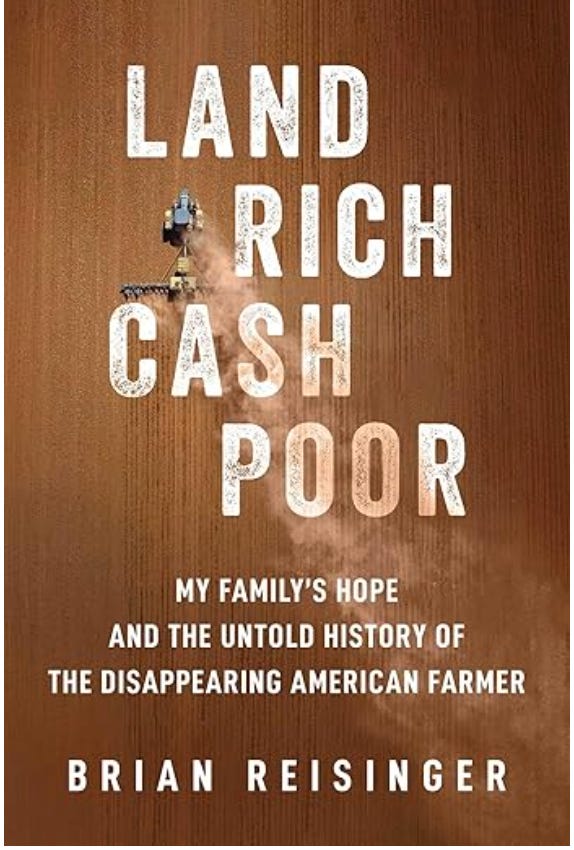
Land Rich, Cash Poor: My Family’s Hope and the Untold History of the Disappearing American Farmer by Brian Reisinger

Land Rich, Cash Poor: My Family’s Hope and the Untold History of the Disappearing American Farmer by Brian Reisinger

land-rich-cash-poor-brian-reisinger-book-review-jeanne-blasbergAs a new farmer in southwest Wisconsin, I read this book as a cautionary tale as well as motivation to keep doing what we are doing – trying to create a model for a mid-sized farm based on a regenerative, diversified operating plan. This story is told well. It is both personal and family memoir as well as a history of the ups and downs of the societal and geopolitical issues that have greatly impacted the American farmer over the past hundred years. Required reading for the frustrated citizen wondering how we got to this point!!

bookshop-support-local-bookstores


About Land Rich Cash Poor:

The hidden history of an economic and cultural catastrophe that is threatening our very food supply—the disappearance of the American farmer.

Taking on this story of heart and hardship, award-winning journalist Brian Reisinger weaves forgotten eras of American history with his own family’s four-generation fight for survival in Midwestern farm country. Readers learn the truth about America’s most detrimental and unexplained socioeconomic How the family farms that feed us went from cutting a middle-class path through the Great Depression to barely making ends meet in modern America. Along the way, they’ll see what it truly takes to feed our  accidents that can kill or maim; weather that blesses or threatens; resilience in the face of crushing economic crises, from inflation to COVID-19; and the tradition that presses down on each generation when you’re not just fighting for your job, you’re fighting for your heritage.

With newly analyzed data, sharp historical analysis, honest debate, and personal storytelling, Reisinger reveals the roots of a problem with stakes as high as they come. A vulnerable food supply, soaring prices for American families, environmental and ecological decay, farmer suicides, addictions, a deepening urban-rural divide, and more worries than ever about what’s for dinner. These are all becoming the hallmarks of a food system that has long stood as a modern miracle. Land Rich, Cash Poor offers the honest truth about these issues, and a candid look at what we can do about them—before it’s too late.

If you enjoyed Jeannie’s review of Colored Television, read more of her book reviews on her blog, on Goodreads or StoryGraph, or on the New York Journal of Books. For more TBR inspiration, check out Jeannie’s curated book lists at Bookshop.org and Shepherd.com

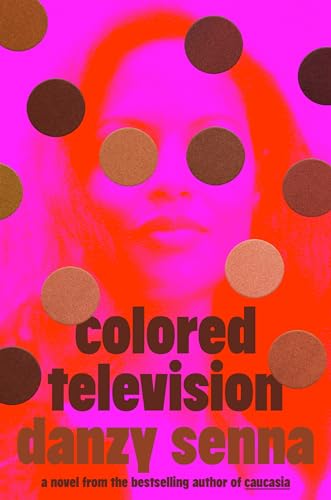
Colored Television by Danzy Senna

This review of Colored Television by Danzy Senna was originally published in the New York Journal of Books.

Colored Television by Danzy Senna

colored-television-danzy-senna-book-review-jeanne-blasbergColored Television is a sharp, comedic novel about the competing drives to make money and make art in one woman’s pursuit of her “American Dream.” Most of all, it is a novel that explores race and racial identities, portraying protagonist Jane, a mixed-race middle-aged mother, as she struggles for belonging in a society that seems either black or white. The mixed-race (white and Black) experience defines her life’s work, writing for the prior decade what her husband, Lenny, terms her “Mulatto War and Peace,” as well as how she thinks of her life, being born into an in-between place, perennially straddling a gap. Her actions in the novel are motivated by a desire for rootedness, epitomized by her young eyes in the perfect pages of home décor catalogs, and later manifested as a craftsman-style home surrounded by a picket fence, owning a labradoodle, in “Multiracial Mulberry,” where she’d be able to send her two children, Ruby and Finn, to a “blue-ribbon” public school.

Her character waffles between grit and confidence and an underlying insecurity that stems from her parents “[raising] her and her sister in a ghetto of artists and poets, guaranteeing that they would be alienated from rich children and poor children alike, thanks to a cultural and political vocabulary that suggested class and privilege without actual class and privilege – gauche caviar without the actual caviar. Jane remembered wishing at a certain point, Ruby’s age maybe, that she came from a dignified working-class immigrant family. Her kind of poverty was the loneliest kind, the least dignified kind, because her parents had chosen it. They had picked poetry over profit.”

In addition, she reflects on her own grade school experience as her daughter is the same age as when “Jane and her sister had been part of a program called METCO that bused a select group of Black children—a talented two percent as it were—from the inner city of Boston to the suburbs. Not too many, just enough to sprinkle those suburban white schools with seasoning. Jane had been sent to a school in Brookline, where she made a friend, a wan white girl with a funny laugh named Emma.”

A particularly poignant scene drives home Jane’s yearning on behalf of her children. She hosts Ruby’s birthday party in the glitzy home in which they are house-sitters, joined by guests they have met only recently, and presents her daughter with an expensive American Girl doll the family can’t afford, sending Ruby up to her bedroom in tears because if it was going to be her only American Doll she didn’t want the dark-skinned one.

It is Jane’s desire to provide stability for her children that makes her often cringe-worthy tactics redeemable. She is an academic on sabbatical aiming to finish her long-awaited second novel, the publication of which will help her rise in status at the college where she teaches, allowing her family to stop bouncing around Los Angeles in sublets and borrowed spaces.

“an important book by an important author who understands only too well that heavy topics are most accessible when delivered with a spoonful of sugar.”

As Danzy Senna’s novel opens, Jane sits in her friend’s borrowed home, in his borrowed office and borrowed desk, drinking up his wine and wearing his wife’s clothing. She finally feels motivated, gaining steam and ambition with the completion of her novel in sight, adding complexity to this multilayered opus that weaves together past and present voices of the mixed-race experience.

In the weeks between the submitted manuscript first impressing her agent (who obviously had yet to read it) and being brutally rejected by her editor, she indulges in optimistic house-hunting and spending. After accepting the rejection, although hiding it from her husband, she musters an earnest instinct to hustle, albeit dishonestly, justifying her actions as necessary to salvage her dreams for her family.

Jane is a complex yet sympathetic protagonist for whom the reader roots while also feeling dread as she lies to Lenny, pitches her friend’s TV agent, avoids his texts and calls, then takes meetings with players in the industry under false pretenses. Her idea is to turn the underlying themes of her novel into a comedic series, and she wins the opportunity to work with the up and coming showrunner, Hampton Ford. He is a Black man who senses he is benefitting from “a moment” and operates with the urgency to not squander the opportunity.

Together, they have high hopes of delivering something meaningful and profound that will push the TV watching public to be entertained by racial truths. When Jane feels guilt over her tenuous path, she justifies her actions by fixating on Lenny’s inability to make money from his art and the ticking clock of needing to find a home for her family. Jane’s father had instilled in her “Race is about money and money is about race. Black people don’t want to be white, they just want what white people have.”

Danzy Senna’s observant eye and humor result in many brilliant, laugh-out-loud moments. Whether it be with regard to the arduous journey of the novelist as compared to the faster roll-out of TV shows, Jane’s insecurity in the face of her son’s special needs diagnosis, the absurdity of Los Angeles’s special brand of superficiality, or the way she used a psychic to help snare Lenny as her husband, this novel uses comedy to deliver the racial truths Jane had hoped a future TV series might.

Don’t let the comedic epitaph fool you. This is an important book by an important author who understands only too well that heavy topics are most accessible when delivered with a spoonful of sugar.

bookshop-support-local-bookstores

About Colored Television:

A brilliant dark comedy about second acts, creative appropriation, and the racial identity–industrial complex.

Jane has high hopes her life is about to turn around. After years of living precariously, she, her painter husband, Lenny, and their two kids have landed a stint as house sitters in a friend’s luxurious home high in the hills above Los Angeles, a gig that coincides magically with Jane’s sabbatical. If she can just finish her latest novel, Nusu Nusu, the centuries-spanning epic Lenny refers to as her “mulatto War and Peace,” she’ll have tenure and some semblance of stability and success within her grasp. But things don’t work out quite as hoped. In search of a plan B, like countless writers before her Jane turns her desperate gaze to Hollywood. When she finagles a meeting with a hot young producer with a seven-figure deal to create “diverse content” for a streaming network, he seems excited to work with a “real writer” to create what he envisions as the greatest biracial comedy ever to hit the small screen. Things finally seem to be going right for Jane—until they go terribly wrong. Funny, piercing, and page-turning, this is Senna’s most on-the-money novel yet.

If you enjoyed Jeannie’s review of Colored Television, read more of her book reviews on her blog, on Goodreads or StoryGraph, or on the New York Journal of Books. For more TBR inspiration, check out Jeannie’s curated book lists at Bookshop.org and Shepherd.com

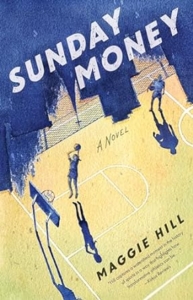
Sunday Money by Maggie Hill

Sunday Money by Maggie Hill

sunday-money-by-maggie-hill-book-review-jeanne-blasberg

Sunday Money is such a well-written book. I rooted for Claire as she navigated teenage struggle and coming of age. New York in the 197o’s is a great back drop, as is the sport of basketball. As a lifelong woman athlete, I love to see these stories being told. I will be recommending this novel!

bookshop-support-local-bookstores


About Sunday Money:

It’s 1971, but for Claire Joyce and girls’ basketball, it might as well be 1871. Stilted rules (three-bounce dribbling, two roving players for full-court games, and uniforms that include bloomers) set their play unfairly apart from the boys’ basketball Claire’s older brother John has trained her in.

Basketball is the only constant in Claire life, and as she enters her teen years the skills she’s cultivated on the court—passing, shooting, and faking—help her guard against the chaos of an alcoholic mother, an increasingly violent younger brother, and the downward spiral her beloved John soon finds himself unable to climb out of. Deeply cut from the cloth of the Catholic Church, Brooklyn’s working class, and the limited expectations her world has for girls, Claire strives to find a mirror that might reflect a different, future self. Then Title IX bounces on the scene. Suddenly, girls’ basketball becomes explosive, musical, passionate, and driven—and if Claire plays it just right, it just might offer a full ride to a previously out-of-reach college.

Sunday Money follows Claire as she narrates her way through 1970s Brooklyn, hustling on and off the court and striving to break free of the turmoil in her home and the rulebook “good” girls are supposed to follow.


Read more of Jeannie’s Reviews on her blog, on Goodreads or StoryGraph, or on the New York Journal of Books. For more TBR inspiration, check out Jeannie’s curated book lists at Bookshop.org

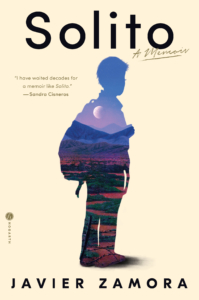
Solito by Javier Zamora

Solito by Javier Zamora

solito-by-javier-zamora-book-review-jeanne-blasberg

This memoir pulled at my gut. I was extremely impressed by the author’s ability to stay in the mind and voice of his nine-year-old self. If I hadn’t known he would survive his seven week journey from El Salvador to the US in order to grow up and write the memoir, I’m not sure I could have read on. I was both scared for young Javier, and at the same time grateful for the adults who looked out for him despite it exacting something from them during a period of immense vulnerability. An inspiring and frustrating story.

bookshop-support-local-bookstores


About Solito:

A young poet tells the story of his harrowing migration from El Salvador to the United States at the age of nine in this memoir.

Trip. My parents started using that word about a year ago–“one day, you’ll take a trip to be with us. Like an adventure.”

Javier’s adventure is a three-thousand-mile journey from his small town in El Salvador, through Guatemala and Mexico, and across the U.S. border. He will leave behind his beloved aunt and grandparents to reunite with a mother who left four years ago and a father he barely remembers. Traveling alone except for a group of strangers and a coyote hired to lead them to safety, Javier’s trip is supposed to last two short weeks.

At nine years old, all Javier can imagine is rushing into his parents’ arms, snuggling in bed between them, living under the same roof again. He does not see the perilous boat trips, relentless desert treks, pointed guns, arrests and deceptions that await him; nor can he know that those two weeks will expand into two life-altering months alongside a group of strangers who will come to encircle him like an unexpected family.

Read more of Jeannie’s Reviews on her blog, on Goodreads or StoryGraph, or on the New York Journal of Books. For more TBR inspiration, check out Jeannie’s curated book lists at Bookshop.org

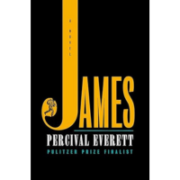
James by Percival Everett

James by Percival Everett

james-percival-everett-book-review-jeanne-blasberg

In this retelling of The Adventures of Huckleberry Finn, Percival Everett gives us enslaved Jim’s point of view. This book epitomizes why retellings of classic literature are necessary – we may know the original was racist in its orientation but to read James is to feel it in your bones. It is a tragic, and haunting novel that is, at the same time, very easy to read – most likely because the foundational text is ingrained in us and we expect where the story is headed. What a gift to the cannon.

bookshop-support-local-bookstores


About James:

A brilliant, action-packed reimagining of The Adventures of Huckleberry Finn , both harrowing and ferociously funny, told from the enslaved Jim’s point of view.

When the enslaved Jim overhears that he is about to be sold to a man in New Orleans, separated from his wife and daughter forever, he decides to hide on nearby Jackson Island until he can formulate a plan. Meanwhile, Huck Finn has faked his own death to escape his violent father, recently returned to town. As all readers of American literature know, thus begins the dangerous and transcendent journey by raft down the Mississippi River toward the elusive and too-often-unreliable promise of the Free States and beyond.

While many narrative set pieces of The Adventures of Huckleberry Finn remain in place (floods and storms, stumbling across both unexpected death and unexpected treasure in the myriad stopping points along the river’s banks, encountering the scam artists posing as the Duke and Dauphin…), Jim’s agency, intelligence and compassion are shown in a radically new light.

Read more of Jeannie’s Reviews on her blog, on Goodreads or StoryGraph, or on the New York Journal of Books. For more TBR inspiration, check out Jeannie’s curated book lists at Bookshop.org

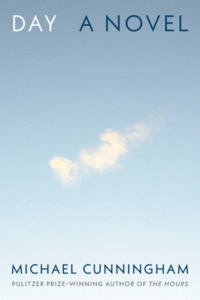
Day by Michael Cunningham

Day by Michael Cunningham

day-michael-cunningham-covid-novel

This novel is wonderful for its in-depth character portrayals. Cunningham takes very authentic and simple domestic situations and makes them the subject of this beautifully paced work. A generation of young parents and their inquisitive children, the devotion of a brother and sister, an infatuation between brothers-in-law, all the struggles of childcare and childraising stress relationships…. and then there is COVID. The effect of the pandemic on a marriage, on the family members’ psyches and the aftermath of one of their deaths is written with tenderness and insight. This is a fabulous read depicting the new age in which we live.

bookshop-support-local-bookstores


About Day:

As the world changes around them, a family weathers the storms of growing up, growing older, falling in and out of love, losing the things that are most precious—and learning to go on—from the Pulitzer Prize–winning author of The Hours

April 5, 2019 : In a cozy brownstone in Brooklyn, the veneer of domestic bliss is beginning to crack. Dan and Isabel, troubled husband and wife, are both a little bit in love with Isabel’s younger brother, Robbie. Robbie, wayward soul of the family, who still lives in the attic loft; Robbie, who, trying to get over his most recent boyfriend, has created a glamorous avatar online; Robbie, who now has to move out of the house—and whose departure threatens to break the family apart. Meanwhile Nathan, age ten, is taking his first uncertain steps toward independence, while Violet, five, does her best not to notice the growing rift between her parents.

April 5, 2020: As the world goes into lockdown, the brownstone is feeling more like a prison. Violet is terrified of leaving the windows open, obsessed with keeping her family safe, while Nathan attempts to skirt her rules. Isabel and Dan communicate mostly in veiled jabs and frustrated sighs. And beloved Robbie is stranded in Iceland, alone in a mountain cabin with nothing but his thoughts—and his secret Instagram life—for company.

April 5, 2021: Emerging from the worst of the crisis, the family reckons with a new, very different reality—with what they’ve learned, what they’ve lost, and how they might go on.

From the brilliant mind of Pulitzer Prize winner Michael Cunningham, Day is a searing, exquisitely crafted meditation on love and loss and the struggles and limitations of family life—how to live together and apart.

Read more of Jeannie’s Reviews on her blog, on Goodreads or StoryGraph, or on the New York Journal of Books. For more TBR inspiration, check out Jeannie’s curated book lists at Bookshop.org

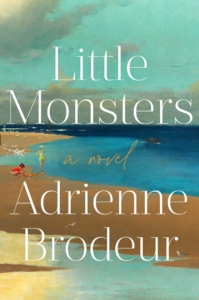
Little Monsters by Adrienne Brodeur

Little Monsters by Adrienne Brodeur

little_monsters_adrienne_brodeur_jeanne_blasberg_book_review

In Little Monsters, as in her memoir Wild Game, I loved Brodeur’s writing, especially the descriptions of Cape Cod. The portrayal of setting was my favorite thing about this book. My second favorite book was Adam’s character. He is bipolar and for most of the novel in a manic state. His interiority was masterful and I so appreciated that point of view character. My least favorite thing about the novel is the way it ends. It seems very unresolved with regard to some major plot points. Even so, a very worthwhile read, particularly for lovers of the Cape.

bookshop-support-local-bookstores


About Little Monsters:

From the author of the bestselling memoir Wild Game comes a riveting novel about Cape Cod, complicated families, and long-buried secrets.

Ken and Abby Gardner lost their mother when they were small and they have been haunted by her absence ever since. Their father, Adam, a brilliant oceanographer, raised them mostly on his own in his remote home on Cape Cod, where the attachment between Ken and Abby deepened into something complicated–and as adults their relationship is strained. Now, years later, the siblings’ lives are still deeply entwined. Ken is a successful businessman with political ambitions and a picture-perfect family and Abby is a talented visual artist who depends on her brother’s goodwill, in part because he owns the studio where she lives and works.

As the novel opens, Adam is approaching his seventieth birthday, staring down his mortality and fading relevance. He has always managed his bipolar disorder with medication, but he’s determined to make one last scientific breakthrough and so he has secretly stopped taking his pills, which he knows will infuriate his children. Meanwhile, Abby and Ken are both harboring secrets of their own, and there is a new person on the periphery of the family—Steph, who doesn’t make her connection known. As Adam grows more attuned to the frequencies of the deep sea and less so to the people around him, Ken and Abby each plan the elaborate gifts they will present to their father on his birthday, jostling for primacy in this small family unit.

Set in the fraught summer of 2016, Little Monsters is a “smart, page-flipping novel…[with] shades of Succession” (The Boston Globe) from a writer who knows Cape Cod inside and out–its Edenic lushness and its snakes.

Read more of Jeannie’s Reviews on her blog, on Goodreads or StoryGraph, or on the New York Journal of Books. For more TBR inspiration, check out Jeannie’s curated book lists at Bookshop.org

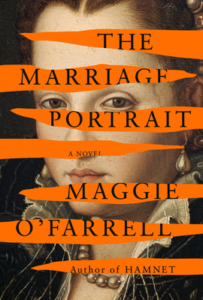
The Marriage Portrait by Maggie O’Farrell

The Marriage Portrait by Maggie O’Farrell

marriage_portrait_maggie_ofarrell_jeanne_blasberg_book_review

If you loved Hamnet by Maggie O’Farrell, this one is a bit of a let down. — dead sister’s intended husband. He is a cruel duke and she senses she is in danger in the palace. Little is known about the real Lucrezia except that her suspicious death was suspected to be at the hands of the duke. Maggie O’Farrell’s voice and writing were very engaging, however, the story in this case was long and predictable.

bookshop-support-local-bookstores


About The Marriage Portrait:

Read more of Jeannie’s Reviews on her blog, on Goodreads or StoryGraph, or on the New York Journal of Books. For more TBR inspiration, check out Jeannie’s curated book lists at Bookshop.org

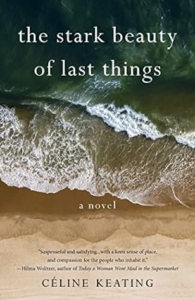
The Stark Beauty of Last Things by Celine Keating

The Stark Beauty of Last Things by Celine Keating

stark-beauty-of-last-things-celine-keating-book-review-jeanne-blasberg

The Stark Beauty of Last Things is a poetic novel that emphasizes the fragility of the worlds we occupy- relationships, lives, places – are all fleeting. The problem is that humans often fail to understand this until it is too late. Told from multiple points of view, this novel also provides an interesting history of Montauk.

bookshop-support-local-bookstores


About The Stark Beauty of Last Things:

Read more of Jeannie’s Reviews on her blog, on Goodreads or StoryGraph, or on the New York Journal of Books. For more TBR inspiration, check out Jeannie’s curated book lists at Bookshop.org