Jeanne Blasberg is a novelist, travel writer, and adventurer. She is a voracious reader and regularly reviews books on her blog, Goodreads, BookBub, LibraryThing, and Amazon.

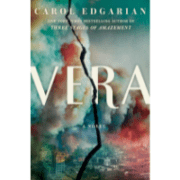
Vera by Carol Edgarian

vera-by-carol-edgarian-book-review-jeanne-blasbergVera by Carol Edgarian

This novel is an exciting, personal (fictional) account of the San Francisco earthquake and fire in 1906 from the point of view of a fabulous character—Vera Johnson is the illegitimate daughter of the city’s most prominent madame during an era of miners, con artists, loan sharks and hookers. The quest for survival after the quake turns Vera into a scrapper and her success at keeping her family of choice alive, fed, and under a roof becomes her greatest accomplishment and happiest time. For lovers of historical fiction.


About Vera

Meet Vera Johnson, fifteen-year-old illegitimate daughter of Rose, notorious proprietor of San Francisco’s most legendary bordello. Vera has grown up straddling two worlds—the madam’s alluring sphere, replete with tickets to the opera, surly henchmen, and scant morality, and the quiet domestic life of the family paid to raise her.

On the morning of the great quake, Vera’s worlds collide. As the city burns and looters vie with the injured, orphaned, and starving, Vera and her guileless sister, Pie, are cast adrift. Disregarding societal norms and prejudices, Vera begins to imagine a new kind of life. She collaborates with Tan, her former rival, and forges an unlikely family of survivors, navigating through the disaster together.

In Vera, Carol Edgarian creates a cinematic, deeply entertaining world, in which honor and fates are tested; notions of sex, class, and justice are turned upside down; and love is hard-won. A ravishing, heartbreaking, and profound affirmation of youth and tenacity, Vera’s story brings to life legendary characters—tenor Enrico Caruso, indicted mayor Eugene Schmitz and boss Abe Ruef, tabloid celebrity Alma Spreckels.

This richly imagined, timely tale of improbable outcomes and alliances takes hold from the first page, with remarkable scenes of devastation, renewal, and joy. Vera celebrates the audacious fortitude of its young heroine, who discovers an unexpected strength in unprecedented times.

Read more of Jeannie’s Reviews on her blog, on Goodreads, or on the New York Journal of Books.

The Veins of the Ocean by Patricia Engel

veins-of-the-ocean-patricia-engel-book-review-jeanne-blasberg

The Veins of the Ocean by Patricia Engel

Loved the sparse concise writing style and the weaving in of spiritual Santero influences. This is the type of fiction I love, following terribly flawed humans through devastating experiences and watching them carry on nonetheless. Plus I learned something about Cuba and Santeria in the process. Scenes where Reina tries to process her family’s tragedy and own her grievous guilt are braided with those depicting her move to the Florida keys, the healing quality of relationships and a communion with the natural world.


About The Veins of the Ocean

Reina Castillo’s beloved brother is serving a death sentence for a crime that shocked the community – a crime for which Reina secretly blames herself. When she is at last released from her seven-year prison vigil, Reina moves to a sleepy town in the Florida Keys seeking anonymity.

There, she meets Nesto, a recently exiled Cuban awaiting with hope the arrival of the children he left behind in Havana. Through Nesto’s love of the sea and capacity for faith, Reina comes to understand her own connections to the life-giving and destructive forces of the ocean that surrounds her as well as its role in her family’s troubled history.

Set in the vibrant coastal and Caribbean communities of Miami; the Florida Keys; Havana, Cuba; and Cartagena, Colombia, The Veins of the Ocean is a wrenching exploration of what happens when life tests the limits of compassion, and a stunning and unforgettable portrait of fractured lives finding solace in the beauty and power of the natural world, and in one another.


Read more of Jeannie’s Reviews on her blog, on Goodreads, or on the New York Journal of Books.

Of Women and Salt by Gabriela Garcia · NYJB Review

Of Women and Salt by Gabriela Garcia

This review was originally posted on the New York Journal of Books.

of-women-and-salt-gabriela-garcia-book-review-jeanne-blasbergOf Women and Salt is a tale of family legacy that juxtaposes the story of four generations of matrilineal descendants in a Cuban family spanning 150 years with the experiences of a lone Salvadoran mother and daughter caught up in the bureaucracy and dehumanization of modern-day US deportation. From a 19th century Cuban cigar factory to present day Miami on the one hand, to a border detention center and an arbitrary landing place in Mexico on the other, the novel’s chapters read like a series of interrelated short stories told from a variety of female perspectives.

Jeanette’s life is the most common thread throughout the book. She lives in a Miami neighborhood where everyone minds their own business. A recovering addict, Jeannette is doing temp work from home when Ana, the daughter of a single mother living next door, is dropped off by the babysitter to an empty home. A moment of connection follows as the young girl knocks on Jeannette’s door: “The girl scans her surroundings, and her eyes stop at Jeanette’s kitchen window. They stare at each other.”

This book is an achievement, with short-story-like chapters that nevertheless follow a satisfying arc.

Earlier in the day, Jeanette had seen ICE agents raid the home and take the little girl’s mother away. Still, Jeanette’s decision to open her door is not easy. After eventually letting the girl in, she feeds her and puts her to bed, then closes the door to her bedroom and Googles “What happens to children if their parents are deported?”

The next day, Jeanette is visited by her mother Carmen, a woman Jeanette describes as “Pearls, slacks, wrinkle cream, a box of blank thank-you notes. Always put together. Always carrying a whiff of her own success and composure like a cardigan at the shoulders. You look at her and just know: here is a woman with answers. So often Jeanette has wondered how she came from such a woman.”

When Carmen discovers her daughter’s desire to take care of Ana, she is incensed, saying, “Jeanette. This is not a game. You’re on probation. You really want to mess everything up again?” The irony is that Carmen, a Cuban immigrant herself, has no compassion for the little girl’s plight. Jeanette asks her, “You’re an immigrant. . . . Do you ever think about how Cubans get all this special treatment . . . Don’t you think it’s your responsibility to give a shit about other people?”

Of Woman and Salt proves that no matter how much one wishes to disassociate with the past, our lives are inextricably wound up with the actions of those who came before us.

And so, the intrigue begins, why did Carmen leave Cuba so many years ago if it wasn’t for political reasons? After hosting Thanksgiving dinner, Carmen shares her perspective on her homeland in relation to her new country: “Cuba this, Cuba that. Cuba Cuba Cuba. Why anyone left a place only to reminisce, to carry its streets into every conversation, to see every moment through the eyes of some imagined loss, was beyond her. Miami existed as such a hollow receptacle of memory, a shadow city, full of people who needed a place to put their past into perspective. Not her. She lived in the present.”

Or she tries to. Of Woman and Salt proves that no matter how much one wishes to disassociate with the past, our lives are inextricably wound up with the actions of those who came before us.

Carmen’s line goes back to Maria Isabel in Camagüey, Cuba, in the year 1866 rolling cigars while her future husband reads aloud from Victor Hugo. Violence abounds for the family and much is kept secret. When Jeanette travels to Cuba in search of answers about her mother, her past, even something of herself, she is hosted by Maydelis, a cousin of her own generation.

Here, the novel offers back-to-back chapters from both women’s points of view, a terrific contrast of worldview. Maydelis’ first reaction to this cousin from America is that she is nothing more than a tourist, blind to her family’s struggle. Maydelis observes, “Jeanette offers to pay but she’s carrying only divisa, not moneda nacional. Constantly she complains about the unfairness of the double-currency system, about how mad she feels paying a commission to exchange dollars into CUCs. There seem so many other easy injustices to point to; I’m frequently amused by what catches her fancy.”

Meanwhile, Jeanette notes of Maydelis, “All she wants to talk about is the United States, what it’s like over there . . . she lists kinds of people that exist in Cuba—freakies, emos, Mickeys, repas. She lists what they wear and what music they listen to and where they hang out and I realize every country is different but the same. Every country has its own lunch tables.”

Of Women and Salt is a beautifully written novel that turns like a kaleidoscope in the light, illuminating the blurry delineation of who is an insider and who an outsider.

And then there is the plight of Gloria and Ana, mother and daughter torn apart by an ICE raid and reunited in a border detention center for families many months after Jeanette discovers Ana at her front door. In a chapter told from Gloria’s point of view, she shares a memory of a Christian missionary who told her as a child, “Despite having so little. . . you are so happy. You could teach the children in my country so much about what’s really important in life.”

Gloria explains that she had never thought of herself as having little. She says of the missionary, “I wondered what she had expected: sad poor people being sad and poor at every sad, poor moment of their lives? She mistook happiness for what it was—how we survive and build lives out of the strings that we hold.” The women in Of Woman and Salt do just that—they build lives out of the strings they hold.

Gloria’s assessment of an outsider judging what she couldn’t possibly understand underscores a recurring theme in this book, aided by the narrative technique of multiple points of view. Examples of racism and the stratification to which human beings are subject fill Gabriela Garcia’s novel. When Jeanette is in Cuba she observes her grandmother’s blatant racism toward a neighbor who is Black, but she notes, “it isn’t as though Black Cubans fare better in Miami, where racism is polite, quiet. This is the fact: In Miami, Cuban is synonymous with white. In Miami, Cubans will scoff when you call them Latino. ‘I’m not Latino, I’m Cuban,’ they will say. By which I mean, I am white, another kind of white you don’t know about, outsider.”

Of Women and Salt is a beautifully written novel that turns like a kaleidoscope in the light, illuminating the blurry delineation of who is an insider and who an outsider. The chapters build upon each other, offering the reader cumulative insight and a sense of dramatic irony. But even while the reader understands much more than any given character ever does, the author also allows precious white space where the reader can come to her own conclusions. This book is an achievement, with short-story-like chapters that nevertheless follow a satisfying arc. Even better, they culminate in a redeeming and emotional ending.


Read more of Jeannie’s Reviews on her blog, on Goodreads, or on the New York Journal of Books. For more TBR inspiration, check out Jeannie’s curated book lists at Bookshop.org

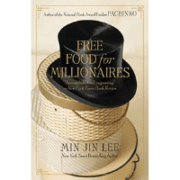
Free Food for Millionaires by Min Jin Lee

free-food-for-millionaires-min-jin-lee-book-review-jeanne-blasbergFree Food for Millionaires by Min Jin Lee

Casey Han is young woman trying to figure things out. She often gets herself in a bind and does what isn’t expected – a dagger to the heart for her hard-working, immigrant parents. There should be more books with female protagonists in their twenties trying to figure things out! I could have used a friend like Casey in my twenties. With omniscient insight into all the characters’ thinking, Free Food for Millionaires is epic and a true exploration of what made a generation in New York (and their parents) tick. Casey is a flawed heroine, but I never stopped rooting for her happiness!


About Free Food for Millionaires:

In this One Book, One New York 2019 nominee from the author of National Book Award Finalist Pachinko, the Korean-American daughter of first-generation immigrants strives to join Manhattan’s inner circle.

Meet Casey Han: a strong-willed, Queens-bred daughter of Korean immigrants immersed in a glamorous Manhattan lifestyle she can’t afford. Casey is eager to make it on her own, away from the judgements of her parents’ tight-knit community, but she soon finds that her Princeton economics degree isn’t enough to rid her of ever-growing credit card debt and a toxic boyfriend. When a chance encounter with an old friend lands her a new opportunity, she’s determined to carve a space for herself in a glittering world of privilege, power, and wealth-but at what cost?

Set in a city where millionaires scramble for the free lunches the poor are too proud to accept, this sharp-eyed epic of love, greed, and ambition is a compelling portrait of intergenerational strife, immigrant struggle, and social and economic mobility. Addictively readable, Min Jin Lee’s bestselling debut Free Food for Millionaires exposes the intricate layers of a community clinging to its old ways in a city packed with haves and have-nots.


Read more of Jeannie’s Reviews on her blog, on Goodreads, or on the New York Journal of Books.

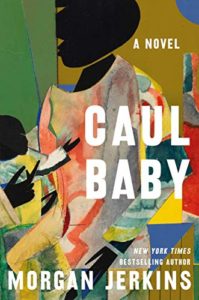
Caul Baby by Morgan Jerkins · NYJB Review

Caul Baby by Morgan Jerkins

This review was originally published by the New York Journal of Books.

caul-baby-morgan-jerkins-jeanne-blasberg-book-reviewCaul Baby is an ambitious and unique novel set in a Harlem neighborhood where a powerful Creole family, the Melancons, conduct a secretive trade from their bodega storefront. They are caul-bearers, born with the birth membrane still intact. A phenomenon that occurs in about 1 in 80,000 births, caul-bearing has long been considered auspicious in many cultures.

The author evokes literary tradition and sets the mysterious tone around cauls in the opening epigraph with a quote from Charles Dickens’ David Copperfield, “I was born with a caul, which was advertised for sale. . . . The caul was won, I recollect, by an old lady with a hand-basket. . . . It is a fact which will be long remembered as remarkable down there, that she was never drowned, but died triumphantly in bed, at ninety-two.”

The Melancons sell pieces of caul as protective amulets to well-off white families. Women from outside the neighborhood are desperate for magical healing and not as disdainful of the family as their neighbors in Harlem. The Melancons, bearing a name that connotes the French for melancholy, are shrouded in rumors of magic and healing.

The price for this independence, however, is that they’ve turned their bodies, and the bodies of their offspring, into commodities.

The matriarch is Maman who brought their tradition from Louisiana to Harlem after their practices came under scrutiny there. Maman is careful to maintain isolation in Harlem and business thrives, allowing this family of women economic autonomy. The price for this independence, however, is that they’ve turned their bodies, and the bodies of their offspring, into commodities. The novel questions how far one might go to maintain self-sufficiency, to avoid the patriarchy, to bypass an altogether unwelcoming capitalist system.

The plot begins with pregnant Harlem native Laila. After having suffered multiple miscarriages, Laila seeks help from Josephine Melancon to keep her most recent pregnancy viable. But when the deal with the Melancon’s falls through, Laila’s child is stillborn. Around the same time, Laila’s college-aged niece, Amara, becomes pregnant. Amara decides to place her newborn daughter, Hallow, in a private adoption, arranged by a Wall Street trader who also moonlights as the Melancons’ agent. Unbeknownst to Amara, her daughter is born a caul-bearer and placed with the Melancons. She is raised as Josephine Melancon’s own in hopes of her carrying on the family tradition.

Mother-child relationships form an important thematic thread in this novel, from Laila’s awful loss to Hallow’s search for her mother. Each mother-child relationship portrayed in the novel suffers from fissures and misunderstanding. Josephine Melancon accuses Maman of showing Hallow off “like a pet monkey.” Maman often burns the girl’s hand in public so spectators can watch her body quickly heal itself, all in the name of marketing.

Maman reminds her daughter, “We help people. Never forget that. Everything here was maintained by us. By our bodies, so that we don’t have to answer to anyone or anything.” She explains further, “[Children] weren’t just born just to be born but to continue a lineage. We have been given a gift, Josephine, can’t you see it? The reason we’ve been able to stay here is not because there’s ample opportunity for Black women to get ahead in traditional jobs, nor is it because of a benevolent landlord, but because of this . . .” Maman says this while running her fingers along the caul of Josephine’s leg.

Caul Baby explores the female body’s various roles, what is taken from a woman, and what she chooses to give away.

Ultimately the plot leads to a point in which Amara has graduated from college and earned a law degree. She has done “everything she is supposed to get ahead.” Positioning herself for a run at District Attorney, she pursues an indictment of the Melancon family for “organ trafficking. And if the caul is traveling across state lines, that could be federal racketeering.” She is seeking justice for what happened to Laila long before and hoping for a legal win that will put her in the media spotlight. Despite doing her research, she doesn’t realize the daughter she surrendered for adoption is part of the Melancon clan.

Caul Baby explores the female body’s various roles, what is taken from a woman, and what she chooses to give away. This is most obvious with a caul, a membrane of skin, but depicted through childbirth as well. Beyond the Melancon inner circle, the novel includes practicing doulas who reveal anecdotes of difficult pregnancies and infertility in the neighborhood, adding an additional backdrop of neglect. Josephine’s sister, Iris Melancon, has a body no longer valued by the family. She is therefore relegated to the basement where she is visited by spirits. She lives “between worlds as old folks say,” inhabiting the gap between myth and reality, much like the story as a whole straddles both surrealism with its allusions to black magic and the reality of systemic racism around prenatal care that puts Black women at higher risk for miscarriage and death during childbirth.

Jerkins adeptly delivers a timely message as well as a novel replete with symbolism and metaphor. The Melancon brownstone is a character in and of itself. With jazz crooning in the background, cannabis smoke often in the air, and Iris and her spirit companions living in the basement, it is a home that moans with history and sadness.

Through Maman’s character, the novel holds a light to the trope of the Black mother…

Cracks in the walls and ceiling grow and expand over time in a ghostly scrawl. The house ultimately falls down around the women and burns to the ground. Standing in a neighborhood increasingly threatened by gentrification, the home becomes a prison to Hallow. She is sheltered and homeschooled her entire life in order to protect the caul. She needs to be on hand so that her skin may be harvested whenever customers arrive. Her innocence, confusion and despair during this most unusual girlhood presents a heartbreaking element to the story. She wonders “what [can] be called hers in this precious brownstone.” Just as her mother, Josephine, will later lament, “without Landon or Hallow or the persistent bullying from Maman. . . . she didn’t feel like a caulbearer or an ordinary. She felt incorporeal, and perhaps this dissolution was the ultimate sacrifice to this brownstone.”

Through Maman’s character, the novel holds a light to the trope of the Black mother and all she is meant to be, a church-going woman holding her family and community together. Maman is none of those things and all of those things. She is larger than life, an embodiment of contradictions alternately playing the roles of heroine, family savior, and villain. Her character is refreshing in its honesty and frankness, if not maddening in its reticence to comfort and coddle.

Caul Baby is like nothing I’ve read before. It has historical references but is overwhelmingly a book of our time. It delivers a story that weaves the nuance of Black womanhood with intergenerational struggles and triumphs and the heartache of contemporary racial injustice.


Read more of Jeannie’s Reviews on her blog, on Goodreads, or on the New York Journal of Books. For more TBR inspiration, check out Jeannie’s curated book lists at Bookshop.org

The Glass Hotel by Emily St. John Mandel

Glass-Hotel-Emily-st-john-mandel-book-review-jeanne-blasbergThe Glass Hotel by Emily St. John Mandel

The Glass Hotel is the type of book that surprises you with where it ends up. The characters are terrific and the weaving of their experiences is deft. The main character, Vincent, is a whip-smart, beautiful, wounded soul. I especially enjoyed reading about her time living in New York in “the kingdom of money.” Besides NYC, this book takes you so many places: Vancouver and islands to the north, trailer parks in the southwest, as well as out to sea. A sub-plot involves a hotel-owning financier and a Ponzi scheme and the detritus he leaves in his wake. Emily St John Mandel combines her stream of characters so fluidly and moves through time in such a fashion, that this book, to me became a lesson in structure. I recommend this book to anyone hoping for themes of identity, loss, morality, and reclamation. The Glass Hotel is a wonderful novel!!


Read more reviews.

Hamnet by Maggie O’Farrell

hamnet-book-review-jeanne-blasbergHamnet by Maggie O’Farrell

Where to start? The premise, the language, the way the structure weaves around events and characters. We have all grown up with Shakespeare, but to dive into this historical speculation is a treat nobody should miss. Titled “Hamnet,” after Shakespeare’s 11 year old son who died from the plague (the letter ‘n’ and the letter ‘l’ were interchangeable back then) and presumably the inspiration behind the writing of HAMLET, this novel is a beautiful rendering of the great playwright’s domestic life. His wife, who is historically known to have been named Anne by her father, prefers Agnes and her character is the mainstay of this novel. She is remarkable and unique, gifted with strong intuition and fiercely independent. Her character development is truly beautiful. I particularly enjoyed the rendering of her relationships with her step-mother and mother-in-law, both fraught with tension and managing them critical to her happiness. This is also a heartbreaking tale of losing a child, the most painful loss imaginable and O’Farrell spares nothing in expressing its devastation. I cant recommend this book more highly.

Read more of Jeannie’s reviews.

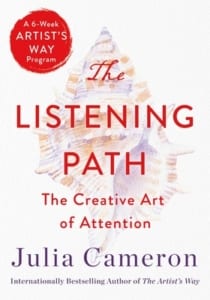
The Listening Path by Julia Cameron

listening-path-julia-cameron-jeanne-blasberg-book-reviewThe Listening Path: The Creative Art of Attention (An Artist’s Way Book) by Julia Cameron

This is a manual for paying attention. A companion book to the Artist’s Way, which I really love, The Listening Path describes a six-week program that takes you to higher and higher levels of awareness. From listening to the world around us, to listening to our partners and friends, to listening to ourselves and our higher selves and on and on, this book affirms my desire for quiet in this crazy world and to seek environments where it is truly possible to listen. The book is written for artists, but is important for anyone who wants to become a better conversationalist and a better person.

Check out Jeannie’s latest reads.

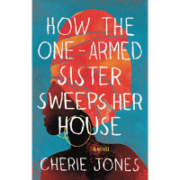
How the One-Armed Sister Sweeps her House by Cherie Jones · NYJB Review

How the One-Armed Sister Sweeps her House by Cherie Jones

This review was originally published by the New York Journal of Books.

how-the-one-armed-sister-sweeps-her-house-cherie-jones-book-reviewHow the One-Armed Sister Sweeps her House is the type of novel you finish and then return to Chapter One to begin again. Because it is that good, but also because it is filled with nuance, subtlety, and rich relationships between characters, the depths of which unfold gradually.

The wonderful title refers to a cautionary parable told to Lala, the primary character, by her grandmother in the opening pages. She warns there were two sisters, one obedient and one naughty who couldn’t quell her curiosity to explore the infamous tunnels of Baxter Bay, Barbados. The grandmother recounts, “This sister question her mother, wonder what in the tunnels that so sweet she warning her away from it, because this good-for-nothing girl already developing a taste for things that her mother tell her not to have, this slack-from-she-born, force-rip sister already thinking that some bad things real sweet it can’t be evil. This sister thinking to herself, It not that dark, it not that spooky, what is the use of a tunnel if you don’t get to see where it lead?”

By opening One-Armed Sister with this warning, Cherie Jones casts a foreboding veil over the rest of the book. Her use of language is consistent with that sentiment, rhythmic and poetic, carrying a tone of impending tragedy. Set in Barbados in the mid 1980s, the plot is heartbreaking although fairly straightforward. A poor young woman goes into premature labor, alone and afraid; a wealthy white family is robbed and the father murdered; a baby girl is born and also dies. There are investigations, grief, and cover ups, but this novel’s real accomplishment is the weaving of characters’ backstories, evoking a sense of inevitability and compassion even for the so-called villains.

Alongside the narrative of Lala and her husband Adan, Jones details the lives of Peter Whalen, the wealthy tourist who was murdered, and his widow Mira. The Whalens had traveled to Baxter’s Beach for many years and were, on this particular trip, attempting to rescue their marriage. Peter is killed while protecting Mira from the robber, leaving her with not only extreme guilt, but the job of consoling Peter’s children, dealing with the investigation, collecting the body, and fielding condolence calls from friends and relatives including her mother in London.

In this novel with prominent themes of class difference, extreme poverty, and lives of crime, Jones makes a profound statement…

It is in Mira’s characterization of her mother that a key message of the novel is conveyed: “Extremes of anything are bad, and the two extremes of possession—deprivation and deluge—are especially crippling to the soul. For that reason, Mira Whalen’s mother has always advocated having just enough. Enough to keep you happy. Enough to eat. Enough to drink. No more or no less.” In this novel with prominent themes of class difference, extreme poverty, and lives of crime, Jones makes a profound statement, writing, “There is perhaps enough diversion in seeking to ascertain what enough is to last a lifetime.”

Along with Lala and Mira, each major character (and some minor characters as well) has chapters written in their point of view. Some of the most sublime are ones Jones writes in a haunting, second-person point of view, giving them an aura of Lala’s internal strength-summoning, and possibly phantom guidance offered by her deceased mother, Esme:

“If you is woman enough to call your own taxi from the hospital and tell it where to go, you tell yourself now, if you can mince out of that taxi with your stitched up parts still stinging and you can pay the taximan and you can cross the sandy soil with two bags and five pounds of baby in a pink dress you buy her with money you make from the same braiding, if you can get up the same twenty-five steps you mince down that night you went to find him, with two bags and a new baby, ain’t you woman enough to decide when you will take that baby and go back to doing heads?”

The knowledge that such love does exist is Lala’s salvation.

Later in How the One-Armed Sister Sweeps her House, when the question of how one learns to love a man is posed, Lala eventually recognizes “that if you must learn to love a man, he is probably not the man you should be loving.” Although the novel portrays generations of abuse, eventually landing at the feet of Lala and Adan and informing the way they relate to each other, it also paints a picture of a good, loyal man who will become Lala’s protector. Lala knows love with this man named Tone, who had been her first love as a girl, quite ironically, in those forbidden tunnels. The knowledge that such love does exist is Lala’s salvation. Jones writes, “This knowledge, you tell yourself, and not the hands and the tongue and thighs of Tone beneath you, on the ground in these tunnels, is why you are singing. This truth that only the girls who dare to enter the tunnels are able to find out.”


Read more of Jeannie’s Reviews on her blog, on Goodreads, or on the New York Journal of Books. For more TBR inspiration, check out Jeannie’s curated book lists at Bookshop.org

Burnt Sugar by Avni Doshi · NYJB Review

Burnt Sugar by Avni Doshi

This review originally appeared in the New York Journal of Books.

burnt_sugar_book_review_avni_doshiBurnt Sugar is an incredible novel with messages and characters that remain with its reader far beyond the final line. In this sometimes humorous, sometimes dark, always ephemeral piece of literature, Avni Doshi unspools an original take on the theme of inheritance—what we take on willingly and unwillingly.

The first chapter introduces us to Antara, narrator and protagonist, a woman obligated to care for her mother. Antara explains, “The reason is simple: my mother is forgetting, and there is nothing I can do about it. There is no way to make her remember things she has done in the past, no way to baste her in guilt. I used to bring up instances of her cruelty, casually, over tea, and watch her face curve into a frown. Now, she mostly can’t recall what I’m talking about; her eyes are distant with perpetual cheer.”

On the surface Antara does the right things: moves her mother in with her, takes her to the doctor, experiments with her diet. But resentment simmers as she admits, “It seems to me now that this forgetting is convenient, that she doesn’t want to remember the things she has said and done. It feels unfair that she can put away the past from her mind while I’m brimming with it all the time.” The story soon becomes as much about Antara’s remembering as her mother’s forgetting, a revelatory examination of memory both individual and shared.

…a revelatory examination of memory both individual and shared.

With biting language and dark humor, Antara slowly reveals the troublesome behavior she undertook while emerging into adulthood, further developing her complex and multi-dimensional character.

The novel’s structure mirrors this tug of war, pulling back to Antara’s childhood and even to her mother’s, then propelling forward to reveal new truths (or perceived truths) about the characters. As a girl, Antara suffers her father’s abandonment, and her mother’s exploits render them homeless for a period. Her grandparents are saviors, although their rescue is always tainted with grim-faced displeasure and disapproval of Antara’s mother.

These intergenerational ties are woven masterfully, highlighting parallels in behavior and appearance, as well as the genesis of wounds and trauma. With biting language and dark humor, Antara slowly reveals the troublesome behavior she undertook while emerging into adulthood, further developing her complex and multi-dimensional character. All the while in the present, Antara is so fixated on the wrongs inflicted on her in childhood that she evolves into a madness that echoes her mother’s neurological ills.

Antara attempts to hold it together with the very societal trappings her mother eschewed. She finds a perverse safety in marrying Dilip, a repatriated Indian who “grew up in Milwaukee, where his ears knew only soft Q-tips and suburban stillness.” Antara’s family is a product of Pune, an Indian city described by Dilip as sensory overload, loud and too pungent. Antara goes to great lengths to create a calm home her husband will find satisfactory, yearning for a “marriage free of gray, fuzzy edges,” and even calculates a pregnancy in order to stay safe from the chaos of her memory.

Burnt Sugar explores security and permanence, the lengths to which people go in search of what they were denied as children.

In this way, Burnt Sugar explores security and permanence, the lengths to which people go in search of what they were denied as children. It is a commentary on how women play by the rules in order to establish a place from which they can’t be evicted—and the danger that lurks when they choose not to.

Dilip’s perception of his wife’s situation gains importance for the reader as Antara’s perspective becomes increasingly unreliable. “It’s hard,” he notes presciently, “for me to understand your relationship with [your mother] sometimes. Being around her is very stressful for you. And the other way round. To be honest, I wonder if you’ll make her worse or better.” Antara does eventually succeed in returning her mother to the present moment: lucid, even sharp, herself again. But in that particular moment of clarity, when the two women are finally able to confront each other on an even battlefield, Antara realizes the power she has over her mother’s well-being.

Antara is a flawed heroine… But she is a heroine many women will identify with.

The novel ends with an incredible crescendo as the major characters gather in Antara and Dilip’s apartment. Antara struggles to juggle a newborn baby, a self-destructive mother, a judgmental grandmother, a manipulative mother-in-law, and the reappearance of her long-lost father upon whom the family heaps their attention. Meanwhile her husband delights in the occasion, oblivious to her concerns. The small talk and frivolity covering all that is wrong under the surface is more than Antara can bear.

Antara is a flawed heroine, admitting even in the opening line, “I would be lying if I said my mother’s misery has never given me pleasure.” But she is a heroine many women will identify with. She bears her mother’s imprint and indeed the mark of many generations of women. Under such pressure, who wouldn’t dance on the precipice of madness?


Read more of Jeannie’s Reviews on her blog, on Goodreads, or on the New York Journal of Books. For more TBR inspiration, check out Jeannie’s curated book lists at Bookshop.org