Jeanne Blasberg is a novelist, travel writer, and adventurer. She is a voracious reader and regularly reviews books on her blog, Goodreads, BookBub, LibraryThing, and Amazon.

Leave the World Behind by Rumaan Alam

Maybe not the best audiobook choice for the day after a coup-attempt and the height of a global pandemic, but Leave the World Behind’s end-of-the-world omniscient narrator thoughtfully contemplates what matters, who we are, and, even as we are ignorant to the end of the world approaching, how we choose to behave. So inspirational…? We aspire and we have bad habits, we find comfort in what we throw into our grocery cart, we have real-life behavior and vacation week behavior, we judge people based on the interior of their homes and by their names, but when the end is in sight, what really matters? This is an intelligent, nuanced, work of literary fiction that pits the survival instincts of two couples against one another. It is a highly suspenseful, microscopic examination of just a few days of Amanda and Clay’s Airbnb vacation in the Hamptons. The home’s rightful owners, Ruth and GH, show up after an emergency in the city and even though distrust, fear and judgment are initial reactions, this novel illuminates the true qualities that bring peace to humans as the end looms near. And for that matter at any time.

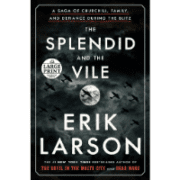
The Splendid and the Vile by Erik Larson

splendid-and-the-vile-erik-larson-jeanne-blasberg-book-review

The Splendid and the Vile: A Saga of Churchill, Family, and Defiance During the Blitz by Erik Larson

The seventeen hour Splendid and the Vile audio book was the perfect companion on a cross country drive. Churchill’s bravery, determination, and leadership rang through as did the efforts of his wife, Clementine, to not only support her husband, but to guide and support the lives of their daughter, Mary, and their daughter-in-law Pamela in light of their son’s disappointing ways. The fact that every detail of this hefty book was drawn from letters and journal accounts, contributes to the authentic voices and development of the characters. A splendid work of weaving together what must have been volumes and volumes of research. Reading about a great leader during a time of national crisis was aptly poignant. The humility, humor, and resolve on display in this book served of a reminder of what could be. It is also a reminder of the way life goes on in the midst of even a blitz, something the history books fail to make note of. Inspiration at I time when I really needed it.


Check out what else Jeannie is reading here!

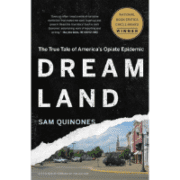
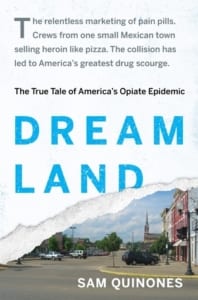
Dreamland by Sam Quinones

dream-land-opioid-crisis-sam-quinones-book-review-jeanne-blasberg
I picked up Dreamland at the suggestion of a person I admire. It details the convergence of our national Opioid crisis and heroine addiction, fueled by criminal drug marketing techniques, an anti-pain revolution, Mexican drug dealers, Medicaid, and more. The web of factors was very interesting and I commend the author for attempting to connect all the dots. His writing, however, was tedious and repetitive. If this book had been edited, it would have been so much better. I was tempted to give up many times, but there would be another nugget of good information that kept me going. I do not recommend the audiobook as the narrator mispronounced dozens of words, diminishing the credibility of an already sloppy bit of writing.

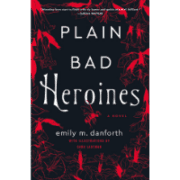
Plain Bad Heroines by Emily M. Danforth

plain_bad_heroines_emily_danforth_book_review_jeanne_blasbergPlain Bad Heroines by Emily M. Danforth

Okay, so a haunted girls boarding school set in Little Compton, Rhode Island… Plain Bad Heroines had me at hello. Emily Danforth has such a punchy and quick-witted use of language that there were always several layers of entertainment going on for me, and I was taken by her unabashedly addressing the reader throughout.

This novel has been described as Gothic, but it harkened to early Nineteenth century novelists such as Mary Shelley, Emily Brontë, and George Eliot in its third person omniscient voice. The story braids two time frames, 1902 at the Brookhants boarding school with contemporary Hollywood, and features a mostly all-female cast of characters. Both time periods include triads of young women who fall in love and suffer jealousies within their respective triangles. The initial love at Brookhants between Flo and Clara and curious Eleanor (on the outside) was inspired by the work of Mary MacLane, a shocking memoirist who in the late 1800’s scandalized readers with her bisexuality. I mention this only because it was the first of many literary and cultural references that made my experience of this book expansive, ie. a second layer of entertainment value.

As for the story itself, it was not so much a haunted tale as it was a parody of haunted tales past and present, and I am not lying reader, when I say a portion of my home was infested with yellow jackets while I was listening to the audio (you must read the book to get this.) I hear the printed version is 600+ pages, but still I would suggest picking it up if you like smart writing and courageous technique.


Note that I listened to the audio version courtesy of Libro.fm and the narrator was outstanding!


Read more reviews from Jeannie.

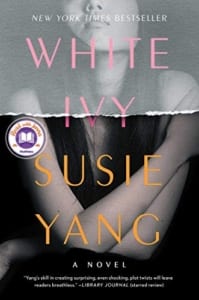
White Ivy by Susie Yang · NYJB Review

White Ivy by Susie Yang

This review originally appeared in the New York Journal of Books.

white-ivy-susie-yang-book-review-jeanne-blasbergWhite Ivy is a suspenseful novel with a protagonist who is intentionally portrayed as an anti-heroine. It begins “Ivy Lin was a thief but you would never know it to look at her.” In classic anti-heroism style, Ivy has few redeeming qualities at the beginning of the novel, and although she experiences growth and revelation, she never comes around morally. She steals, lies, prostitutes herself, and even treats her own body like a garbage dump. So the question is: How do we feel about detestable protagonists? Such a structure certainly demands tolerance from a reader and some appreciation for its departure from what we’ve been raised on—characters who transition over the course of a novel and in so doing deliver a universal message of hope or possibility.

Can we enjoy novels with protagonists we don’t like? There are plenty of male anti-heroes, the Humbert Humberts of the world, detestable protagonists we end up rooting for despite their faults. The fact is the reading public is especially hard on female characters who do not adhere to stereotype, who are not kind and thoughtful and domestic, or do not at least come around to these attributes by novel’s end. Because of this, one can hold White Ivy up as a work of art that challenges societal bias. It receives five stars on that measure, if only three stars on the whole.

In classic anti-heroism style, Ivy has few redeeming qualities at the beginning of the novel, and although she experiences growth and revelation, she never comes around morally.

On the other hand, the jacket copy describes the novel as one that offers “sharp insights into the immigrant experience.” That statement is pure marketing and potentially exploitive. Ivy Lin is a very complex individual as are the members of her family. One would hate to think that Susie Yang wrote Ivy Lin’s character or the Lin family in general to be representative of Chinese Americans. If that is the case, it paints an extremely negative and troubling picture.

In addition, for a story primarily set in Boston and fictitious towns surrounding the city, it fails to offer authentic details. In fact, there are several erroneous details, creating lapses in credibility that trip up the reader and diminish her eagerness to go along with the narrator on a journey that already demands she withhold judgement on Ivy Lin’s character. For example, bad winter weather usually comes in from the west, not the north, and not from the Atlantic; when leaving Boston one does not drive through upstate New York in order to get to New Jersey; there is no block on Beacon Hill where there are rows of identical front doors; a state senator works in Boston and not in Washington. While Yang writes well and employs fine use of metaphor, occasional poor grammar and word choice threaten to startle the reader from the fictive dream she is working hard to establish.

Ivy Lin grows up in a poor family but attends a private school in Massachusetts on account of her father working there. It is at this school that she develops a crush on Gideon Speyer. After lying to her parents in order to attend a slumber party at his home, Ivy is sent to stay with relatives in China for the summer, and the family moves to New Jersey while she is out of the country. Lin goes on to attend an unnamed women’s college outside of Boston where she reconnects with the Speyer family and drama ensues.

The lesson for the reader might be in the irony—that if you are looking for a real hero, the most self-aware and honest character in this novel is the one you would have least expected.

The early chapters of this novel are enjoyable. The relationship Ivy shares with her grandmother is great, as are her travels and the relationships she makes that summer as a young teen in China. The choices she makes to fit in and survive in her family seem plausible. If this is the description of the immigrant experience Yang is going for, then it’s laudable. The second half of the novel, however, is where plot twists enter around the superficially and simplistically wrought Speyer family and the story succumbs to a downward spiral of baseness.

White Ivy is entertaining insofar as it is extremely original. The conclusion left this reader without a sense of hope, depressed over an ending that rewards self-centered opportunism. The final scene is one where Ivy faces off against Gideon’s sister, Silvia Speyer, in a contest of innuendo between two equally loathsome human beings. However, maybe that was the point. The lesson for the reader might be in the irony—that if you are looking for a real hero, the most self-aware and honest character in this novel is the one you would have least expected.


Read more of Jeannie’s Reviews on her blog, on Goodreads, or on the New York Journal of Books. For more TBR inspiration, check out Jeannie’s curated book lists at Bookshop.org

Brown Girl Dreaming by Jacqueline Woodson

brown-girl-dreaming-jacqueline-woodson-book-review-jeanne-blasbergBrown Girl Dreaming by Jacqueline Woodson

To write a memoir in prose, to distill each experience into just the right words, to leave enough white space on the page for a reader to jump in and participate with the language, that is the work of a master. Reader, you already know you are in masterful hands with Jacqueline Woodson. I listened to an interview with Woodson on the Write-Minded podcast with Brooke Warner and Grant Faulkner where she admitted that it was possible to consume Brown Girl Dreaming in one sitting, but that it pained her to hear when readers did that. She really wished we wouldn’t. Indeed, I enjoyed this memoir slowly in bites I could savor. Keeping it on hand for quiet moments when I could sit and think and enjoy the cadence of the verse. It is a book you will want to keep close at hand, a reminder that poignant imagery transports and conveys meaning better than pages and pages and pages. This is a beauty of a book!

More reviews from Jeannie.

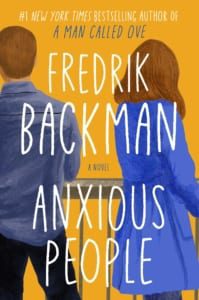
Anxious People by Fredrik Backman

anxious-people-frederick-backman-book-review-jeanne-blasbergAnxious People by Fredrik Backman

With an equal measure of humor and philosophy, Backman’s latest work examines the intricacies of family and home and the anxiety we feel over getting it right. The novel’s structure engaged me from the very beginning with its omniscient voice moving two steps forward and then one step backward, telling what the novel was about in a way that was delightfully unreliable. And as the dots connected and puzzle pieces began to fit together, the experience of this novel was as much an intellectual exercise as a dive into the neuroses of its many delightful characters. I was struck by Backman’s ability to develop all eight characters in a hostage situation so masterfully. The book goes beyond story telling and is a plea for compassion in this crazy world. It will have you laughing at our foibles and universal oddities, its observations are really spot on. I listened to the audio version of Anxious People and the narrator did an incredible job of giving each speaking character a voice of their own. I highly recommend this book!


Read More

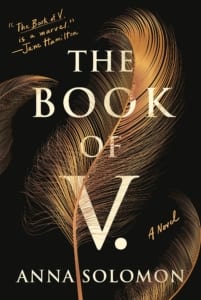
The Book of V by Anna Solomon

anna-solomon-book-of-v-review-jeanne-blasberg

The Book of V by Anna Solomon

I loved this book’s ambition. Any modern retelling of a biblical character has me hooked as well. The braiding of the three point-of-view characters’ stories in The Book of V was masterful and the reveal about two-thirds of the way through around how their lives were even more tightly wound was terrific.

Having just finished reading Cassandra Speaks by Elizabeth Lesser, I am struck by how Esther and Vashti’s stories might have been interpreted entirely differently if a woman had first written them. Here was my chance to find out! Just as the Lionel and Ian in the novel malign and misconstrue Vee’s intentions, so has been the masculine lens on a woman’s life.

The Book of V grapples with such important issues around motherhood, femininity, misogyny, but with a structure that is incredibly innovative and entertaining.


More from Jeannie.

Jacobo’s Rainbow by David Hirshberg

jacobo's-rainbow-david-hirshberg-book-review-jeanne-blasbergJacobo’s Rainbow by David Hirshberg

May 2021

Although set in the nineteen sixties, David Hirshberg’s Jacobo’s Rainbow is infused with prescient relevance today. This hero’s journey shines a light on activism and protest on a college campus as well as the idea of patriotism and serving in the army. Most profoundly, it depicts a search for identity as young Jacobo Toledano struggles with the blurry distinction between who people are and how they present themselves in public. I loved this novel for its timeless message: that building a home of one’s own means leaving the safety of childhood and being resilient to the knocks the world hands you, true for an individual as well as a tribe. A great new read from the author of My Mother’s Son.

This official blurb was provided at the request of the author.


Expanded Review:

Jacobo’s Rainbow depicts the coming of age of a young man who is the ultimate outsider, from a town in New Mexico so small it wasn’t even on a map. From that sheltered beginning, Jacobo Toledano arrives on a college campus where he becomes an activist, advocating for the Free Speech movement as well as ending the Viet Nam war. Especially relevant today, the portrayal of both movements highlight a culture war rife with bigotry and anti-Semitism. Jacobo struggles with patriotism, friendship, and family relationships in a way that engenders a reader’s empathy, triggering her to root, if not for Jacobo’s happiness, at least ease in the world.

In another nod to the sixties, our protagonist and narrator Jacobo sometimes describes hallucinatory observations.  This is a story in which the characters he meets are not always as they first seem and because of this, it is a novel that explores the theme of identity, belonging, and trust. 

The high-altitude, red landscape of New Mexico is beautifully wrought. Arroyo Grande is a town Jacobo is intent on escaping, but its storied past turns out to be as much in his DNA as his high moral standards. Catholic by day, Jewish by night, woven together with a thick strand of Navajo, the rich history of this place and the small tribe of families who settled there together in isolation back in the 1600’s is especially compelling. As can be surmised by its title, Jacobo’s Rainbow is rife with biblical allusion and metaphor, not the least of which is the way Jacobo’s journey parallels the plight of an entire people.  

Check out more of Jeannie’s reviews.


About Jacobo’s Rainbow:

“Until 1960, all of us in Arroyo Grande were ignorant of electricity and automobiles, were unaware of plastic, steel, or homogenization, hadn’t been exposed to vaccines, x-rays or Freud…”

On the occasion of the 15th anniversary of a transformative event in Jacobo’s life—the day he was sent to jail—he writes about what happened behind the scenes of the Free Speech Movement, which provides the backdrop for a riveting story centered on his emergence into a world he never could have imagined. His recording of those earlier events is the proximate cause of his being arrested. Jacobo is allowed to leave jail under the condition of being drafted, engages in gruesome fighting in Vietnam, and returns to continue his work of chronicling America in the throes of significant societal changes.

Nothing is what it seems to be at first glance, as we watch Jacobo navigate through the agonies of divisive changes that are altering the character of the country. Coming to grips with his own imperfections as well as revelations about the people around him, he begins to understand more about himself and how he can have an impact on the world around him … and how it, in turn, will have an effect on him.

Jacobo’s Rainbow is a historical literary novel set primarily in the nineteen sixties during the convulsive period of the student protest movements and the Vietnam War. It focuses on the issue of being an outsider, the ‘other’, an altogether common circumstance that resonates with readers in today’s America. Written from a Jewish perspective, it speaks to universal truths that affect us all.


Jacobo’s Rainbow comes to an independent bookstore near you on May 4, 2021. Or preorder today from Bookshop.
Cassandra Speaks by Elizabeth Lesser

cassandra-speaks-book-review-jeanne-blasbergCassandra Speaks is Lesser’s musing on how it might be different if women told our civilization’s earliest stories, how it might be different if our society valued attributes found predominantly in women as opposed to those found predominantly in men. Layers and layers of patriarchy are hard to strip off, however, as both women and men have perpetuated throughout the ages. It is our worldview.

As a writer of women’s fiction, I took Lesser’s admonitions to heart – that it is possible for us, for me, to help usher in a change. It is important to create characters that succeed because they are collaborators, for example, intuitive, loving. The book described how a younger generation is living the change, how the expectations of fatherhood has changed.

Much of this book affirms what we already know, but serves as a good kick in the pants!


Read more of Jeannie’s reviews.