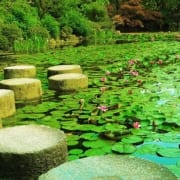
A Song of Gratitude: Reflecting on Japan

This article originally appeared on Indagare under the title “A Song of Gratitude: Jeanne McWilliams Blasberg Reflects on her Journey to Japan.”
Our trip to Japan followed a week in Hong Kong where my husband had business and I spent mornings working and writing before doing my best to take in the city amidst unrelenting rain. Our introduction to Japan was eye-opening, and sightseeing in Tokyo felt both educational and sensual: the Imperial Palace, the fish market, the samurai tradition, the infrastructure being built for the upcoming Olympic Games, a new Emperor literally ushering in a new era…it was a lot to take in, and I was still struggling with the tragic news of a friend’s unexpected death, as well as missing my children on Mother’s Day and dealing with an overflowing inbox each morning. But, despite this unease, my husband and I immersed ourselves in Tokyo’s complexities, tackling the sprawling subway system, crisscrossing neighborhoods for shopping, visiting museums, attending sumo wrestling contests, taking cooking lessons and more.
We left Tokyo to spend 24 simple, meditative hours at a traditional ryokan outside the city, where I felt myself finally begin to relax into my surroundings. We enjoyed massages and delicious meals. We listened from our crisp white futons atop tatami mats as the rain fell and the birds chirped. I began to appreciate the culture’s continuum of generosity and hospitality behind everything we encountered: the insistence on cleanliness, the way food was selected and served, the calligraphy, the tea ceremony, even the slicing of sushi.

Our first full day in Kyoto, toward the end of our trip, was designed to be the climax, and I had high expectations for a very special day. After breakfast, we met our guide, who escorted us to a tea ceremony and on a stroll through a lovely, ancient neighborhood. The weather was perfect, and we were off to a great start. The next stops on the itinerary were the bamboo forest and the Golden Temple on the outskirts of the city. Perfect, I thought, we would avoid Kyoto’s throngs of tourists and have a walking meditation through nature. We were met, instead, by tour busses and selfie stick-wielding masses. In addition to the usual population of international tourists, this was “school trip week,” and large clusters of students in uniform had been dispatched to Kyoto, the country’s cultural capital. The peaceful, contemplative ambience we’d been grasping for was quickly evaporating.
When our guide explained that the Golden Temple would be just as crowded, I expressed my desire for a new plan. I didn’t need to check major attractions off a list. I yearned for more mystery, more beauty. Although an abrupt change of course isn’t exactly common in Japan, our guide, like any great hostess, proved adept at “calling an audible.” We hailed a cab and escaped to a quiet lunch over noodles where we could discuss adjustments.

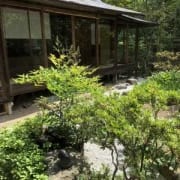
We decided to visit the Daitokuji Temple complex, comprised of 25 Zen Buddhist temples and monasteries, of which three were open to the public that day. Our guide taught us about the symbolism within each garden. We meditated where monks have meditated for centuries. We strolled the pine tree-lined paths through the complex. There were hardly any other people in sight. It was perfect.
“Should we go in one more?” our guide asked, almost as an afterthought, keeping her eye on the time.
“Sure,” we answered.
After removing our shoes and making a small donation, we proceeded to the garden, passing an elderly man in black robes sitting at a table. I remarked to my husband that he resembled my grandfather (who was not Japanese and who had died 23 years ago). But he had the same glasses, same eyebrows, same large forehead.
The building was similar to the previous Zen Buddhist temples in terms of its layout, but hanging on the wall of the inner sanctuary garden, we spotted the English translation of a poem that stopped us in our tracks.
A Song of Gratitude
The whole family, harmonious and devout.
Aware of debts to our parents and ancestors.
Revering nature, grateful for society.
Always humble, learning from others.
Able to give, demonstrating kindness.
Making one’s motto: “A bright life.”
Overlooking other’s faults, correcting one’s own.
Moderate in speech, not getting angry.
Gentle, kind, honest.
Let’s appreciate the joy of life.
Patient. Peaceful.
Not getting angry.
Careful in speech.
This leads to long life.

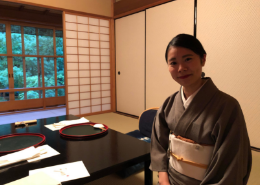
It turned out that the elderly man we passed upon entering was the Senior Monk and the poem’s author, Soen Ozeki. He had not only penned that poem, but also several others on racks beside the table—all written in beautiful Japanese calligraphy. Six of his books were on display, as well, including one with an English translation blurbed by Steve Jobs. How ironic that as an author angsting over her new book, I would stumble upon a signing by a cheerful celebrity monk—the Dr. Ruth of Zen Buddhism, a man who spoke wisdom and helped people solve their problems on a weekly TV program. He spoke English well and had a sense of humor. He had a presence that defied age and emanated positivity, embodying the sentiments he professed. We took pictures together, although when he took his glasses off for the camera, he didn’t look as much like my grandfather.
Several of his writings resonated with us, and our purchases would likely put him over his daily sales quota, allowing him, as he joked, to take an afternoon nap. As we sat together, discussing his work, he smiled and laughed. Before we left, he looked into my eyes and, as if noticing something was a little off, said to me, “Be happy.” It was a moment that took my breath away: such a simple message after a happenstance meeting, but likely what I’d traveled ten thousand miles to receive.
 On our recent
 The Ritual of Writing

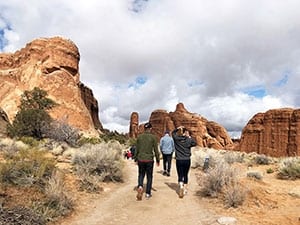
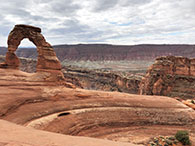 n for a couple weeks but there are images from Utah that I’m carrying close through this cold and grey New England spring. Not really images, more like colors: white snow, blue sky, and green trees…. And then there’s the red.
 sides being the birthplace of Ruth (one of my biblical heroines), it is also the last bit of wilderness where the Israelites stayed before entering the Promised Land. It is where Moses’ Exodus story ended, where he died and was buried, never able to enter Canaan himself.
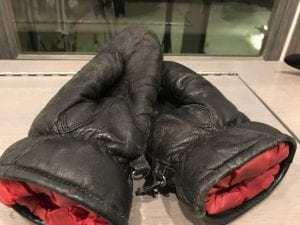 My mother’s mittens are soft and worn, of black leather and insulated with red nylon and down fill. I wore these fifty-year-old mittens every day this past March and wondered what she would have thought of my extravagances: an EPIC pass in my pocket and accommodations just a short walk to the mountain. She was a frugal Yankee who insisted we be first on the lift and not stop until at least 3:30 pm to get our money’s worth. I’d never even set foot in a lodge before spending a ski weekend with a friend’s family because my mom laced up (yes I’m dating us) in the parking lot to save precious time and she carried our lunch in her pockets.
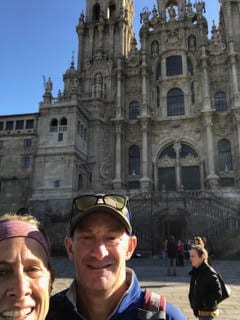 In theory, the medieval pilgrimage routes of Europe shouldn’t have held any special allure for me. “It’s such a Christian thing,” several people commented when I told them about our travel plans. I am a 53-year-old Jew, but I am also a lover of the outdoors, of physical challenge, and of meditation. John and I wanted a taste, so we chose a relatively short section, 210km, 10 days, on the Camino de Santiago, a thousand mile and thousand year old migratory path that culminates in Santiago de Compostela, Spain with an emotional mass held in its ornate cathedral.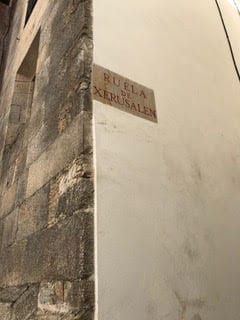
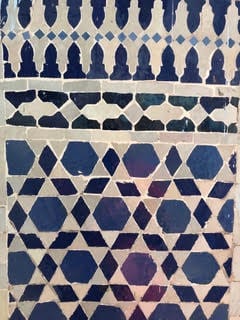 Spanish and Portuguese Jews fled to North Africa, the synagogue opening in Marrakech marked that Sephardic migration. I flashed back to my 7th grade French teacher, a Jew from Morocco – meeting her as a privileged, white, suburban kid in the 1970’s made an impact that has lasted to this day. Back then there was nothing more exotic to me than a French-speaking female Jew from Africa of all places. Who knew?
 It wasn’t until I was sitting on the plane, writing down thoughts on the way back to North America, that I mused on our walk along the Camino followed by a journey to Morocco mirroring the migratory pattern of Jews over hundreds of years…. Walking, not toward a religious ceremony, but because they were chased out, first from Spain and Portugal and later from various North African countries.

 Starting our walk on the
 It is always easier to pack more than less. Just like it is easier to spew out a burgeoning overwrought draft than refine a work of poetry. Sitting on the floor of my bedroom with a suggested packing list, luggage weight limitations, and the need to only carry-on, the journey has begun – or at least the mindset – I will be in Boston for about 30 more hours but I am already letting things go.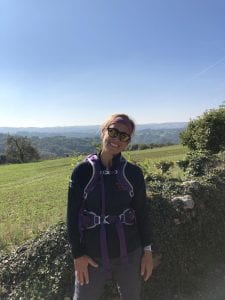

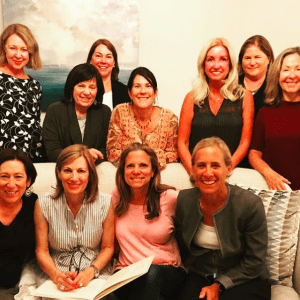 Promoting a book is almost as hard as writing one. Especially the first time, especially for an indie author without access to the big marketing machines behind books published by the big five.


