The Price of a College Admission Scandal

I had to pull my  jaw off the floor reading the recent reports of parents and college admissions consultants gaming the system. Even though the college admissions process has never been ‘fair,’ the hacks these people created stooped to a whole new level. I should qualify this post with the fact that as a fourth generation applicant to Smith College, I was a beneficiary of the uneven playing field myself.  Even though I was admitted to equally fine institutions, I attended Smith as a legacy. What’s more, all three of my children were recruited athletes to Ivy League institutions, competing in squash, and leading and captaining their respective college teams.  Although they were qualified candidates, the ability to bypass the general application pool was an enormous boon. These schools admit about 220 recruited athletes per year across all sports whereas the general application pool is flooded with upwards of 30,000 people. Tough odds for even the best of the best.

As in life, systemic privilege has always existed with college admissions, although typically more subtly, reserved for those in the know, those tipped off early as to how the game works. (I’ll go ahead and throw myself in that group.)  The parents who worked with “The Key,” however,  were made aware of a “side door,” and did whatever it took to gain entrance at the eleventh hour.  It was like a big, bad case of cutting in the carpool line. The transcripts included in the indictment depict parents who had no problem with the six-digit price tag for an admissible test score, on the condition their children were none the wiser, as if betraying a child’s trust was fine as long as it went undiscovered. One father even laughed at his child innocently assuming he’d achieved a good ACT score on his own.

In my forthcoming novel, The Nine, Hannah Webber is a middle class mother who prescribes to the slow and steady approach (much like mine): nightly dinners, homework sessions, attendance at sports practice, healthy breakfasts, school pick-ups and drop-offs or at least a best effort.  There is mundanity to the routine, a year-in-year-out scheduling of parent-teacher conferences, supporting kids through ups and downs, but always emphasizing hard work and doing one’s best above all else.  Consistency. Trust. Listening.  It isn’t always easy. And again, probably speaks to the privilege of a childhood where a parent is at home to provide the steady support. But just like many parents today, Hannah Webber will realize even her best efforts aren’t enough when pitted against parents with money.

Privilege is pervasive in reality as well as fiction, but the recent revelation of cheating has provided our culture with a moment – not only to gawk at the defendants’ insane behavior, but to evaluate the status quo and the spectrum of admissions abuses: how donations to schools are treated, why athletics and athletes should matter so much, how unlimited test taking time and bogus doctor diagnoses has become a thing.  It’s an important conversation, but I hope the point that hits home the hardest for parents (including Hannah Webber) is that integrity, honesty, and a relationship with their children built on trust will always be worth more than any diploma!!
 

Book Club: It’s Okay if You Don’t Discuss the Book

The following article was originally published on NovelNetwork.com.

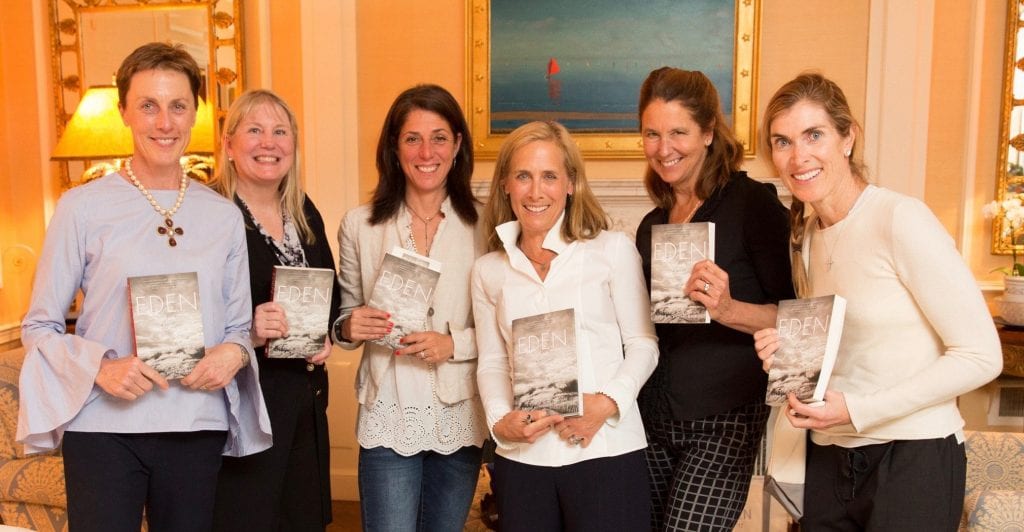
I can’t tell you how many times I have heard the disparaging comment that book clubs drink more wine than talk about that book. I’ve visited many book clubs since the release of EDEN, and people who think it is just an excuse to drink wine don’t get it. Book clubs are for readers but the meetings aren’t just to talk about the book. In my own book club, we spend a higher percentage of our meeting time talking about other things.

And that’s okay.

When a group of friends make book selections and read simultaneously, it’s like traveling to the same place, meeting the same people, entering a common consciousness no less. When they meet later “to discuss,” enjoying food and drink, the contents of the book are almost reminisced about as opposed to critically analyzed. Some people have fond memories and some thought something was missing, some have foggy memories, and some got stuck on a particular issue, but we’ve taken the same trip and that’s pretty cool.

The common experience is what matters, setting the groundwork for a deeper dive into the themes of the book. Bonds of friendship are formed when we share experiences and ideas, when we discuss hypotheticals. A book that stimulates great discussion (tangential or not) is a good book club pick.

Better to tear apart a fictional character than to gossip, and better to discuss a place you’ve read about than to sit in envy of one person’s exotic travels. The conversation at your book club may not always stay on the one thing you have in common that month (the book) but it is a starting point to many important conversations.

It is fun to imagine friends lying in bed reading or driving in their cars listening to the same books. If you’re like me details about the book will come up in snippets of conversation when we bump into each other on the sidewalk or at the gym. I might even text a friend “loving it” or “hating it” mid-month. Often, by the time the book club meets, the temperature of the group has been determined, influencing how much time we spend on the book or how quickly we go there.

Picking a good cross section of genre, our group has found, is important. Traveling to a variety of lands offers an opportunity to compare and contrast stories as well as authors’ styles. So no, we aren’t always talking about the book, we are already a few steps beyond, on to the next step, talking about where the book took us.

Competitive Parenting: No One Wins

The following article was originally published on GrownandFlown.com.

It’s not like a gymnastics competition where the judges hold up scores at the end of a floor routine. It’s not like you can “stick the landing” either. It’s not like the announcement comes over the PA system: “A perfect 10! She’s achieved the perfect 10!”  No, a mother doesn’t stand on a podium, beaming at the end of the day, while the grand maternal order of the universe hangs a gold medal from her neck, declaring her the best of all time.

Hey, I’ll admit I played. Big time. This is a confessional and I was all in. I remember one year-end Prize Day when my kids all won the highest academic honors for their respective grades (I think my youngest was in Kindergarten, but hey) and a rival mother with four brilliant children passed me filing out of the assembly and whispered, “Three for three, I’m impressed.”

It’s embarrassing, and shameful but I’m just warning you once it starts, it’s hard to stop.

I’ve spent time reflecting on this (written a novel in fact) and am going to open the kimono a little further here to share some of why I fell prey. And since everything gets blamed on mothers, I’ll blame this one on mine. But really, as the only child of an alcoholic, dysfunctional marriage, my role in that happy little threesome was to put on a good face, achieve plenty and show the world everything was really okay. Not just okay, super! It took a long time to let the role of chief marketing officer go.

What was less unique to me and more of a universal experience, I believe, was choosing to be a stay at home mom in an era when many of my female friends were remaining in the workforce. After ten years of holding interesting and upwardly mobile positions in finance and retail, I decided to stay home after the birth of my youngest. Three babies in 60 months, just like clockwork, back then I was still trying to win points for Harvard Business School honed efficiency. I tried to do it all and be it all for a while, but that was a recipe for disaster. (See previous paragraph referring to alcoholic family). But in the recesses of my personality I still needed to prove that staying home was the right decision. Of course, I knew in my heart it was the right decision for me, but still, I needed to manifest that sentiment to the world. In the absence of semi-annual performance reviews, my children’s report cards were my tangible affirmation.

No matter how you ended up playing this insane version of Monopoly, when you find yourself tsk-tsking the foibles of other children, most likely children of parents who are not as committed/dedicated/present as you are, just stop. No matter how well you follow the rules, all children stumble, they all fall, they all feel pain, and from time to time, they all lose their way. When mine (now young adults) eventually had their moments, large and small, I felt shame over the superior air I’d taken. I’d been an asshole, not just strutting out of year end assemblies, but at the bus stop. Daily.  (And yes, I promise that I’m working on an epic article about the Beacon Hill bus stop!)

Don’t become the mother I recently spoke to who hired a consultant to help her college junior get a better internship. Get it under control now or you’ll be competing over whose child makes more money, who marries better, who produces more grandchildren. JUST STOP.

Your child’s mental health and happiness is the most important thing. Turn your hovering energy inward, discover your own passion and invest time in whatever friendships you still have. If I could do it, so can you.

Learning to Say Goodbye to your Children is an Overrated Skill

The following article was originally published on GrownandFlown.com.

I scoffed at the parents, briefcases in hand, dressed smartly, waving furiously and tearing up at the “Goodbye Window.” I donned an ensemble of sweats, maybe even the t-shirt I’d slept in, and a hat and down jacket long enough to cover the entire mess. My eldest son was three and a half and I’d drop him each morning in the ‘green room,’ his younger siblings in tow. Sometimes literally drop him.

I had no time for drawn out goodbyes, for melodrama, for prolonging this chore. My baby was fussing, and my milk was letting down and if I got out of there quickly, I might be able to nurse her, tuck her in her crib and cajole my toddler into a  morning nap or ‘quiet time’, or at least render him a zombie in front of a Thomas the Tank Engine video. I made a bee-line out of the nursery school’s front yard, dreaming of forty-five minutes more sleep before needing to return for pick-up.

Looking back, I see that I put an inordinately high value on my children’s independence. Like they were baby sea turtles and I was their biggest cheerleader, rooting them along from the hole in which they hatched, across a treacherous, sandy beach to breaking waves where they might swim off haphazardly, as if once their tiny bodies submerged, crossed some invisible goal line, I’d be relieved of all this mothering. I might be able to sleep again. I even believed, during those first foggy years, the goal line was as attainable as the nursery school’s threshold.

I learned to say goodbye to my children, time after time.

I would witness other prolonged goodbye rituals after the nursery school, at the bus stop when they went off to elementary school, for example. I snickered morning after morning as one particular father jumped up and down, trying to glimpse his daughter through the bus window, waving goodbye, blowing kisses. (BTW he turned out to be a serial killer, but I’ll save that for another article.)  Anyway, I had a dog that needed walking, and dirty dishes and a pile of laundry back at home waiting…

When my children became bar and bat mitzvah, I glowed with pride as the doctrine came down, “You are no longer children, you are responsible adults in the eyes of God.” Could I also operate under that assumption?  Probably not until they received their drivers licenses, but soon! Very soon!

I’d deliver them to boarding schools in the fall, and after every break, telling myself all these million goodbyes were character building, were necessary if they were ever to stand on their own, if they were ever to succeed, to compete.  Later, there’d be college dorms where I carried boxes up flights of stairs, but I’d stopped making their beds and putting their clothes away, thinking You are old enough to put your shirts on hangers. Besides, I was double-parked.

They now have jobs and apartments of their own. They come home for holidays, and after a few weeks of over-flowing joy and bustling activity, they are gone again. My house is way too large without them. My refrigerator is empty. And I wonder why exactly I tried so hard to master the art of goodbye. What exactly were the benefits of that skill?

I will say it now, scream it, even. Saying goodbye sucks. Maybe it’s deep-seeded in our species’ survival instinct – a mother’s instinct to make her wobbly-kneed youngsters sturdy, nudging them off into the forest to hunt and forage on their own. Survival of the fittest and all that. But it is a mother’s last pain to endure, watching her children leave.

However, I can be patient. Someday grandchildren will arrive. I will go visit them, and they will have to kick me out.

On Minimalism: Packing or Unpacking

It is always easier to pack more than less. Just like it is easier to spew out a burgeoning overwrought draft than refine a work of poetry. Sitting on the floor of my bedroom with a suggested packing list, luggage weight limitations, and the need to only carry-on, the journey has begun – or at least the mindset – I will be in Boston for about 30 more hours but I am already letting things go.
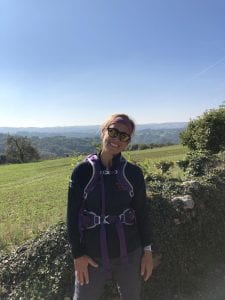

I won’t bring my laptop, too heavy and tempting for thieves, for example. Might not sound like a big deal, but to a writer, it’s like dropping an appendage. In order to leave it behind, I needed to complete a lot of work this week. I would not allow myself that old procrastination, “I’ll just do it on the plane.” Down to the wire, I submitted THE NINE for copyediting yesterday – whoop whoop! While walking in Spain and Morocco, I plan to write some travel pieces as well as journal and start drafting scenes for a new novel with the working title “In Question,” and get a little jump on NaNoWriMo. I will do it all with pen and paper.

I have decided which paperback to carry with me – the advanced copy of Leading Men by my friend, Chris Castellani.

What else? Passport, credit cards, good shoes, rain gear, Advil, clean underwear, sunglasses, water bottles.

We will be having meals in a few nice restaurants and the weather will be much warmer in Marrakech than in Spain or in the Atlas mountains… So maybe, 2 dresses? A fleece? One of our travel buddies brings only old clothes on these trips and after something is too dirty to wear again, she leaves it in the hotel room. Her goal is to go home with nothing. Others bring very little, maybe with an extra bag folded into the bottom of a suitcase with the philosophy that it’s fun to buy souvenirs and necessary items at your destination.

During the Passover Seder we often discuss the journey and what are the basics – i.e. if you had to distill everything down to just the metaphorical flour and water (Matzah)… What would you carry? With my competitive mindset, I take that as almost a challenge – how little can I live with? With the answer being: A lot less than I think.

This is one of the wonderful lessons of wandering or adventure travel. You are forced to bring less and realize at some point along the way, you didn’t even need half of that. We took a river rafting trip in the Grand Canyon a while back where I wore only a bathing suit morning, noon, and night for 7 days. Even to sleep in and I never looked in a mirror or put on make up. Granted, that was warm Arizona, but I have never forgotten the lesson of that trip.

Shed, shed, shed…

Patience and Purpose in Jury Duty

I had a feeling when I showed up on October 1st my number would get called. I had a pretty flexible week, no true hardship. I had no bias to claim, no obvious conflicts of interest. It did in fact take an interview of almost 90 potential jurors to select the 14 of us who would serve on the jury, and given the prior week’s bruises to our judicial system, I felt compelled to fulfill my responsibility as an American citizen.

I watched my psyche go from feeling like I might be selected, to wanting to be selected, to regretting being selected. From controlling and protecting my time to surrendering my time – and to an inefficient (in my opinion) calendar at that. I was forced to sit for hours with no distractions, just paying attention (wow).

Mine was seat number 5 and looking around the jury box, we were a cross section of society for sure. We listened to seven days of testimony and observed evidence on a topic that was frighteningly close to one of my biggest fears. Colonoscopy. More and more I became certain the universe ordained my selection because I was intended to learn something there. It was like a mini medical school on the topic with one of the country’s leading practitioners serving as an expert witness. I now know enough about the complications of colonoscopy to be scared to death of my next procedure. (I have been on a 3-year testing cycle since age 40 due to a family history of colon cancer.) Great.

Besides the anatomy education I received, and accepting the inability to control my schedule, the experience of serving on a jury boosted my faith in the system. My verdict was coming out pretty clearly in one direction as the evidence was unfolding…. And each evening I would wonder if my fellow jurors felt the same. However, we were not allowed to discuss anything until the very end of the trial when it was time to deliberate. Anyway, even though I was feeling certain, I wondered if the others were as convinced as I was. How often in life can 14 people absolutely agree? We were different genders, ages, races, had varying levels of education and economic backgrounds. We were from all parts of the city. I was expecting a healthy debate when it came time to render a unanimous decision.

After the closing arguments were made and the judge gave us his instructions, we returned to the jury room to discuss. After thirty minutes of expressing our impressions and discussing the relevant points, it seemed like we were all on the same page. A vote proved it to be so.

The defendant breathed a big sigh of relief as our decision was read. A trial by a jury of his peers was his right as a citizen of the United States of America. We had his professional future in our hands. Next time you get called to jury duty, don’t look for an excuse.

Sea Worthy

Our boat was loaded down with golf clubs, hostess gifts, costumes for a Saturday night party, bedding, clothing, and cheese and crackers. The dog was at the sitter’s and the sun was high in the sky. Our plan was to stop first at the gas dock in Avondale before starting our journey north along the Rhode Island coast, through Buzzards Bay to Marion, MA. We wanted to  arrive in time for dinner.

When John went to start the engines, however, it became clear there was a problem. Everyone knows that heart-sinking feeling: plans are laid and the forecast is perfect, but technical difficulties arise. “Ugh,” I moaned.

I took a deep breath, preparing myself for the likelihood we’d be transferring everything from the boat into our car and making the trip by land. Not as fun, not nearly as fun. Fortunately, Mike from Frank Hall’s boatyard met us at the gas dock and walked us through the cause of the problem (one of our batteries was failing) and helped us decide whether or not it was safe to make the trip.

It’s been said that the most dangerous thing to have on a boat is a schedule. One must be willing to surrender to the inevitability of things breaking down, and weather and sea conditions stirring up. Time on a boat is meant to be at a different pace than on land and serves to remind us that we are never in control even though we pretend to be.

This time, we decided to carry on, assured the running engine would do its part to replenish the charge of one of our batteries. We’d make it to Marion, Cuttyhunk, Hadley Harbor, Falmouth, and Edgartown before returning to Watch Hill four days later. And don’t you know every time those engines turned over and purred, I said a prayer of gratitude.

In addition to some anxiety over the battery, we’d also heard a lot about how tricky the channel through Woods Hole can be, with ferries and currents and lots of boat traffic. However, by the time the weekend was over we had made a huge deposit in the bank of experience and navigated it three times.

There is something very satisfying about being tested on the water and rising to the occasion, taking the opportunity to strengthen the resiliency muscle. Yes, our destinations were beautiful and so were our friends and the weather, but this particular trip felt more like an opportunity to learn and gain confidence. It was our first time through Buzzards Bay and our proximity to the Cape Cod Canal sparked my interest in cruising even further north. I love to push our boundaries…. stay tuned.

An Organized Library: A Labor of Love

organized-library-jeanne-blasberg

There is something about organizing my library that feels like putting my mind in order. Not so much my mind as my memories. Holding a book and turning it over in my hands, I recall the story, the characters, or sometimes just the message that it imparted. It is probably yet another futile attempt at controlling the chaos, but this big summer project lifted my spirits. Listening to Pamela Paul speak about her ‘Book of Books,’ and acknowledging my incomplete Goodreads profile, I set about taking an inventory of my library. Not just that but culling, discarding, curating and cataloguing. If my fitness watch captures data on every move my body makes, why shouldn’t I aim to account for mental exercise?

I am blessed to have a room in our home that can be called a library. It was the feature that sold us on the house. It is an English styled 1920s addition to an 1820s Beacon Hill townhome with copper skylights, a fireplace, and of course, many bookshelves and cabinets. I have always loved libraries, physical libraries. A good portion of my new novel is set in a boarding school library. As a research associate at HBS in the 90’s (pre useful Internet) I did the bulk of my work at Baker Library. As a senior at Smith College I adored my coveted carrel in the Art History Library. Studying and writing and learning among books was, to me, the epitome of the college experience. The order of a library and the abundance a collection represents resonates with my mild OCD and desire to accumulate knowledge.

When we moved in 15 years ago, I intended the books in our library to be shelved with some order, but in an inevitable rush to unpack boxes alongside the all the other family activity, I did a haphazard job. Or maybe it wasn’t that, but a rapid acquisition of books and their hasty transfer from bedside table, to purse, to bookshelf that I was guilty of. But over the past six years, the disorganization has saddened me. And then it felt like one of those projects too big and overwhelming to begin. Doing it the right way wouldn’t just entail organizing the books, it would be a curation of the shelves themselves – which objects would retain the honor of resting among the books? This beautiful room had fallen victim to my laziness, to clutter, to my initial sense that it was okay to put just about anything on the shelves because they would take a lifetime to fill. Well guess what?

It‘s been a summer project in a warm room without much A/C. It is a labor of love. I have enlisted help. Someone who can look at the books and objects without emotional attachment and help me to simplify. It is the type of cleaning or fresh start that makes an old home feel new. There is more to do beyond the books, there are the files, the old tax returns, the photographs… but one step at a time.

The first question was whether to organize by author, genre, or subject matter. I have seen pictures on Instagram where people organize books by color. Crazy. My brain is asking for order. I am tired of standing in the middle of the room, scanning the shelves, searching, certain that I own a book. It’s like when my husband stares into the half empty refrigerator looking for the butter right in front of him.

There is an emotional lightness I’ve achieved from this work and also a confidence I’ve gained from the survey. I have read a lot of books. I do appreciate a wide array of genres. I did read many of them aloud to my children. Not just volumes but series of work. I will pass some of these on, with love to younger mothers. I hope to read to my grandchildren someday. They will be born in an age where books will be relics, feel old fashioned – they will sit in my lap feeling like I felt when my mother taught me to knit a blanket, but at least I will be confident in knowing just where to place my finger on the story I wanted to read.

On Golfing and Writing

on-golfing-and-writing

If I look back at the woman I was twenty years ago…

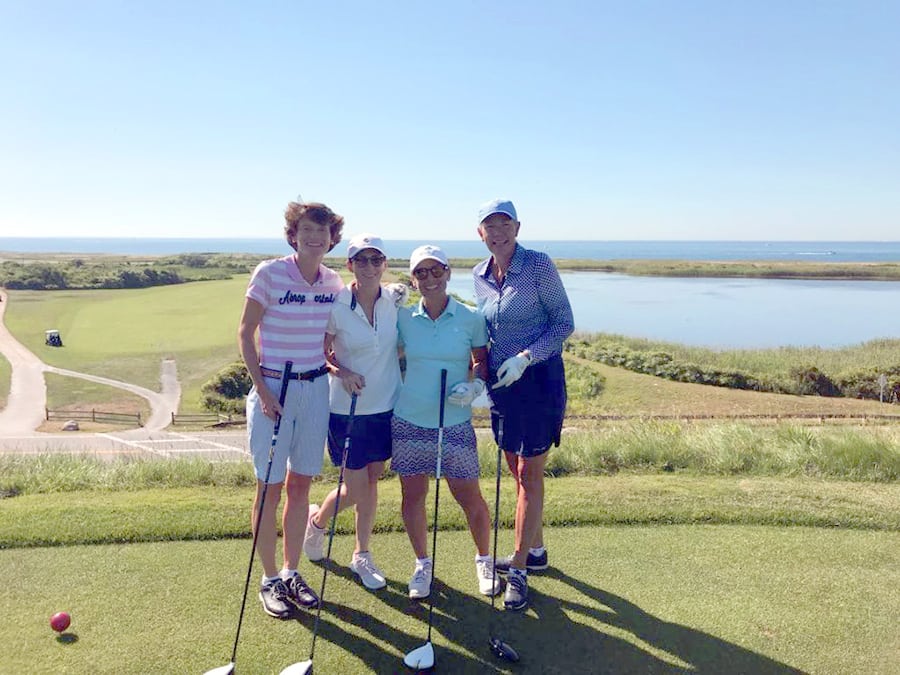
I never thought I’d love golf. I also never thought about the day I’d be staring into my sixth decade on the planet. When you are in your thirties, it’s hard to find joy in a slower tempo. In the same way yoga didn’t appeal to me at that age, neither did a four-hour activity mired with frustration.

It’s only been in the last ten years I’ve come to appreciate the compassion and brain health that comes from a beginner’s mentality. It is so much easier to stick with what we are good at, but there is no growth in that. No matter how much golf I play, I’m always filled with humility and the sense that I have so much to learn. As a writer, reading great books evokes the same feeling. German classes and years of bridge lessons have also put me in the shoes of a beginner, but those practices didn’t stick the way golf has.

That’s because I also love being outdoors. I’ve come to crave the green grass and fresh air, the camaraderie walking the course, my heart rate slowing with the measured, even, pace of the game. A four-hour walk with good friends and no phones: such a luxury in today’s world. Golf teaches me that success comes from taking time and studying my options. Ever try to putt quickly without reading the green? I am a type A personality who multi-tasks and juggles multiple projects at once. Golf has taught me something about concentration and clarity. It has taught me to value precision over power.

Golf benefits my squash and my writing in the same way yoga or meditation does. I like to think of a golf outing as an extended practice in even breathing and intentional thinking. It begins with gratitude for just having the time and the access to play the game. Then, every swing, every new hole is an opportunity to put the past behind and visualize greatness and use positive self-talk. It’s taken me many decades to face down the critic in my head, but rounds of golf have given me millions of opportunities to tell her to go away!

I never thought I’d love golf, I never understood what people liked about it. I can’t believe I’m at an age where I feel this way, but I really do love golf.

Back on Campus – School Stories

back on campusYou’ve probably seen all the photos on Facebook and Instagram – it’s graduation season and I can’t believe how my friends’ children are growing up! Graduations mark a big accomplishment for students as well as parents. Whether its high school or college, it is monumental to have crossed this major finish line.

Our middle son graduated from college on Memorial Day Weekend. It was a wonderful weekend that brought our family together to honor him and all his hard work. There were ceremonies and cocktails and dinners, but what I most appreciated was being on campus.

A campus is an island whether its remotely located or embedded in a town. It’s a self-contained world with traditions and a culture and rules of its own. It is self-governing and is populated by a revolving door of young adults. It has its common spaces and its hiding places. It has its own rhythm with quiet mornings and raucous late nights.

As a parent, walking onto a campus, or into a dorm or classroom building, feels like sneaking – dare I say trespassing after all the tuition we’ve laid out! But we aren’t supposed to be there, when we visit we are voyeurs to a special place and time that is no longer ours. And our children, who have license to occupy the space, might do so with the mindset of a traveler on an extended journey. They will be moving on, after all. So, it becomes a first home away from home, an experiment in living alone.

Aah if the walls could talk. The campus has seen growth and love and dissent and resistance. The campus has seen victory and protest. The campus has seen homesickness and nostalgia. The campus has witnessed trepidation and pride.

Maybe that is why, in addition to the romance of an actual green quadrangle surrounded by ivy-laden brick buildings, I have always loved the campus novel. What do you think of this line up:

I devoured all these books. A writing teacher had me watch “The Sterile Cuckoo,” starring a very young Liza Manelli and filmed on the Hamilton College campus. There are the more main stream hits: Love Story, Animal House, and Harry Potter but I think I’ve made a point – drama or comedy, literary fiction, or a trashy delve into Restless Virgins, lots of people find the campus entertaining. There is something primal about a world unto its own – it’s a microcosm of society, with all sorts of “Lord of the Flies” possibilities.

I am working on the final revisions of my novel, The Nine, which is also set on a boarding school campus. When I wrote EDEN, I hadn’t been aware that there was a whole genre around the “saying-goodbye-to-the-family-summer-home” story line. I am well aware, however, there is a long history of great campus novels. They have been a mainstay of American literature since before Holden Caulfield bolted for New York City. Campuses are filled with intrigue and mystery and the adults in charge of them are managing conflict and staving off scandal. It’s ripe, people. It’s ripe.

I would love to hear what your favorite campus novels are and why!!